








Today, I am delighted to welcome to the blog my dear friend, E.C. Ambrose (a.k.a. Elaine Isaak). Elaine and I have known each other for a long time, and she is one of the truly good people in this business. She is incredibly smart, funny, and deeply passionate about writing and our genre.
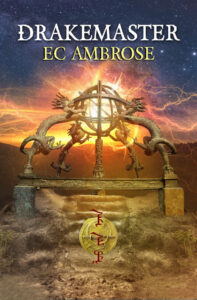
Her newest book, DRAKEMASTER, comes out from Guard Bridge Books on April 14!
Two Books with One Stone
by E. C. Ambrose
 One of the great delights of writing historical fiction is the opportunity to leap into research and go bouncing off into every conceivable rabbit hole—er, to do a deep dive into a specific time, place or topic which will provide the backdrop for the story you have in mind. Unless you’re already a historical specialist in that area, doing the research is likely to consume a lot of time, attention, and other resources.
My approach to developing a novel idea tends to be pretty methodical. Sometimes, I trip across an engaging fact or historical moment that I want to explore and I’m able to use that as an immediate jumping off point for the more detailed research. Other times, I have a general enthusiasm for a topic that could be mined for fictional potential. Mostly what I’m looking for is moments of cultural instability, ideally with multiple cultures interacting, and rich layers of conflict that can propel a plot as well as inform character.
The genesis of DRAKEMASTER, my new historical fantasy novel, arose from my fascination with Mongolian history and culture, alongside an interest in early clockworks. The first gave me a general region I wanted to explore, but it was the second that allowed me to pinpoint exactly where and when the book would be set. Central Asia is a region both vast in scale, and deep in scope, so it would be easy to get lost in all of those aforementioned rabbit holes.
When I came across a reference in one of my early technology books to “the vermillion pens of the ladies’ secretarial” I had found my particular niche. The footnote refers to the court recorders of Song Dynasty China writing down very detailed horoscopes for imperial children, in order to determine who was most fit to succeed the emperor.
These horoscopes depended on a highly accurate astronomical clock built in Kaifeng around 1090 CE by the polymath known to us as Su Song. Kaifeng, the capital of the Northern Song Dynasty, fell to the Mongols during their southward sweep, but rebelled against the Khan in 1257. Conflicts aplenty! I had my very specific place and time to write into.
By this point in my research process, I had amassed quite a heap of books and references. It seemed sad to use all of that information to craft only the single book, even if it might grow into a series. What to do? The answer was to spin out the same body of research into a completely different book, one that would aim at a different market rather than compete with the fantasy novel.
In addition to my love of fantasy and science fiction, I also adore a good adventure novel, the kind that solves a puzzle which may span centuries and a thousand miles to uncover something extraordinary. I took what I had learned about Mongolian history, and in particular, the landscape-oriented tradition of Khoomei throat singing, and used it to envision a musical map created a long time ago, which would lead a contemporary team on a thrilling chase to locate a great prize, one of the greatest tombs never found: that of Genghis Khan. This project became The Mongol’s Coffin, the first of my Bone Guard archaeological adventure novels.
What’s the takeaway for the would-be historically inspired writer?
First, diligent pursuit of the specific. Rather than be overwhelmed by the sweep of history, or consumed by the “great men” who tend to dominate, look for the telling detail that might serve as the jumping off point for a different view.
Second, find an organizational system that works for you. You’ll need to return to this well throughout the project(s) so marking pages, keeping a bibliography, and making detailed notes about the stuff that most excites you will give you a good start. I am a spreadsheet fan, so I make a timeline for the period of the book and fill in all I can find, then have additional worksheets to cover specific topics.
Third, let your pre-writing brain go wild with the nuggets you discover. Extrapolate what they imply about conflict and character. For a fantasy, look for the gaps that might suggest magic or other fantastical elements. Don’t stop when you have one compelling idea for a book—see if there might be another book or two lurking just behind.
And above all, happy writing!
*****
E. C. Ambrose writes adventure novels inspired by research subjects like medieval surgery, ancient clockworks, and Byzantine mechanical wonders. Published works include DRAKEMASTER (2022), the Dark Apostle Series, and the Bone Guard archaeological thrillers. Her next adventure will be an interactive superhero novel, Skystrike: Wings of Justice, for Choice of Games.
Learn more about the work of E. C. Ambrose on the author’s website
Find DRAKEMASTER on the publisher’s website
Amazon| Barnes and Noble| Apple|
 When I am not in these panels, I will be at my table in Author’s Alley, signing and selling books. I also plan to have with me some of
 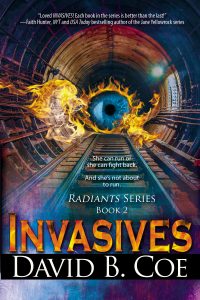 And when it comes to writing, I am in something of a rut. The last novel-length piece I wrote beginning to end was Invasives, the second Radiants book, which I completed (the first draft at least) eleven months ago. Eleven months!
 Mostly, as I say, I’ve been editing. My work. Other people’s work. The Noir anthology. I’ve been plenty busy, but I have not been as productive creatively as I would like. And I wonder if this is because of
 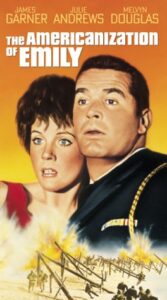 Hidden Gem movies: Two entries here, too, both of them idiosyncratic. But that’s the point, right? The first is a film from 1964 called The Americanization of Emily. It is a war movie set during World War II, but it will turn your expectations upside down as it rejects normal images of heroism and wartime valor. The cast is great — Julie Andrews in the title role is terrific. She’s worldly, sassy, and a long, long way from Mary Poppins and Fräulein Maria. James Garner, a favorite of mine, is her love interest, and is not at all the usual romantic lead. James Coburn and Melvyn Douglas are strong in supporting roles.
 Anyone who has met me and/or read this blog knows I am an avid photographer. And I have a very nice camera, a digital SLR with several interchangeable lenses that I use for landscapes, portraits, macro, travel photography, and pretty much everything else. Pretty much.


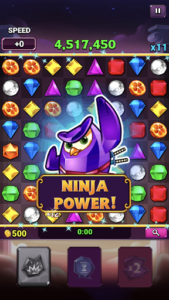 Confession #1: I play Bejeweled Blitz on my phone. I play it a lot, and I have been addicted to it for years. I have enough gold bars and coins piled up to make Warren Buffett envious. I have so many free gems wracked up that I could play for weeks straight, without pausing for meals or sleep, and never have to pay for a gem with any of those hoarded coins. It’s a bit of a sickness, actually. But I do enjoy it.
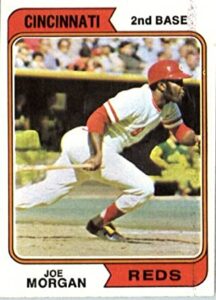 “Aha!!” I was able to reply. “What about Joe Morgan? Two time Most Valuable Player, perennial All-Star, World Series champion. He’s five foot seven!” Besides, I assured them. I didn’t expect or need to be six feet tall. I would be perfectly happy with five foot ten, like my hero, Roy White.
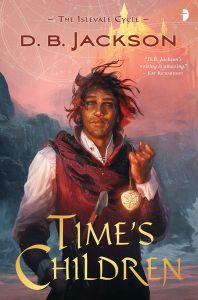 It’s not enough to create my worlds and magic systems. I have to explain them to my readers in a manner that is entirely natural and unobtrusive. And — my own preference — I also have to complete my stories and my character arcs in ways that utilize my fantasy elements without allowing them to take over my story telling. My heroes may possess magic, but in the end, I will always choose to have them prevail by drawing upon their native human qualities — their courage and resolve, their intelligence and creativity, their devotion to the people and places they love. Magic sets them apart and makes them interesting. It is often the hook the draws readers to my books. But those human attributes — those are the ones my real-world readers relate to. They form the bond between my readers and my characters. And so if those are the qualities that allow my characters to prevail in the end, then their triumphs will feel more personal and rewarding to my readers. It is the simplest sort of literary math.
 And so those who trust the Covid science will remain safer than those who don’t. Those who keep up with vaccinations and boosters will get sick less often and less severely. They will die in far smaller numbers and spend far less time in the hospital. The numbers are dramatic and indisputable. Sadly, but predictably, living with Covid means accepting an ever widening gap in the rates of infection and in case outcomes between those who ignore the advice of medical professionals and those who follow it. It means accepting that some social and economic disruptions will be unavoidable. One-third of the people in this country are unwilling to protect themselves and their families. There are bound to be consequences for this.
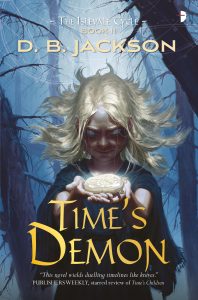
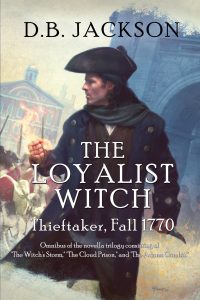 But at the very least, we need to see our main heroes grappling with what they have endured and setting their sights on what is next for them. We don’t need this for every character but we need it for the key ones. Ask yourself, “whose book is this?” For me, this is sometimes quite clear. With the Thieftaker books, every story is Ethan’s. And so I let my readers see Ethan settling back into life with Kannice and making a new, fragile peace with Sephira, or something like that. With other projects, though, “Whose book is this?” can be more complicated. In the Islevale books — my time travel/epic fantasy trilogy — I needed to tie off the loose ends of several plot threads: Tobias and Mara, Droë, and a few others. Each had their “Louis” moment at the end of the last book, and also some sense of closure at the ends of the first two volumes.
 Why do I do this? Why am I suggesting you do it, too? Because while we are telling stories, our books are about more than plot, more than action and intrigue and suspense. Our books are about people. Not humans, necessarily, but people certainly. If we do our jobs as writers, our readers will be absorbed by our narratives, but more importantly, they will become attached to our characters. And they will want to see more than just the big moment when those characters prevail (or not). They will want to see a bit of what comes after.