








This coming weekend, I will be attending JordanCon in Atlanta. There I will see many friends — colleagues as well as fans. I will sell some books, talk about writing, both on panels and informally over drinks and meals, and catch up with people who have been out of my life for too long. We will all be masked, of course. The con organizers are taking no chances, and I’m grateful to them for that.
JordanCon will not be my first convention of the year — that was Boskone back in February. But somehow this one feels like the start of the convention season. It is the first of several appearances I’ll be making this summer and fall — JordanCon, ConCarolinas, LibertyCon, DragonCon, Hampton Roads Writers Conference, perhaps World Fantasy Convention.
And I have to say, I am more excited for this set of conventions and workshops than I have been in several years. I think part of it is my pent up need to interact with people, to be in a professional setting (as opposed to on a professional Zoom call). Another part of it is the simple fact that I miss my friends. For instance, I haven’t hung out with Faith Hunter in ages. And for those of you who don’t know, Faith is this year’s Literary Guest of Honor at JordanCon. I will be “interviewing” her at the Guest of Honor event Saturday morning of the convention. It should be tremendous fun. (11:30 AM — be there!)
I am, generally speaking, an outgoing person. I enjoy conventions. I enjoy talking to fans and discussing craft and business issues on panels. Since the pandemic began, I have struggled more than ever with my anxiety, and have found myself shying from contact with large groups. I’ve had to force myself to be social and I’ve battled nerves before the few events I have done.
In other words, I haven’t felt like myself, and I’ve hated it. I’m ready to be out in the world again, among people I know and care about and respect. I look at these upcoming conventions and such as more than professional obligations, more than promotional opportunities. They’re a step toward renewed emotional health.
Yes, that’s a lot to ask of a speculative fiction convention, and maybe I’m loading too many expectations onto JordanCon and other events. But really, I’m placing those expectations on myself. As I have said in other posts recently, this spring has been a time for me to come out of my emotional bunker. Life remains complicated for my family and me. On the other hand, as I look around, I see a world filled with people coping with issues of one sort or another. It used to be, when I found myself in the midst of trying times, I would look forward to “normal life” when the difficulties subsided.
I have come to realize there is no such beast. “Normal” as I envisioned it was a time without problems, without stuff going wrong. And that’s not realistic. “Normal life” is complicated in one way or another. Pretty much always. I don’t mean to sound grim. I’m not being Eeyore. Quite the opposite, actually. I’m finding that the hard stuff is a little easier to deal with when I understand that all of us struggle, that no matter how bad one part of life might seem at any given moment, I am not alone, and there is almost invariably another part of life that is good, great even.
This coming weekend, I will begin in earnest to put this perspective into practice.
For those of you who will be at the convention — and I hope to see many of you there — I will be on the following panels (with times and hotel venues):
“Economics of Publishing: How Does It All work?” — Friday, 8:30pm, Conference Center
“I’ve Written Something. Now What?” — Saturday, 10:00am, Conference Center
“Author Guest of Honor Spotlight: With GoH Faith Hunter” — Saturday, 11:30am, Dunwoody
“Outlining vs. Pantsing: What are the Benefits and Drawbacks?” — Sunday, 10:00am, Conference Center
“Pro-Tip: What I Wish I’d Known” — Sunday 1:00pm — Conference Center
 When I am not in these panels, I will be at my table in Author’s Alley, signing and selling books. I also plan to have with me some of the new photographic cards I wrote about recently. Please feel free to come by and say hello. Yes, I’ll be working, but I also welcome the chance to catch up. And maybe I’ll convince you to buy a book or two!
In the meantime, have a great week!
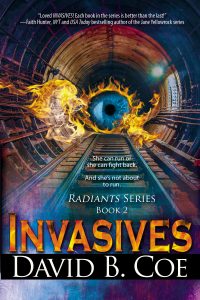 And when it comes to writing, I am in something of a rut. The last novel-length piece I wrote beginning to end was Invasives, the second Radiants book, which I completed (the first draft at least) eleven months ago. Eleven months!
 Mostly, as I say, I’ve been editing. My work. Other people’s work. The Noir anthology. I’ve been plenty busy, but I have not been as productive creatively as I would like. And I wonder if this is because of
  Hidden Gem movies: Two entries here, too, both of them idiosyncratic. But that’s the point, right? The first is a film from 1964 called The Americanization of Emily. It is a war movie set during World War II, but it will turn your expectations upside down as it rejects normal images of heroism and wartime valor. The cast is great — Julie Andrews in the title role is terrific. She’s worldly, sassy, and a long, long way from Mary Poppins and Fräulein Maria. James Garner, a favorite of mine, is her love interest, and is not at all the usual romantic lead. James Coburn and Melvyn Douglas are strong in supporting roles.
 Anyone who has met me and/or read this blog knows I am an avid photographer. And I have a very nice camera, a digital SLR with several interchangeable lenses that I use for landscapes, portraits, macro, travel photography, and pretty much everything else. Pretty much.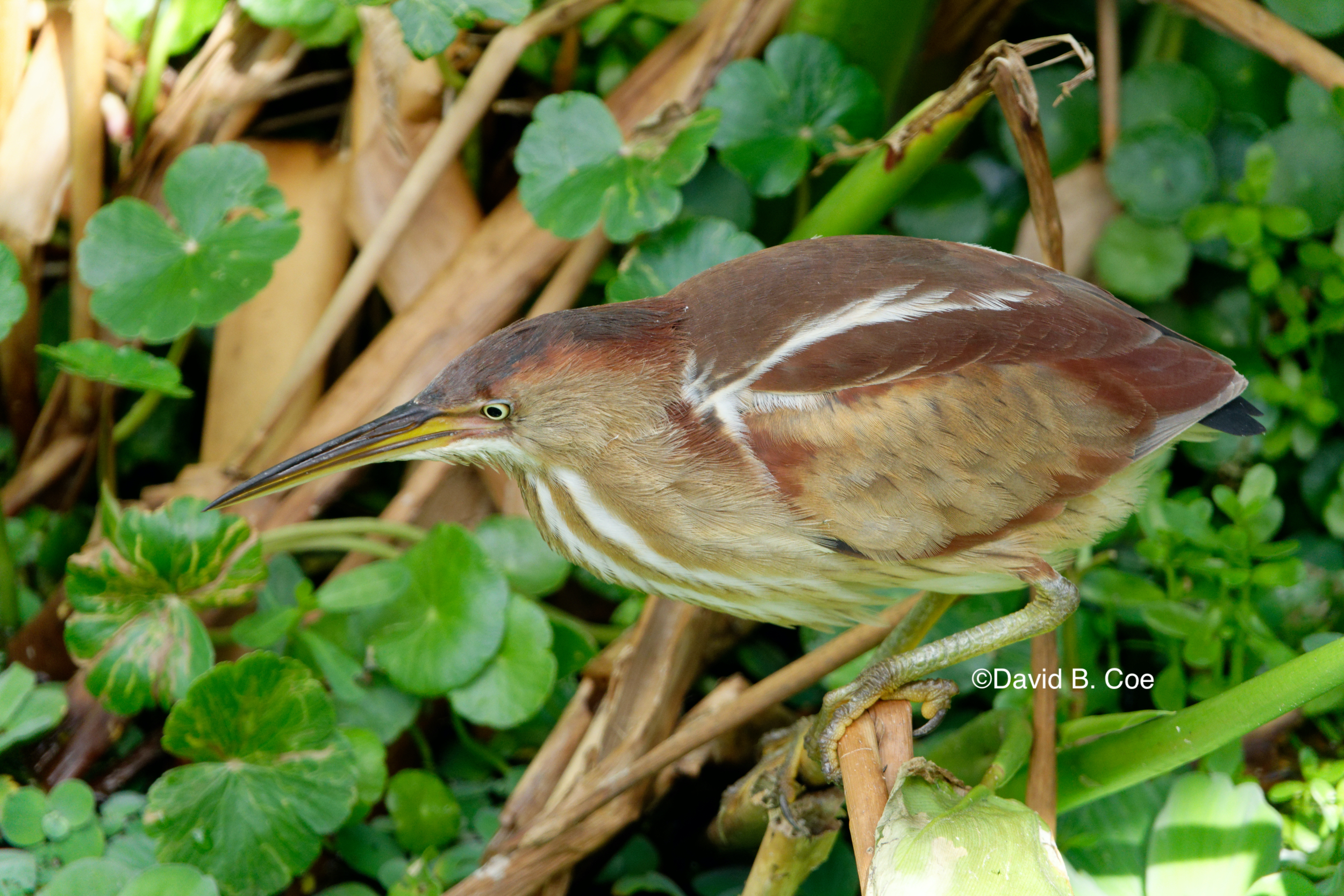


 Confession #1: I play Bejeweled Blitz on my phone. I play it a lot, and I have been addicted to it for years. I have enough gold bars and coins piled up to make Warren Buffett envious. I have so many free gems wracked up that I could play for weeks straight, without pausing for meals or sleep, and never have to pay for a gem with any of those hoarded coins. It’s a bit of a sickness, actually. But I do enjoy it.
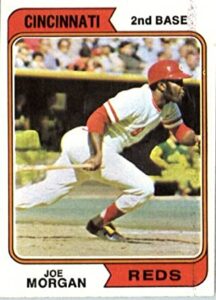 “Aha!!” I was able to reply. “What about Joe Morgan? Two time Most Valuable Player, perennial All-Star, World Series champion. He’s five foot seven!” Besides, I assured them. I didn’t expect or need to be six feet tall. I would be perfectly happy with five foot ten, like my hero, Roy White.
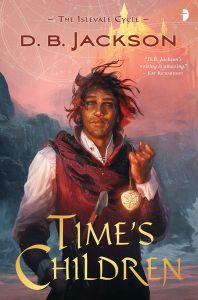 It’s not enough to create my worlds and magic systems. I have to explain them to my readers in a manner that is entirely natural and unobtrusive. And — my own preference — I also have to complete my stories and my character arcs in ways that utilize my fantasy elements without allowing them to take over my story telling. My heroes may possess magic, but in the end, I will always choose to have them prevail by drawing upon their native human qualities — their courage and resolve, their intelligence and creativity, their devotion to the people and places they love. Magic sets them apart and makes them interesting. It is often the hook the draws readers to my books. But those human attributes — those are the ones my real-world readers relate to. They form the bond between my readers and my characters. And so if those are the qualities that allow my characters to prevail in the end, then their triumphs will feel more personal and rewarding to my readers. It is the simplest sort of literary math.
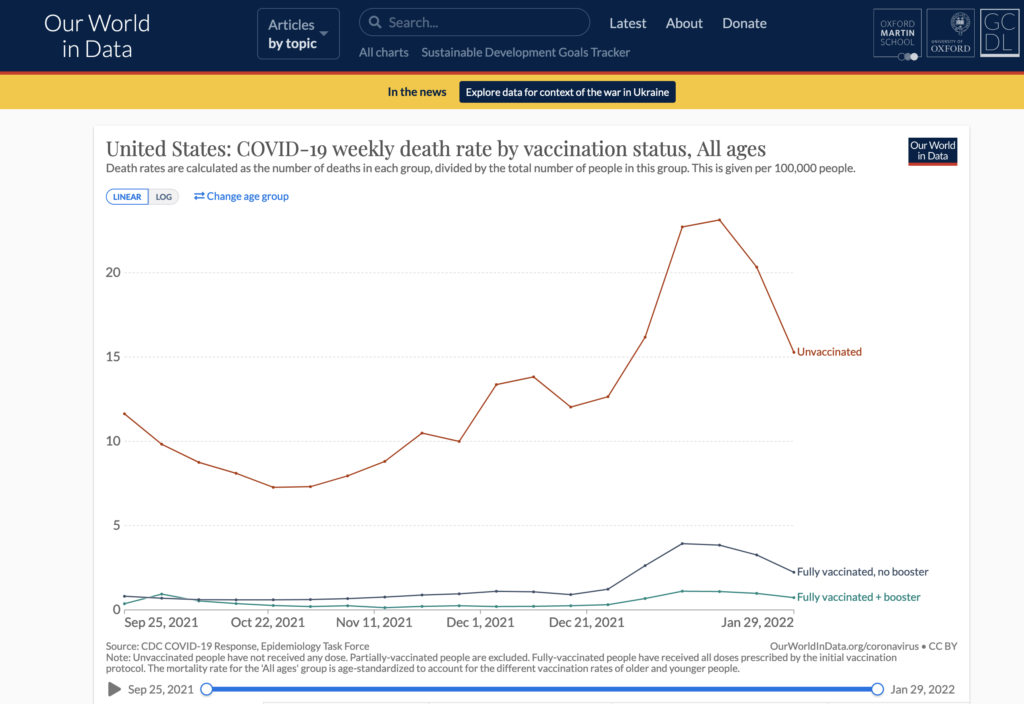 And so those who trust the Covid science will remain safer than those who don’t. Those who keep up with vaccinations and boosters will get sick less often and less severely. They will die in far smaller numbers and spend far less time in the hospital. The numbers are dramatic and indisputable. Sadly, but predictably, living with Covid means accepting an ever widening gap in the rates of infection and in case outcomes between those who ignore the advice of medical professionals and those who follow it. It means accepting that some social and economic disruptions will be unavoidable. One-third of the people in this country are unwilling to protect themselves and their families. There are bound to be consequences for this.
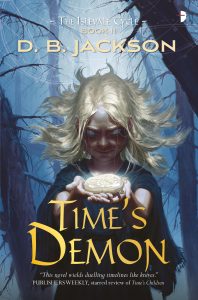
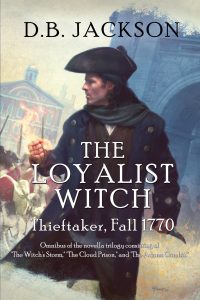 But at the very least, we need to see our main heroes grappling with what they have endured and setting their sights on what is next for them. We don’t need this for every character but we need it for the key ones. Ask yourself, “whose book is this?” For me, this is sometimes quite clear. With the Thieftaker books, every story is Ethan’s. And so I let my readers see Ethan settling back into life with Kannice and making a new, fragile peace with Sephira, or something like that. With other projects, though, “Whose book is this?” can be more complicated. In the Islevale books — my time travel/epic fantasy trilogy — I needed to tie off the loose ends of several plot threads: Tobias and Mara, Droë, and a few others. Each had their “Louis” moment at the end of the last book, and also some sense of closure at the ends of the first two volumes.
 Why do I do this? Why am I suggesting you do it, too? Because while we are telling stories, our books are about more than plot, more than action and intrigue and suspense. Our books are about people. Not humans, necessarily, but people certainly. If we do our jobs as writers, our readers will be absorbed by our narratives, but more importantly, they will become attached to our characters. And they will want to see more than just the big moment when those characters prevail (or not). They will want to see a bit of what comes after.