








Today, I add to my series of posts about “Beginnings, Middles, and Endings,” with a continued focus on the vast middle of the novel. If you wish to go back and read my first two essays in this feature on openings and middles-part I, feel free to do so. We’ll wait.
Ah, very good. Moving on . . . .
 I have spoken before about the recurring problem I have with manuscripts at about the 60% mark. For those unfamiliar with the phenomenon, which afflicts many writers — not just me — it is fairly simple to explain. When I write a novel, I tend to make fairly steady progress until I approach the final third of the narrative. At that point, I run into a wall. And this has been true from the very start of my career. I didn’t recognize the pattern until one afternoon, while working on my fourth or fifth book. I came downstairs after a frustrating day, and Nancy asked me how my novel was coming.
“It’s awful,” I said. “There is no story here. I don’t know what I was thinking. The whole thing has fallen apart on me, and I have no idea how to move forward.”
“Ah,” said she, without surprise or very much sympathy. “So, you’re about 60% in.”
Cue heavenly light and revelatory music sung by angels. Because, yes, I was 60% in. Apparently, I complained this way, at this exact spot, with every book.
As I say, this is not all that uncommon. Lots of writers struggle with a similar wall. For some it comes a little earlier, for others a little later. But I would suggest that it is caused for all of us by the same basic dynamic in our process.
For the first 60% of our narrative (again, your percentage may be slightly different) we are doing what comes naturally to us writers: namely piling layer after layer of awful shit onto our protagonists. We set them up with lives — with love and security and comfort, with friends and family and colleagues, with belief systems and confidence and purpose. And over the course of 250 pages, we strip all of that away. We throw tragedy at them. We place them in danger. We rob them of the things they need and love most.
Those of you who don’t write fiction might, at this point, ask why we do this. That is a topic for another series of posts. The short answer is, we are horrible human beings, possessed of unbounded cruelty, bordering on sadism. But we are also sane enough (barely) to understand we ought not to do all these terrible things to REAL people. And so we do them to our characters. Also, it makes for really good reading. And what that says about the rest of you, I will leave unspoken . . . .
In any case, after we have done all these awful things to our characters, we suddenly realize (for me at around 60%) that we have to start repairing some of this damage. We can’t end the book with our heroes tied in knots, their lives destroyed, their spirits broken. Because while readers might enjoy watching us torture the poor dears, they also want us to offer them redemption and a new start after all is said and done.
All kidding aside, the problem in plotting comes at that pivot point, the place where the tide finally turns and the main characters start to work their way out of crisis. Setting up all the bad stuff is actually pretty easy. Getting characters to move beyond it, to find their way to a new equilibrium — that’s hard.
So, how do we get past that wall? How do I defeat the 60% block again and again and again?
First, breathe. Our story has not suddenly blown up. The situation is not hopeless. This is no time to give up our dreams of being a writer and turn to orthodonture. Seriously, that turning point is never easy, and writing is not one smooth exercise in creation. Fits and starts are part of the process. So relax. There IS a story here, and there is a way to get our heroes to where we want them to be. But we have work to do. I can’t tell you how many aspiring writers have unfinished manuscripts that break off at this pivot point. Let’s not allow ours be one of them.
Second, we need to think about the ending we have in mind for our novel, and then work backward from there, step by step. What needs to happen in order for our narrative and our characters to get to that finale? Take notes, make a reverse outline, plot point by plot point. In doing this, we may realize that we need to make some revisions to the first 60% of the novel — adjustments that make the ending possible. That’s fine. This is our first draft. No one will know but us. Yes, we might even have to kill a darling or two. That’s part of being a writer.
Third, if the 60% problem still seems intractable, we need to look for places where our story as it reads now has deviated from what we had in mind when we first conceived of the narrative and its ending. Maybe we have taken a narrative detour, or added in a new character, or killed someone off who it turns out we need. Again, this is draft. Rewrites are part of the process. So if we have stuff to fix, so be it. Or maybe we keep those deviations in place and have to rethink our ending. That works, too. But we might need to make some adjustments.
Finally, we keep moving forward no matter what. Don’t give up. Don’t retreat into those rewrites now. We’ll make notes on all we have to revise in the earlier part of the book, and then we will finish. Because that’s what writers do.
Remember, the pivot is hard for all of us. We can overcome it. If we couldn’t, there would be far, far, far fewer books in this world.
Keep writing!
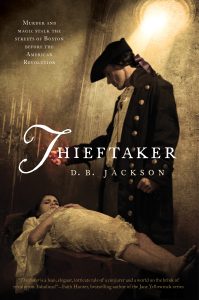 First, though, it occurs to me that in writing about openings last week, I left out one crucial, but easy-to-describe story element: “the inciting event.” The inciting event of your narrative is, quite simply, the thing that jump-starts your story, that takes the characters you have introduced in your opening lines from a place of relative stasis to a place of flux, of change, of tension and conflict and, perhaps, danger. It is the commencement of the narrative path that will carry your characters through the rest of the story. In his description of the Hero’s Journey, Joseph Campbell referred to the inciting event as the “Call to Adventure.” If you’re looking for examples, think of the arrival of the first letter from Hogwarts in Harry Potter and the Sorcerer’s Stone, or the appearance of Gandalf at Bilbo Baggins’s door in The Hobbit. In pretty much all the Thieftaker books and stories, it is the arrival of whoever Ethan’s new client will be for that episode.
 I fall somewhere in between. I don’t think any of my novels have a single opening sentence that grabs readers by the collar (that’s actually pretty rare), but I do try to capture my readers’ attention early. My best book opening, I believe, comes in
  Let’s start with the obvious:
 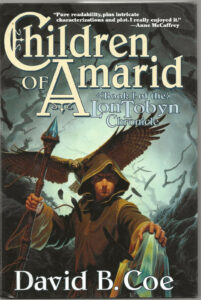 I’m asked quite often if I still feel the thrill of seeing a new book in print, even after so many years and so many releases. And the truth is, I do. Sure, the very first time was unlike anything I’ve experienced since. I still remember getting a call from the local bookstore here in our little college town. My author copies hadn’t arrived yet, so when the store manager reached out to let me know the hardcover edition of Children of Amarid was in stock, I rushed over to see it. I’m pretty sure Nancy came with me.
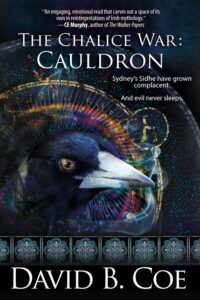
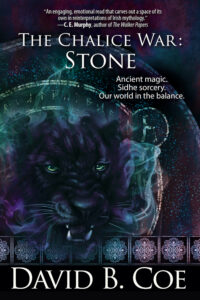 With all this in mind, I am happy to say that the releases of The Chalice War: Stone and The Chalice War: Cauldron have gone great. No new pandemics. The stock market is up. The art work looks marvelous. All the chapters are just where they should be. (I think — I should probably check to be sure . . . . Yep, they look great!) Sales? I have no idea at this point. It’s too early to know. Reviews? We’ll see about those as well. I worry, of course. I want these books to succeed. I want you to like them. And, if you do, I would love for you to tell the world.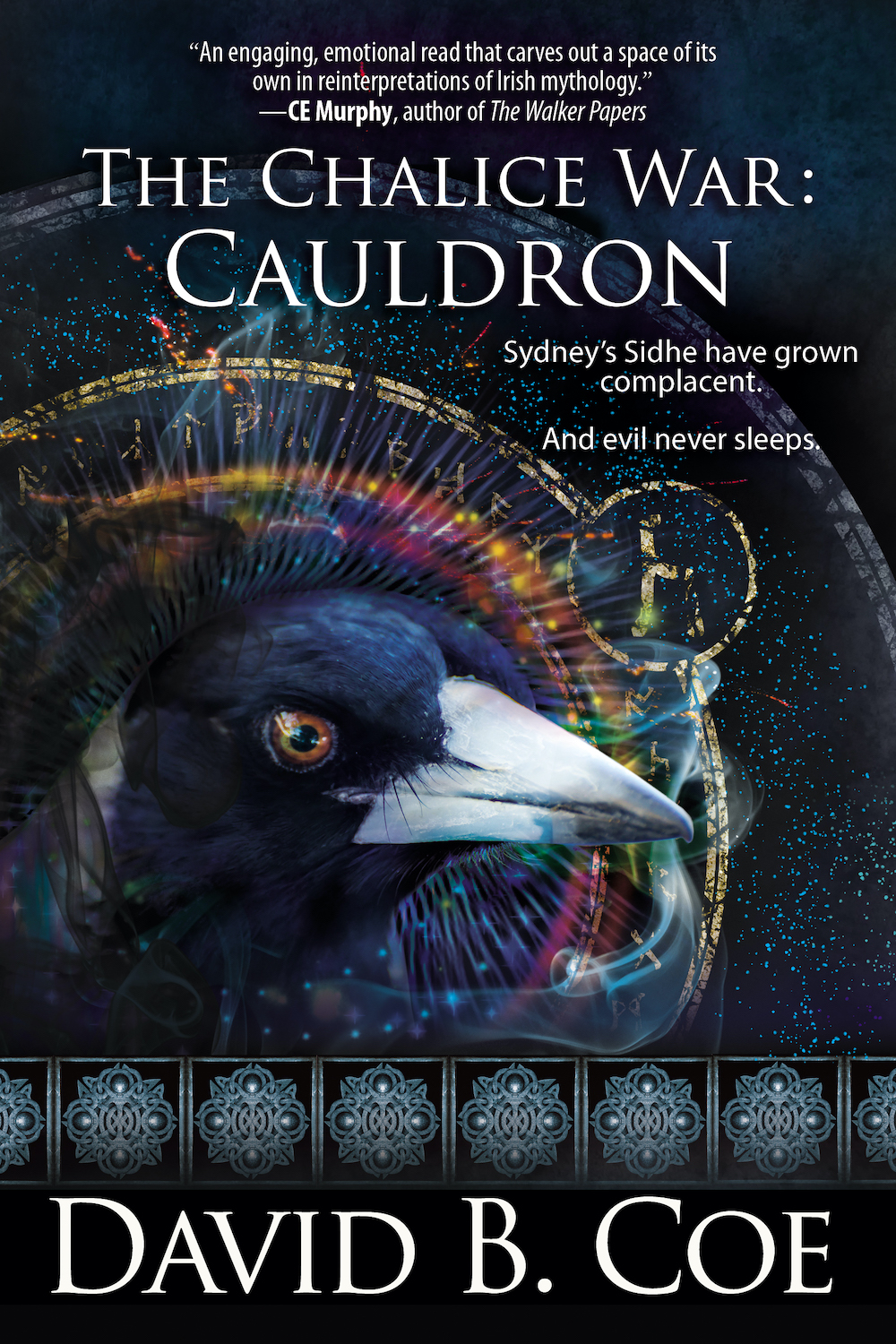
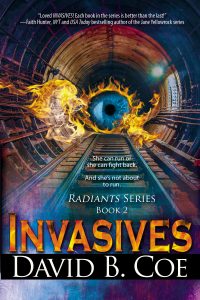 On the other hand, do trust in your story ideas. All of them. Even the old ones that haven’t yet gone anywhere. At some point, you’ll have an idea for a story about three kids living in the subway tunnels beneath New York City. And you won’t have any idea what to do with it. You’ll give up on it. Don’t. It will become Invasives. At another time, you’ll write a story about two women interacting with Celtic deities and trying to protect an ancient, transcendently powerful magical artifact. That one, too, will seem to languish. Trust the story. That book just came out. It’s called The Chalice War: Stone. Believe in your vision.
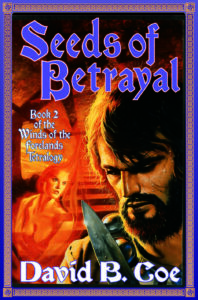
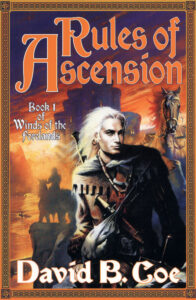 I continue to read through and revise the books of my Winds of the Forelands epic fantasy series, a five-book project first published by Tor Books in 2002-2007. The series has been out of print for some time now, and my goal is to edit all five volumes for concision and clarity, and then to re-release the series, either through a small press or by publishing them myself. I don’t yet have a target date for their re-release.
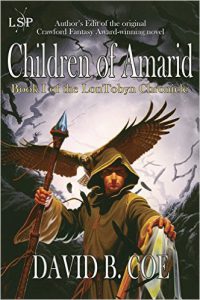 We are often our own most unrelenting critics. This is certainly true for me in other elements of my life. I am hard on myself. Too hard. And, on a professional level, I am the first to notice and criticize flaws in my writing. So reading through old books in preparation for re-release is often an exercise in self-flagellation. It was with the LonTobyn reissues that I did through Lore Seekers Press back in 2016. And it is again with the Winds of the Forelands books.
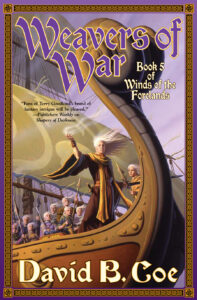 As I have read through this first book in the story, polishing and trimming the prose, I have rediscovered that narrative. I remember far less of it than I would have thought possible. Or rather, I recall scenes as I run across them, but I have not been able to anticipate the storyline as I expected I would. There are so many twists and turns, I simply couldn’t keep all of them in my head so many years (and books) later.