At the risk of wading into very dangerous political waters, I feel I must weigh in publicly on the recent leak of the Supreme Court’s draft decision in Dobbs v. Jackson Women’s Health Organization, the Mississippi abortion case, which effectively seeks to overrule Roe v. Wade. Based on the text of the leaked draft, at least five of the Court’s six conservative justices are poised to put an end to Federal protection for reproductive freedom in this country, despite assurances several of them (Neil Gorsuch, Brett Kavanaugh, Amy Coney Barrett) gave during their confirmation hearings to the effect that they would respect precedent, that they viewed Roe as settled law, and that claims they intended to overturn the 1973 decision were based in groundless left-wing fears.
Yes, I support reproductive freedom for all women, regardless of what state they live in, what color their skin, and how big their bank accounts. Overturning Roe, it needs to be said, will not end abortion in this country. It will merely limit its availability to states with solid progressive majorities, and to those in conservative states with the means to circumvent their states’ laws. Put another way, abortion will remain available to wealthy white women everywhere. Women of color and poor and working class women, regardless of race, who live in red states, will be left with few options.
I should also add here that I have several friends who oppose abortion on religious grounds, and whose views on issues of “life” I find unimpeachable. They oppose the death penalty as well. They support commonsense gun control. They support increased funding for daycare, early education, family leave policies, and other initiatives that truly soften the effect of their stance against abortion. I respect their opinions and accept that well-meaning, sincere, and ideologically consistent advocates on both sides of this issue can legitimately disagree.
But I also have to say this to those who are pleased by what they saw in the Court’s draft opinion: Be very, very careful what you wish for.
Samuel Alito’s draft opinion essentially returns the Court to a stance that began to erode during the 1960s with the Court’s decision in 1965’s Griswold v. Connecticut. That case, brought by a married couple in Connecticut, overturned a state law that had rendered illegal the use of contraceptives by consenting adults. Read that sentence again. The Court overruled a state law that barred consulting adults, even if they were married, from using contraceptives. The Court, in a 7-2 decision written by William O. Douglas, held that there was in the Constitution an implied right to privacy upon which states and the Federal government could not infringe.
An implied right to privacy.
Here we see the power of precedent. Without Griswold, there is no Roe. Without Griswold, there also is no Eisenstadt v. Baird, a 1972 decision that extended to unmarried couples the unfettered right to purchase and use contraceptives. Without Griswold, there also is no Loving v. Virginia, a 1967 decision that struck down state prohibitions on interracial marriage. Without Griswold, there is no Lawrence v. Texas, a 1986 case in which the Court held that sexual intimacy among consulting adults, regardless of gender, is also protected from governmental interference and regulation. Without Griswold, there is no Obergefell v. Hodges, the 2015 ruling granting marriage equality to all couples, regardless of gender and sexual orientation.
The Griswold decision, and its establishment of that implied right to privacy, is fundamental to every decision since that has taken government oversight out of our bedrooms. Alito’s draft decision, while aimed at Roe, effectively calls back into question Griswold itself, and every case that drew upon its precedent.
Don’t believe me? Think I’m overreacting? In March of this year, perhaps anticipating where the Texas and Mississippi abortion bans would take this new conservative supermajority on the Court, Senator Mike Braun, a conservative Republican from Indiana, said he thought the Supreme Court should return to the states the power to regulate interracial marriage, the availability of contraceptives, and the notion of marriage equality. He is not the only Republican to make such a statement in recent months.
I am far from the first person to point out that the ideological Right is all for small government except when it comes to our most intimate relationships. At which point it very much wants government telling us what to do.
Connecticut, of course, is not about to start banning the sale of contraceptives. But Mississippi might. Alabama might. Utah and Wyoming and Idaho might. I live in Tennessee. I can see the Tennessee legislature being first in line to role back the clock to the 1950s.
Again, think I’m exaggerating the threat? Consider this: Brett Kavanaugh, during his Senate confirmation hearings, called contraceptives “abortion-inducing drugs.” (1)
Conservative observers assure us that while Roe may be in peril, these other decisions are not, because they are popular enough to survive challenges to them. The problem with that argument is that legal abortion is also quite popular in this country. More than two-thirds of Americans oppose overturning Roe. That hasn’t stopped the Court from stepping to the precipice of doing just that. (2)
I do believe that the Court’s impending decision, should it go as the leaked draft suggests it will, is likely to spark an overwhelming backlash from voters on the Left. Recent polls show Democratic voters lack enthusiasm about voting in November’s midterm elections, especially the young and those who identify as most progressive. Those are precisely the groups who are likely to react most passionately to the Court’s action. They will be energized by this. The political landscape, I believe, is about to shift dramatically.
But the real shock for conservatives is likely to come as emboldened legislatures in America’s red states turn their efforts to restricting more and more of our most precious private rights. Some yahoo in Tennessee or Idaho or elsewhere is bound to decide that contraception ought to be regulated, or that relationships between people of different races ought to be outlawed. And at that point, even their most conservative supporters in the electorate are going to wake up and decide they’ve had enough.
Conservative politicians who overreach in this way will get exactly what they deserve. All because Samuel Alito has given them exactly what they think they want.
Have a great week.
—-
1 Litman, Leah and Vladeck, Steve, “The Biggest Lie Conservative Defenders of Alito’s Leaked Decision Are Telling,” Slate, May 5, 2022.
2 Litman and Vladeck.
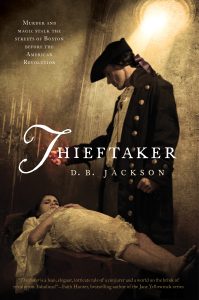 I would love to be a bestselling author. And with each new project I take on, I wonder if this might finally be the literary vehicle that gets me there. Thieftaker, Fearsson, the time travel books, the Radiants franchise. I had high hopes for all of them. All of them were critical successes. None of them has taken me to that next level commercially. So does that mean I should give up?
 The difference between what I did with those two projects and what I am telling you not to do is this: I kept working on these books, but I also moved ahead with other projects, so that I wouldn’t stall my career. Yes, I worked for six years on the first Fearsson book. But in that time, I also wrote the Thieftaker books and the Robin Hood novelization. This, by the way, is also the secret to finding that balance I mentioned. By all means, keep working on the one idea, but do so while simultaneously developing others. Don’t become so obsessed with the one challenge that you lose sight of all else.
 One of the great delights of writing historical fiction is the opportunity to leap into research and go bouncing off into every conceivable rabbit hole—er, to do a deep dive into a specific time, place or topic which will provide the backdrop for the story you have in mind. Unless you’re already a historical specialist in that area, doing the research is likely to consume a lot of time, attention, and other resources.
 When I am not in these panels, I will be at my table in Author’s Alley, signing and selling books. I also plan to have with me some of
 And when it comes to writing, I am in something of a rut. The last novel-length piece I wrote beginning to end was Invasives, the second Radiants book, which I completed (the first draft at least) eleven months ago. Eleven months!
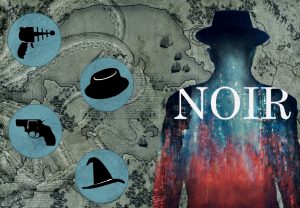 Mostly, as I say, I’ve been editing. My work. Other people’s work. The Noir anthology. I’ve been plenty busy, but I have not been as productive creatively as I would like. And I wonder if this is because of
 Hidden Gem movies: Two entries here, too, both of them idiosyncratic. But that’s the point, right? The first is a film from 1964 called The Americanization of Emily. It is a war movie set during World War II, but it will turn your expectations upside down as it rejects normal images of heroism and wartime valor. The cast is great — Julie Andrews in the title role is terrific. She’s worldly, sassy, and a long, long way from Mary Poppins and Fräulein Maria. James Garner, a favorite of mine, is her love interest, and is not at all the usual romantic lead. James Coburn and Melvyn Douglas are strong in supporting roles.
 Anyone who has met me and/or read this blog knows I am an avid photographer. And I have a very nice camera, a digital SLR with several interchangeable lenses that I use for landscapes, portraits, macro, travel photography, and pretty much everything else. Pretty much.