








I love villains. I love writing them. I love reading them. I love seeing them brought to life on big screen and small.
Well, let me modify that. I love villains in fiction and movies and television shows. I can’t stand real-life villains. (In the interest of keeping things civil, I won’t name any of the real-life villains I have in mind, even the one whose name rhymes with Peon Husk.) But a good fictional villain can make even the most mundane of stories shine. And a boring or ineffective villain can ruin an otherwise effective narrative. Over the years, as a reader, teacher, and editor, I have seen many beginning writers undermine their stories by making the same mistakes in the development of their antagonists.
 What qualities make a villain compelling? I intend to dive into that. Who are some of my favorite villains? I’ll get into that, too. But let me offer a few quick points up front. I don’t think much of the all-powerful-evil-through-and-through villains one often encounters in the fantasy genre. Sauron, for instance — the evil god whose world-conquering designs lie at the heart of J.R.R. Tolkien’s The Lord of the Rings — is, to my mind, a very boring villain. He’s really powerful, and he’s really, really evil. And yes, he’s cunning, which is a point in his favor, and he’s scary (or his minions are). But beyond that, and unless one has gone back and read all his backstory in The Silmarillion, there isn’t really much to him. He lacks dimension and complexity.
So, let’s begin there. In my opinion (and yes, ALL of this is just my opinion), villains should be complex. There should be more to them than mere evil. Their backstory should contain the seeds of their villainy and the twisting of their world-view. Because let’s face it, most of the villains we encounter and create do some pretty messed up things in pursuit of their agendas. They’re not all there sanity-wise. But how they wound up there ought to be an interesting tale in and of itself. And the fact that their actions are working at cross purposes with those of our protagonists should not mean they can’t have some normality and even joy in their lives. They can and should have people and things that they love. They should be relatable for our readers. One of my very favorite villains is Brandan of Ygrath, the emperor-sorcerer who is the villain of Guy Gavriel Kay’s Tigana. He is charming, brilliant, loving with those he cares about, handsome, refined. He is also ruthless, merciless, temperamental, and unpredictable. He does horrible, cruel, vicious things for reasons that are both understandable and insufficient. He is nearly as easy to like as he is easy to hate.
Too often, I see young authors make their villains unintelligent and unsubtle. They give their villains lots of power, but then undermine that power by making their machinations transparent. Villains, I believe, need to be canny, keen of mind, creative. Their schemes should be the stuff of genius. Remember the old Adam West Batman series? I used to watch it after school when I was little. Invariably, Batman’s foes would leave him in a situation where he wasn’t dead yet, but he would be soon. They were sure of it. So they didn’t need to wait around to make sure. They could leave, and eventually, the pendulum on the giant clock with the medieval axehead attached to it would cleave the masked crusader in two! And, of course, their premature departure gave Batman and the Boy Wonder the opportunity they needed to escape their less-than-certain deaths. Stupid villains were entertaining and convenient when we were kids watching bad TV. But for more sophisticated fiction, stupid villains will ruin a good tale.
Think of it this way: Assuming that our protagonist eventually manages to overcome the villain in our story, the power AND intelligence AND shrewdness of the bad guy reflect well on our good guy. The easier the villain is to defeat, the less challenging their plot against the world, the less impressive our hero appears when they prevail. When we build up our villain, when we make them really smart and really cunning, our hero’s victory becomes that much more of an achievement. Consider it narrative mathematics.
 Some of my favorite villains from my own work? Quinnel Orzili from the Islevale Cycle (Time’s Children, Time’s Demon, Time’s Assassin), Saorla from the second and third books in The Case Files of Justis Fearsson, and, my absolute favorite, Sephira Pryce from the Thieftaker books. Yes, she later become something other than a pure villain, but that was basically because she became SO much fun to write that I had to find a way to keep her around and relevant.
 My favorite villains in the work of others? I already mentioned Brandan of Ygrath. John Rainbird, from Stephen King’s masterpiece, Firestarter, is a terrific villain. Smart, brutal, and yet also human. In Catie Murphy’s marvelous Negotiator trilogy there are two supernatural “bad guys,” Daisani and Janx, whose personal rivalry threatens the fabric of the mortal world. Their mutual animus and their own needs and desires humanize them and make them terrific foils for Magrit Knight, the series’ protagonist. And I would add that a certain writer I care not to mention in light of recent revelations has created some truly amazing villains. Too bad he wound up being a villain worthy of his own undeniable storytelling talents.
So, make your villains relatable, make them canny and dangerous and terrifying, and make their eventual defeat a true achievement for your protagonist. And try not to be villainous yourself.
Advice for this week. Cheers!!
 But the media work I have done in the past wasn’t like that. Back in 2009-2010, I wrote the novelization of Ridley Scott’s movie Robin Hood, starring Russell Crowe and Cate Blanchett. The movie wasn’t out yet — I worked from a script — and I didn’t know whether or not I would love it. (I didn’t.) In 2018, I wrote a novel that tied in with the History Channel’s Knightfall series about the Knights Templar. In this case, I got to see all the episodes of the first season before the series was aired. I liked the show well enough.
 With the Knightfall book, I had a good deal more freedom and control, and so I enjoyed the process much, much more. But still I was mostly writing from the viewpoint of someone else’s characters. There is one point of view character, though, who I made my own — a child who appears later in the series as an adult. But her childhood POV was mine and gave me that sense of ownership, of personal investment in the book.
 Which is another way of saying that innovation for the sake of innovation is not necessary or advised. Yes, it’s fun and challenging to write books or stories that don’t conform to simple linear narrative. I learned that with the Islevale Cycle, my time travel/epic fantasy series. And if you have ideas for playing with chronology or otherwise changing up your narrative style, by all means give it a try. But don’t feel that you have to. There are plenty of books, movies, plays, and stories out there that conform to regular old narrative form, and they do just fine. Better to write a story in the normal way and have it come out well, than to change things up just for the purpose of doing so, and thus leave your audience confused.
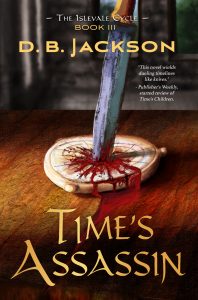 Those are not easy questions to answer. As with beginnings and middles, there are as many ways to approach an ending as there are stories to be written. Different authors like to do different things with their closing chapters. And so, again as with the other parts of story structure, we can learn how to write good endings, in part, by reading as many books and stories as possible. Guy Gavriel Kay’s stand-alone fantasy novel, Tigana, has one of the finest endings of any book I’ve ever read. It is haunting and beautiful and — surprisingly — uncertain. But it is incredibly effective. Of all the endings I’ve written, I believe my favorite is the closing to Time’s Assassin, the third and final book of The Islevale Cycle, my time travel/epic fantasy trilogy. Why do I think it’s the best? Because it ties off all the loose ends from my narrative. It hits all the emotional notes I wanted it to. My characters emerge from those final pages changed, scarred even, but also in a place of growth and new equilibrium. Also, it’s action-packed and, I believe, really well-written.
 2) Tying off various narrative loose ends. The most important story element is the central conflict, which the climax should either settle (if the book is a stand alone or the last of a series) or advance in some significant way (if the book is a middle volume of an extended series). But there are often other narrative threads that need to be concluded to the readers’ satisfaction before our audience will feel at peace with the story’s ending. These can include unresolved relationship issues (strained friendships, burgeoning or troubled romances, conflicts between siblings or a parent and child, etc.), missing information and/or secrets that could not be revealed before the climax ran its course (this is especially common in mysteries like the Thieftaker stories), or character arc and narrative arc issues involving secondary characters and storylines. Part of the so-called “denouement” involves wrapping up these additional story threads.
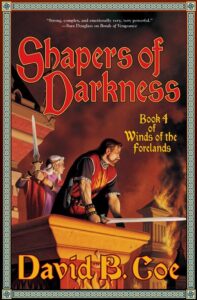 I am currently reading through my Winds of the Forelands series, editing OCR scans of the books in order to re-release them sometime in the near future. Winds of the Forelands was my second series, a sprawling epic fantasy with a complex, dynamic narrative of braided plot lines. At the time I wrote the series (2000-2006) I worked hard to make each volume as coherent and concise as possible. Looking back on the books now, I see that I was only partially successful. I’m doing a light edit right now — I’m only tightening up my prose. The structural flaws in the series will remain. They are part of the story I wrote, and an accurate reflection of my writing at the time. And the fact is, the books are pretty darn good.
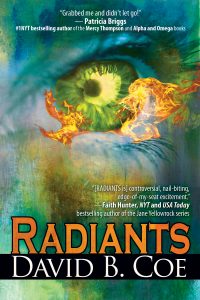 But when I hold Winds of the Forelands up beside the Radiants books, or the Chalice War novels, or even my Islevale Cycle, which is my most recent foray into big epic fantasy, the older story suffers for the comparison. There are so many scenes and passages in WOTF that I could cut without costing myself much at all. The essence of the storyline would remain, and the reading experience would likely be smoother and quicker. — Sigh — So be it.
 With this in mind, I thought it might be helpful to list a few things I learned, reminded myself of, and/or tried to do differently while writing my
 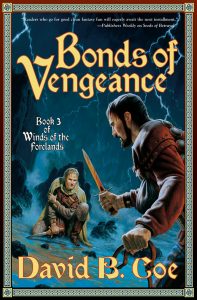 I’ve been thinking of this a lot recently because I am in the process — finally! — of reissuing my Winds of the Forelands series, which has been out of print for several years. The books are currently being scanned digitally (they are old enough that I never had digital files of the final — copy edited and proofed — versions of the books) and once that process is done, I will edit and polish them and find some way to put them out into the world again.
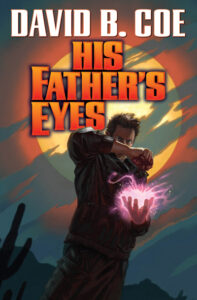 I feel that way about the second and third books in my Case Files of Justis Fearsson series, His Father’s Eyes and Shadow’s Blade. These books are easily as good as the best Thieftaker books, but the Fearsson series, for whatever reason, never took off the way Thieftaker did. Hence, few people know about the Fearsson books, and it’s a shame, because these two volumes especially include some of the best writing I’ve ever done.
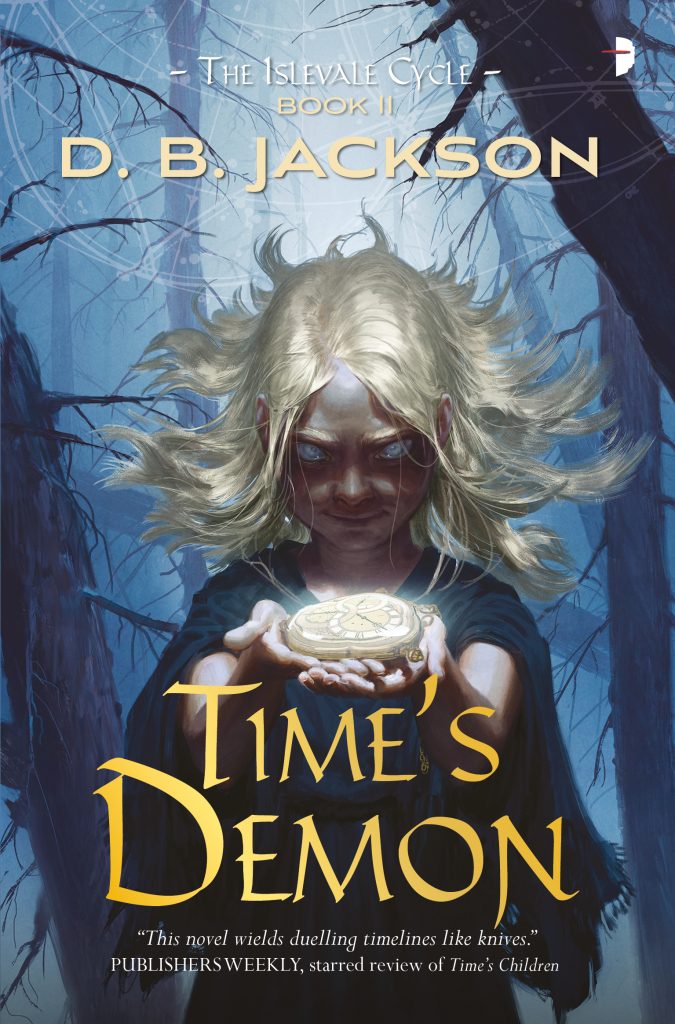
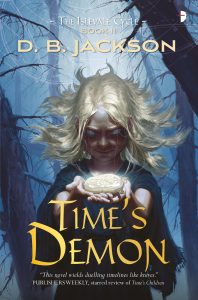
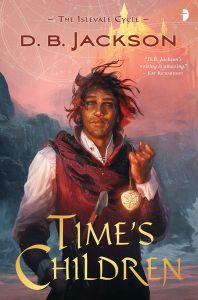 Same with the Islevale Cycle trilogy. Time’s Children is the best reviewed book I’ve written, and Time’s Demon and Time’s Assassin build on the work I did in that first volume. But the books did poorly commercially because the series got lost in a complete reshuffling of the management and staffing of the company that published the first two installments. The series died before it ever had a chance to succeed. Which is a shame, because the world building I did for Islevale is my best by a country mile, and the plotting is the most ambitious and complex I ever attempted. Those three novels are certainly among my very favorites.
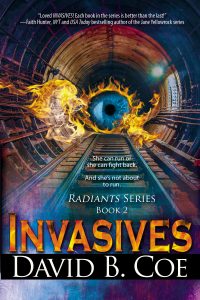 But of all the novels I have published thus far, my favorite is Invasives, the second Radiants book. As I have mentioned here before, Invasives saved me. This was the book I was writing when our older daughter received her cancer diagnosis. I briefly shelved the project, thinking I couldn’t possible write while in the midst of that crisis. I soon realized, however, that I HAD to write, that writing would keep me centered and sane. I believe pouring all my emotional energy into the book explains why Invasives contains far and away the best character work I have ever done. It’s also paced better than any book I’ve written. It is simply my best.
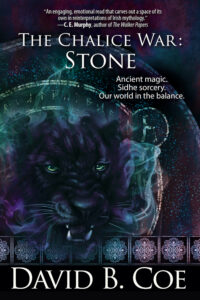
 My “What matters?” series of posts will conclude next Monday, after a Monday Musings post this week that straddled the personal and professional a bit more than usual. In the meantime, I am using today’s Professional Wednesday post to begin pivoting toward the impending release of my new series, a contemporary urban fantasy that delves deeply into Celtic mythology. The series is called The Chalice War, and the first book is The Chalice War: Stone. It will be released within the next month or so, and will be followed soon after by the second book, The Chalice War: Cauldron, and the finale, The Chalice War: Sword.
 I finished the book and showed it to my agent. She liked it a lot, but thought it needed work. She was right, of course. But by that time, I had signed the contracts for Robin Hood and the Thieftaker books. Not too long after, I finally sold the Fearsson series to Baen Books and so had that trilogy to get through.
 But I never forgot my Celtic urban fantasy, or its heroes Marti and Kel. When I had some spare time, I went back and rewrote the book, incorporating revision notes from friends and from my agent with my own sense of what the book needed. I rewrote it a second time a couple of years later, and having some time, started work on a second volume, this one set in Australia (where my family and I lived in 2005-2006). I stalled out on that book about two-thirds of the way in, but I liked what I had. By then, though, I was deeply involved with the final Thieftaker books and the Fearsson series. And I was starting to have some ideas for what would become the Islevale trilogy.
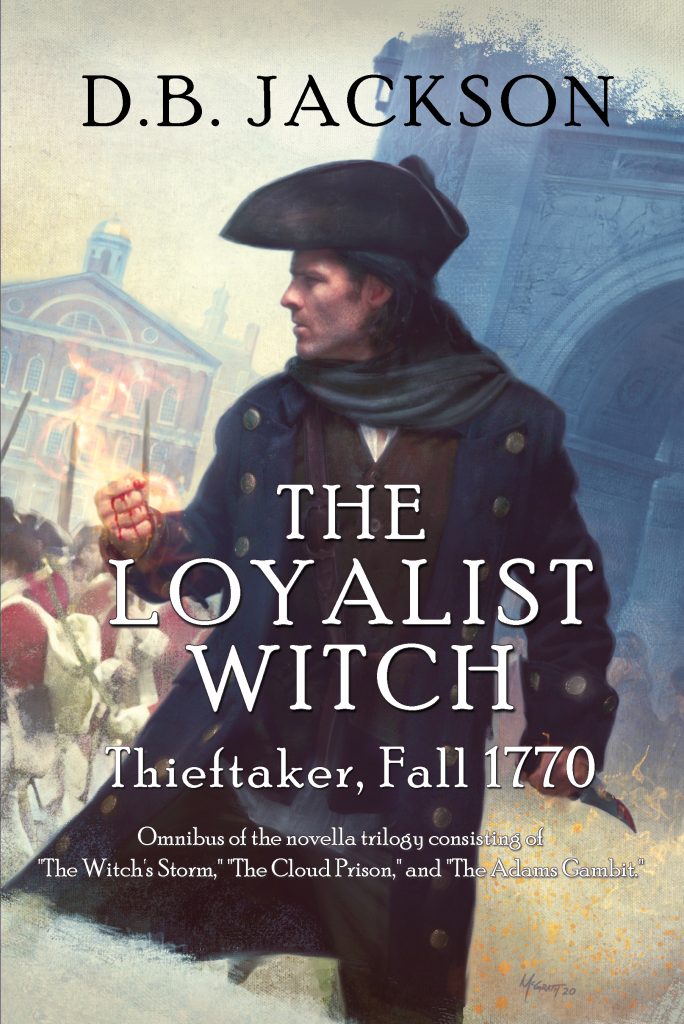 What are you giving for the holidays?
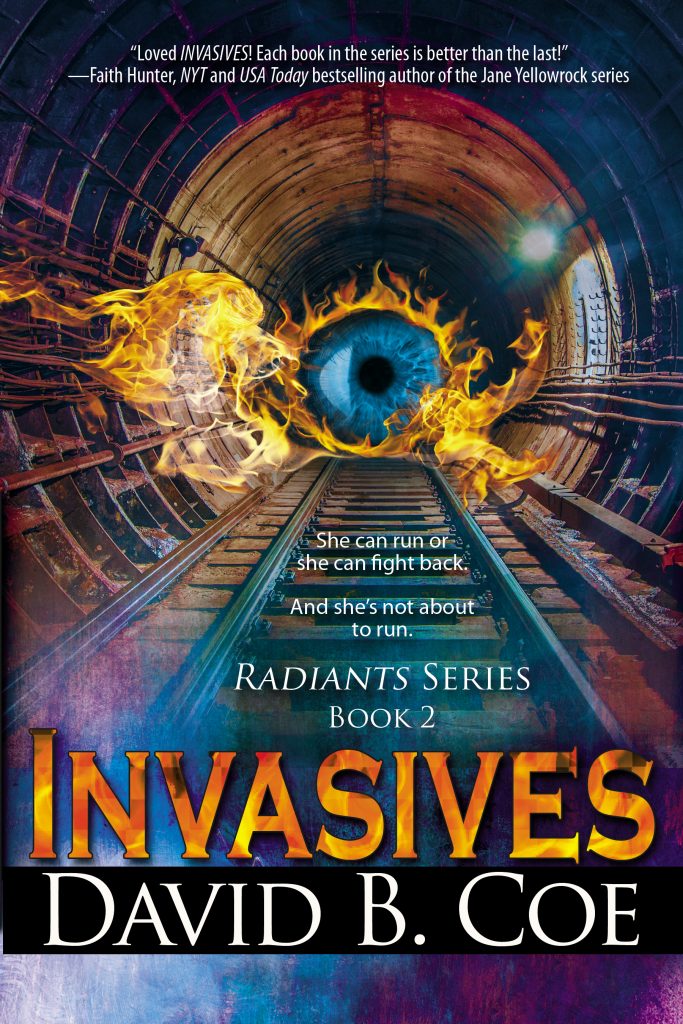 May I suggest a book, or several books?
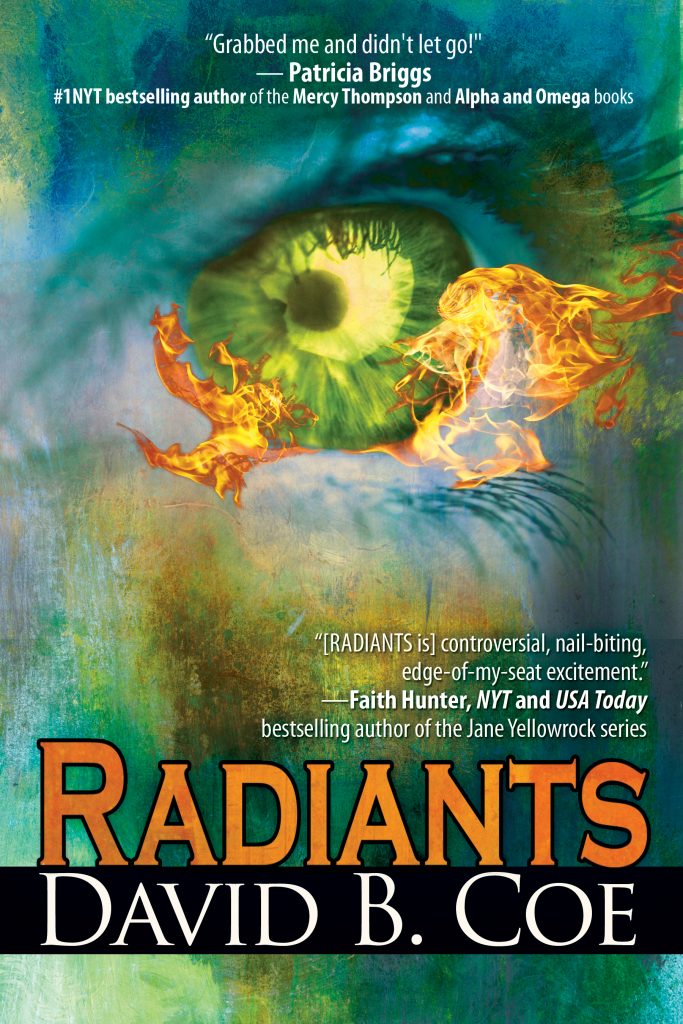 Yes, I know, this probably seems a little crass. But here’s the thing: Creators like me make our livings off the sale of our creations. It really is that simple. If our books (or music or art or whatever) don’t sell, we don’t earn.
 Now, many of you are probably saying at this point that you have already bought my books and, I hope, read and enjoyed them. That’s wonderful. Thank you. Truly.
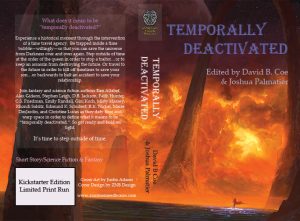
 Around that same time, I was also reading submissions for the Temporally Deactivated anthology, my first co-editing venture. Last year I opened my freelance editing business, and a year ago at this time, I was editing a manuscript for a client.
 Last week, I wrote about planning out my professional activities for the coming year. This week, I want to discuss a different element of professional planning. My point in starting off with a list of those projects from past years is that just about every year, I try to take on a new challenge, something I’ve never attempted before. I didn’t start off doing this consciously — I didn’t say to myself, “I’m going to start doing something new each year, just to shake things up.” It just sort of happened.
 As it turns out, these new challenges have brought me to a place where I can say, in all candor, that I have never been happier in my work than I am now. Each time I try something new, I reinvigorate myself as a creator. I force myself out of the tried-and-true, the comfortable. With each of the new projects I mentioned above I had a moment of doubt. I wondered if I was capable of accomplishing what I set out to do. Now, I’m a pretty confident guy when it comes to my writing chops and my ability to help others improve their writing, so those doubts didn’t last long. But they were there each time.