








Not so very long ago, I wrote a post on some of my favorite things. I thought I would follow up on that with a post about a few things I love that I consider “hidden gems,” things I have found along the way with which a large number of people might not be familiar.
So buckle in and enjoy a brief spin through the backwaters of my artistic and entertainment tastes.
Hidden Gem novels: I have a couple of recommendations in this regard, as it happens, both of them by people I know. The first series comes from fantasy author Lynn Flewelling. Her Tamir Trilogy (The Bone Doll’s Twin, Hidden Warrior, and The Oracle’s Queen) is one I have recommended before, but I love, love, love it, and I think others will as well. It is haunting, thrilling, and romantic, but it also bends our expectations when it comes to gender and the roles imposed upon girls and women. Brilliant stuff.
I also love C.E. Murphy’s Negotiator Trilogy (Heart of Stone, House of Cards, Hands of Flame). These are urban fantasies set in New York City, but they are unlike any UF I’ve read before or since. They’re exciting and romantic (yes, I admit it: I like romantic plots), with a magical element that is utterly fascinating and entirely captivating. I love these books.
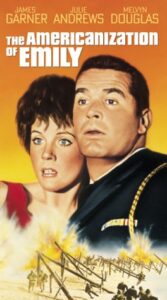 Hidden Gem movies: Two entries here, too, both of them idiosyncratic. But that’s the point, right? The first is a film from 1964 called The Americanization of Emily. It is a war movie set during World War II, but it will turn your expectations upside down as it rejects normal images of heroism and wartime valor. The cast is great — Julie Andrews in the title role is terrific. She’s worldly, sassy, and a long, long way from Mary Poppins and Fräulein Maria. James Garner, a favorite of mine, is her love interest, and is not at all the usual romantic lead. James Coburn and Melvyn Douglas are strong in supporting roles.
The second film is 1992’s Passion Fish, starring Mary McDonnell, Alfre Woodard, David Strathairn, and Angela Bassett. Written and directed by John Sayles, Passion Fish tells the story of a spoiled soap opera star who is paralyzed in a car wreck and returns to her childhood home in the bayou, intent on drinking her way into an early grave. What she discovers at home changes her life. It sounds hokey and depressing. It’s neither. Trust me on this. It’s wonderful, and the performances are phenomenal.
Hidden Gem music: I’m a big fan of acoustic instrumental music and I have a couple of recommendations along these lines. The first is an album I know I have mentioned on this blog before, but it’s been some time. The album is called Skip, Hop, and Wobble. The musicians are Jerry Douglas on dobro, Russ Barenberg on guitar, and Edgar Meyer on stand-up bass. The music is bluegrass inspired, but it has little of the twang that some object to in bluegrass. Rather, the tunes are by turns lyrical, humorous, and toe-tapping. I have a lot of bluegrass, a lot of instrumental music. This album is unique. I can think of nothing else like it.
The second album I would classify as Scottish folk music. Some might call it Celtic, but I tend to think of Celtic music as specifically Irish. Tomato, to-mah-to. Anyway, the album is called Highlander’s Farewell, and it features Alasdair Fraser on fiddle and Natalie Haas on cello. The music is evocative and gorgeous. You’ll feel like you’ve been transported to Scotland.
Finally, a third recommendation. Alison Brown is an amazing crossover musician. She plays banjo and has been a session player for bluegrass stars like Chris Thile and Alison Krauss. But she also has a band of her own, the Alison Brown Quartet, which includes her husband, bass player Garry West. They play an amazing form of bluegrass-jazz that is completely addicting. I recommend you start with the album Replay.
Hidden Gem TV: Many of you know I am a huge fan of Aaron Sorkin’s The West Wing, and many of you share that passion. Before he started work on that classic, though, he was show-runner for a short-lived series called Sports Night. It’s about a late-night sports show similar to ESPN’s Sports Center, but for a third-place network. Like all of Sorkin’s shows Sports Night is funny, poignant, intelligent, and filled with marvelous dialogue and terrific acting. It aired on ABC, and they didn’t know what to do with it. They marketed it as a romantic comedy and even added a laugh-track, which is really too bad. It was far too smart a show for the network, and they managed to kill it in two seasons. But those seasons are great, and you can find it on one of the streaming services. Easy to binge, and so, so good.
And with that, I will stop, although I reserve the right to return to this theme in future posts.
In the meantime, have a great week!
 Confession #1: I play Bejeweled Blitz on my phone. I play it a lot, and I have been addicted to it for years. I have enough gold bars and coins piled up to make Warren Buffett envious. I have so many free gems wracked up that I could play for weeks straight, without pausing for meals or sleep, and never have to pay for a gem with any of those hoarded coins. It’s a bit of a sickness, actually. But I do enjoy it.
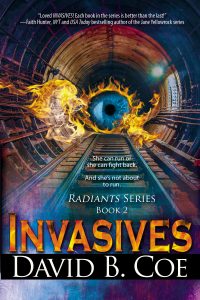 The bias against genre fiction (fantasy, science fiction, mystery, Westerns, romance, etc.) among those who consider themselves devotees of “true” literature, is something I have encountered again and again throughout my career. Not surprisingly, I don’t believe it has any basis in reality. Fantasy (to address my speciality) like literary fiction, runs the gamut in terms of quality. One can find in all literary fields examples of brilliance and also of mediocrity. No genre has a monopoly on either. I write fantasy because I enjoy it, because I love to imbue my stories with magic, with phenomena I don’t encounter in my everyday life. I wasn’t shunted to this genre because I wasn’t good enough to write the other stuff. I don’t hide in my genre because I fear I can’t cut it in the world of “real” literature.
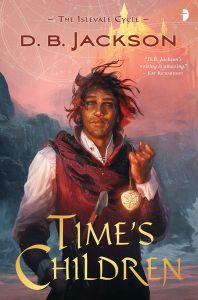 It’s not enough to create my worlds and magic systems. I have to explain them to my readers in a manner that is entirely natural and unobtrusive. And — my own preference — I also have to complete my stories and my character arcs in ways that utilize my fantasy elements without allowing them to take over my story telling. My heroes may possess magic, but in the end, I will always choose to have them prevail by drawing upon their native human qualities — their courage and resolve, their intelligence and creativity, their devotion to the people and places they love. Magic sets them apart and makes them interesting. It is often the hook the draws readers to my books. But those human attributes — those are the ones my real-world readers relate to. They form the bond between my readers and my characters. And so if those are the qualities that allow my characters to prevail in the end, then their triumphs will feel more personal and rewarding to my readers. It is the simplest sort of literary math.
 And so those who trust the Covid science will remain safer than those who don’t. Those who keep up with vaccinations and boosters will get sick less often and less severely. They will die in far smaller numbers and spend far less time in the hospital. The numbers are dramatic and indisputable. Sadly, but predictably, living with Covid means accepting an ever widening gap in the rates of infection and in case outcomes between those who ignore the advice of medical professionals and those who follow it. It means accepting that some social and economic disruptions will be unavoidable. One-third of the people in this country are unwilling to protect themselves and their families. There are bound to be consequences for this.
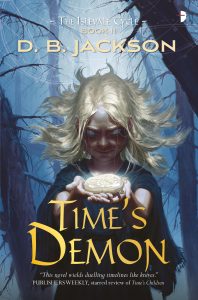
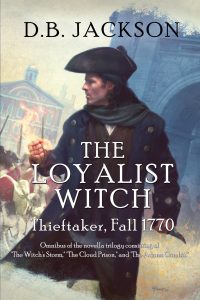 But at the very least, we need to see our main heroes grappling with what they have endured and setting their sights on what is next for them. We don’t need this for every character but we need it for the key ones. Ask yourself, “whose book is this?” For me, this is sometimes quite clear. With the Thieftaker books, every story is Ethan’s. And so I let my readers see Ethan settling back into life with Kannice and making a new, fragile peace with Sephira, or something like that. With other projects, though, “Whose book is this?” can be more complicated. In the Islevale books — my time travel/epic fantasy trilogy — I needed to tie off the loose ends of several plot threads: Tobias and Mara, Droë, and a few others. Each had their “Louis” moment at the end of the last book, and also some sense of closure at the ends of the first two volumes.
 Why do I do this? Why am I suggesting you do it, too? Because while we are telling stories, our books are about more than plot, more than action and intrigue and suspense. Our books are about people. Not humans, necessarily, but people certainly. If we do our jobs as writers, our readers will be absorbed by our narratives, but more importantly, they will become attached to our characters. And they will want to see more than just the big moment when those characters prevail (or not). They will want to see a bit of what comes after.
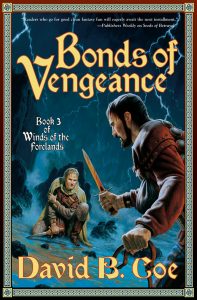 Honestly, I think “trust yourself” is good advice for life in general, but for me, with respect to writing, it has a specific implication. It’s something I heard a lot from my first editor when I was working on my earliest series — the LonTobyn Chronicle and Winds of the Forelands.
 You won’t get your best ideas sitting at your desk. You’ll get them in the shower. Or, when you’re driving your car, or taking a walk on a snowy day.
 It’s happened to all of us. It happened to me writing my new book, Demon Kissed, and the next two in The Summoner’s Mark trilogy, coming from
 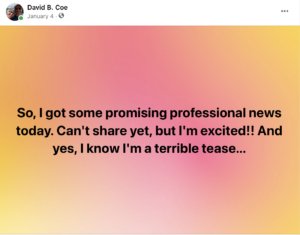 Nearly two months ago, early in the new year, I posted on social media that I had some exciting professional news I couldn’t share quite yet. I was thrilled, and wanted to let people know. But I also didn’t want to say anything before all the details had been settled. So I posted my little teaser, forgetting the one immutable rule of the publishing business: Things always happen slower than one thinks they will.