








This past week, I spent a good deal of time going through old magazines and books in my office trying to clear out some of the clutter. (More on that in Wednesday’s post.)
For years, I have subscribed to a nature photography magazine. Yes, it’s an actual paper magazine — I get an issue every month, and invariably each includes beautiful, glossy photographs — landscapes, portraits of wildlife, macro shots of plants or creatures — articles about different ways I might improve my craft (if only I had all the time in the world to devote to my cameras and lenses), and lots of advertisements for lots of equipment I can’t afford and don’t need. I look forward to every issue.
But one issue published a year or so ago had an article from a photographer who was trying to give advice to aspiring and amateur photographers about how they/we should deal with the pandemic. Since travel was hard just then, he said, we should concentrate on local sites, places we probably overlook on a day-to-day basis, but which might be beautiful in their own right, and thus might be worthy subjects for our next photographic outings. Great advice.
Except his example, based on where he lived, was Capitol Reef National Park, in Utah’s magnificent red rock country. THAT’S where he was going to take photos as a consolation for not being able to travel due to Covid restrictions. That’s a little like telling someone that since they can’t eat out in restaurants, they should settle for a home-cooked meal, like you do. And then revealing that your partner is a 3-star Michelin chef . . .
I somehow missed this article when the issue first appeared, and so got a good laugh out of it the other day.
But then I started thinking that for many people reading the advice I offer to budding writers, I might come off as equally out of touch.
Let me be clear. I don’t think ill of this writer, and I’m not sitting here thinking all the readers of my blog posts think ill of me. But I do think that for those of us who have achieved some success in a given field, it is often too easy to dispense advice, no matter how well-meaning, no matter how grounded in lived experience. I can suggest that writers experiment with this approach, or rethink that old habit, but the fact is sometimes the advice I give demands a commitment of time, or a certain amount of creative risk. And those sorts of practices are much easier for me to try than they might be for someone who doesn’t have a publishing history or a current contract for a book or trilogy.
Put another way, on some level I can’t help but write from a place of privilege and good fortune, and that may, at times, make me blind to the subtext of my advice and recommendations. So consider this a blanket apology for every time in the past I have given writing advice that I think sounds easy and basic, but that comes across as lacking in understanding or empathy for the experiences of writers at other levels. And consider it as well an apology for every time in the future when I do this again. Because I’m sure I will.
Don’t think for a moment I don’t know just how lucky I am to do what I do. And if in my eagerness to share advice or experience with you, I come across as clueless . . . well, as Nancy and the girls will tell you, it’s because sometimes I AM pretty clueless. But I love what I do. Twenty-five years-plus into this career, I still can’t quite believe I get to make up stories for a living. And I want that for others who have the same dreams I did when I typed “Chapter One” for the very first time.
I should also say that most of the advice I give in my writing posts is stuff I needed to hear in the early years of my career. I highlight mistakes I either used to make or still struggle with to this day. Sometimes I tell you to do things I am currently trying to make myself do. The wonderful thing about writing is that we can always improve. And the frustrating thing about writing is that we always need desperately to improve. We can start writing as young children and continue well into our dotage and still not learn all we need to about this magical craft.
And so I hope you will consider that when I offer advice and lessons on writing, I am there learning and striving right alongside you. Because I am certain I have yet to master beyond the capacity for further improvement any skill or practice about which I’ve written. We are, all of us, students of the written word, and we are still matriculating. How glorious is that?
Have a great week.
 After publishing
 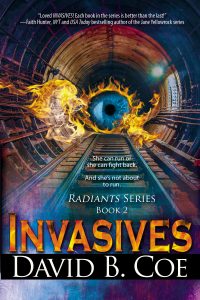 And when it comes to writing, I am in something of a rut. The last novel-length piece I wrote beginning to end was Invasives, the second Radiants book, which I completed (the first draft at least) eleven months ago. Eleven months!
 Mostly, as I say, I’ve been editing. My work. Other people’s work. The Noir anthology. I’ve been plenty busy, but I have not been as productive creatively as I would like. And I wonder if this is because of
 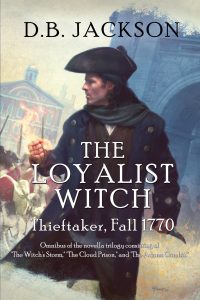 But at the very least, we need to see our main heroes grappling with what they have endured and setting their sights on what is next for them. We don’t need this for every character but we need it for the key ones. Ask yourself, “whose book is this?” For me, this is sometimes quite clear. With the Thieftaker books, every story is Ethan’s. And so I let my readers see Ethan settling back into life with Kannice and making a new, fragile peace with Sephira, or something like that. With other projects, though, “Whose book is this?” can be more complicated. In the Islevale books — my time travel/epic fantasy trilogy — I needed to tie off the loose ends of several plot threads: Tobias and Mara, Droë, and a few others. Each had their “Louis” moment at the end of the last book, and also some sense of closure at the ends of the first two volumes.
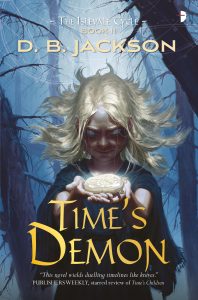 Why do I do this? Why am I suggesting you do it, too? Because while we are telling stories, our books are about more than plot, more than action and intrigue and suspense. Our books are about people. Not humans, necessarily, but people certainly. If we do our jobs as writers, our readers will be absorbed by our narratives, but more importantly, they will become attached to our characters. And they will want to see more than just the big moment when those characters prevail (or not). They will want to see a bit of what comes after.
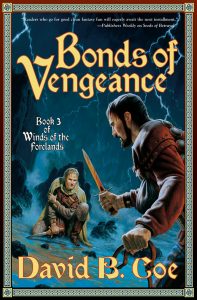 Honestly, I think “trust yourself” is good advice for life in general, but for me, with respect to writing, it has a specific implication. It’s something I heard a lot from my first editor when I was working on my earliest series — the LonTobyn Chronicle and Winds of the Forelands.
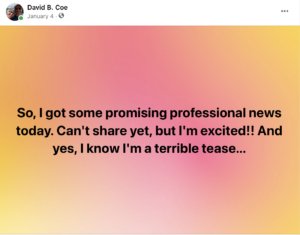 Nearly two months ago, early in the new year, I posted on social media that I had some exciting professional news I couldn’t share quite yet. I was thrilled, and wanted to let people know. But I also didn’t want to say anything before all the details had been settled. So I posted my little teaser, forgetting the one immutable rule of the publishing business: Things always happen slower than one thinks they will.
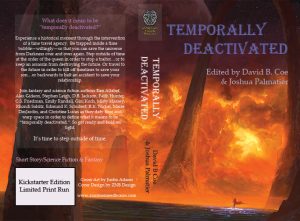 Since writing it, though, I have become sort of fixated on the idea. I am editing my fourth anthology, and already looking at the possibility of editing another. My freelance editing business is attracting a steady stream of clients — I’m booked through the spring and have had inquiries for slots later in the year.
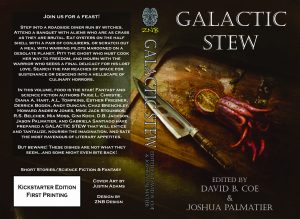 I am not an acquiring editor. I do decide, along with my co-editor, whose stories will be in the anthologies I edit, so I suppose in that way I am determining the fate of submissions and, in a sense, “buying” manuscripts. But, for now at least, I don’t make decisions about the fate of novels, and so I don’t have to go toe-to-toe with agents. Good thing. They scare me. (Looking at you, Lucienne Diver.)
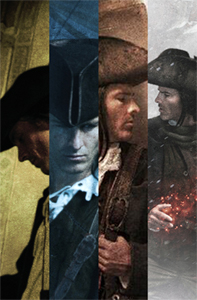 I am not the most talented writer I know. Not by a long shot. I am good. I believe that. My character work is strong. My world building is imaginative. My prose is clean and tight and it flows nicely. I write convincing, effective dialogue and I have a fine eye for detail. My plotting and pacing, which were once just okay, have gotten stronger over the years. I think writing the Thieftaker books — being forced to blend my fictional plots with real historical events — forced me to improve, and that improvement has shown up in the narratives of the Islevale and Radiants books.
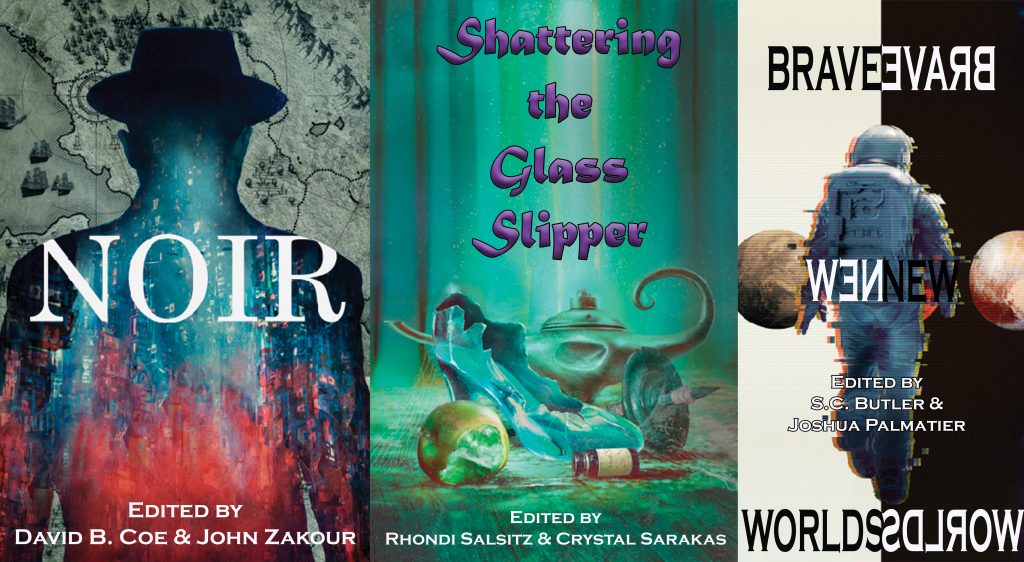 As many of you know, I am once again co-editing an anthology for