








I have a very good friend, also a writer, with whom I often discuss the depressing state of the writing world at this point in history. We have a sort of gallows humor about the whole thing — a lot of joking comments about low pay, the dearth of readers, the way New York publishing has basically lost interest in the midlist author, and the generally low quality of self-published works that we encounter when we dare to dip our toes into those murky waters. (No slight intended to anyone — seriously, if you are self-published, please don’t tell me that I have insulted you. There are good self-published books out there. But let’s be honest: The self-pubbed gems tend to be overwhelmed by the dross. Too many self-published books have had no serious editing or proofing, leaving them overlong and filled with errors that might easily have been avoided.)
Writers starting today face formidable obstacles that did not exist when I began my career (you know, back in the day when we carved novels into stone tablets….). There are more wannabe writers hawking their wares on various online platforms now than there have ever been. The democratization of publishing technology has convinced many that they can be professionals simply by writing something, slapping it into the appropriate app, and putting it up for sale. Again, some of those books might be very good, but none of them have had to make their way through any vetting process. I am a dedicated amateur photographer, and I am pretty good. I have even sold some of my work and had images published. But I am not truly a professional. I know professionals. Most of them are far, far better than I am. But I have access to digital photo equipment that has helped me elevate my skill. I have access to printing services that make my photos look professional. I have even put together a book of my work that looks like any other coffee table photography book. In short, I have benefited from the same sort of democratization in photography that I am describing with respect to publishing, even though I KNOW that I am not nearly as good a photographer as most professionals.
So, anyway, that is one obstacle: The sheer number of authors out there these days, competing for the attention of an ever-shrinking pool of potential readers.
Why ever-shrinking? That’s obstacle number two. I actually think the absolute number of devoted readers has remained roughly the same over the course of the past, say, fifty years. But if that number is remaining relatively static while the population grows, and while the number of would-be authors grows… well, you do the math.
The third obstacle I mentioned above: New York publishing — a moniker used to refer to what some might call legacy publishing — basically means the publishing houses that have dominated the industry for so long: Alfred A. Knopf, Random House, Saint Martins (which includes my old publisher, Tor Books), and other such behemoths. When I started writing, these big publishing houses were still (mostly) independently owned. They ran their businesses with at least some sense of the mission of their founders. They understood that publishing was not simply another profit-maker. The success of big-name authors allowed these houses to nurture the careers of beginning writers, and of those in the so-called midlist who had solid readership but who were probably never going to break into the ranks of those bestsellers. (And allow me to say here that legacy publishing was far from an idyllic business world. Yes, it supported authors in a range of sales categories. But the vast, vast majority of its authors were male and White.) Around the turn of the millennium, New York publishing began to consolidate. Mergers and buyouts disrupted that old model, and when the dust settled, many of the remaining publishing houses were subsidiaries of larger corporations that had no interest in sustaining the careers of authors who didn’t sell all that well. They still gave contracts to the big names, and they still gave contracts to young writers who showed promise, but they had little patience if those young voices didn’t catch on quickly, and they stopped maintaining the midlist pretty much entirely.
 The publishers also squeezed out a lot of editors, feeling that editing was a luxury, and an expensive one at that. “Look at all those self-published titles selling online,” they said. “They’re not edited, and their readers don’t seem to care. Why should we spend so much when most readers just aren’t that discerning?” My editor at the start of my career was, to put it mildly, a problematic character. He was difficult to work with, unreliable, and slow. And eventually, he was fired for cause. And yet, I learned a ton from him. He taught me about the business. He taught me to be a much, much better writer, simply by working with me to improve my craft. I would be lying if I didn’t admit that I owe much of my career to his peculiar brand of wisdom. Young writers need that sort of mentorship. And in today’s world, few of them get it.
I should also say (in a post that is already lengthy) that today’s young writers also have to compete with a faceless, soulless technology that can produce passable stories at virtually no cost, in virtually no time. How the hell are human authors supposed to compete with that? Yes, AI generated characters and stories are not very good (yet). But again, many readers have come to accept mediocrity as entertainment, so long as it has a plot and serviceable characters. It may not be great, but it will divert my attention for a little while.
And all around us, civilization collapses….
 That brings me to the larger point of this post. Last year, at ConCarolinas, I was given the Polaris Award, in large part for the mentoring of young writers I have done, and continue to do. Right now, I have no fewer than half a dozen writers who consider me a mentor. Over the course of my career, that number is far, far higher. I benefited from the wisdom of many established authors when first I began my career. I have always felt that it was my duty, and also my privilege, to offer the same guidance to those coming up after me. I love mentoring.
But in recent years, I have come to wonder how I can offer encouragement to young writers knowing how difficult a path they face in this profession. I have discussed this at length with the friend I mentioned at the beginning of this post. He feels much the same way, and yet he continues to mentor, too. Why do we do this?
At the risk of speaking on his behalf…. We do everything in our power not to mislead our mentees. We tell them all that I have said in this post about the state of the publishing world. We try to make certain that they understand fully the challenges laid before them. We make sure they know that there are many easier careers available to them, all of them more lucrative. But the truthis, this litany of obstacles usually does little to dissuade them. Which also begs that simple question: Why?
I believe the answer is the same for those seeking mentorship as it is for those of us who mentor. And I find hope in that answer. Storytelling is fundamental to being human. So is the act of receiving stories. Yes, that explains the glutting of the marketplace. But it also explains why so many of us continue to write for a world that seems less and less interested in the tales we create. Many of my friends who are writers tell me that they can’t not write. Writing is an imperative. It is as fundamental to their (our) being as breathing, eating, sleeping. This has been true for me for as long as I can remember. And it is also true for those seeking mentorship today. Just as reading (or listening to books and stories) is essential to those who still seek out books at cons and in bookstores. I have said repeatedly in this post that many readers are not all that discerning. They will accept stories that are just so-so in the absense of anything else. But I also believe that when they encounter a story written with passion and elegance, they recognize it, and they celebrate it.
This is a difficult time for the arts — not just writing, but also music, photography, painting, theater, dance, etc. Our digital world competes with those endeavors for our time, our ears and eyes, our money. And with the digital in our palms all the time, it has a huge advantage. And yet, new creators, with new creations, emerge from obscurity every day. Because at an elemental level, we yearn for art, for story and narrative, for beauty. These things are part of what make us human. I refuse to believe that they won’t remain so for generations to come.
Have a great week.
 And in part, this is the fault of professionals like me, who talk about our work habits and, perhaps, create unrealistic expectations that writers with less experience then apply to themselves. I write full time. I demand of myself that I write 2,000 words per day. I am asked often how long it takes me to write a book, and the honest answer is that it takes me about three months, which is pretty quick, I know. Writers who are at the outsets of their careers should not necessarily expect to do the same.
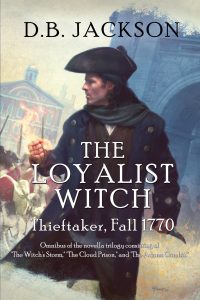
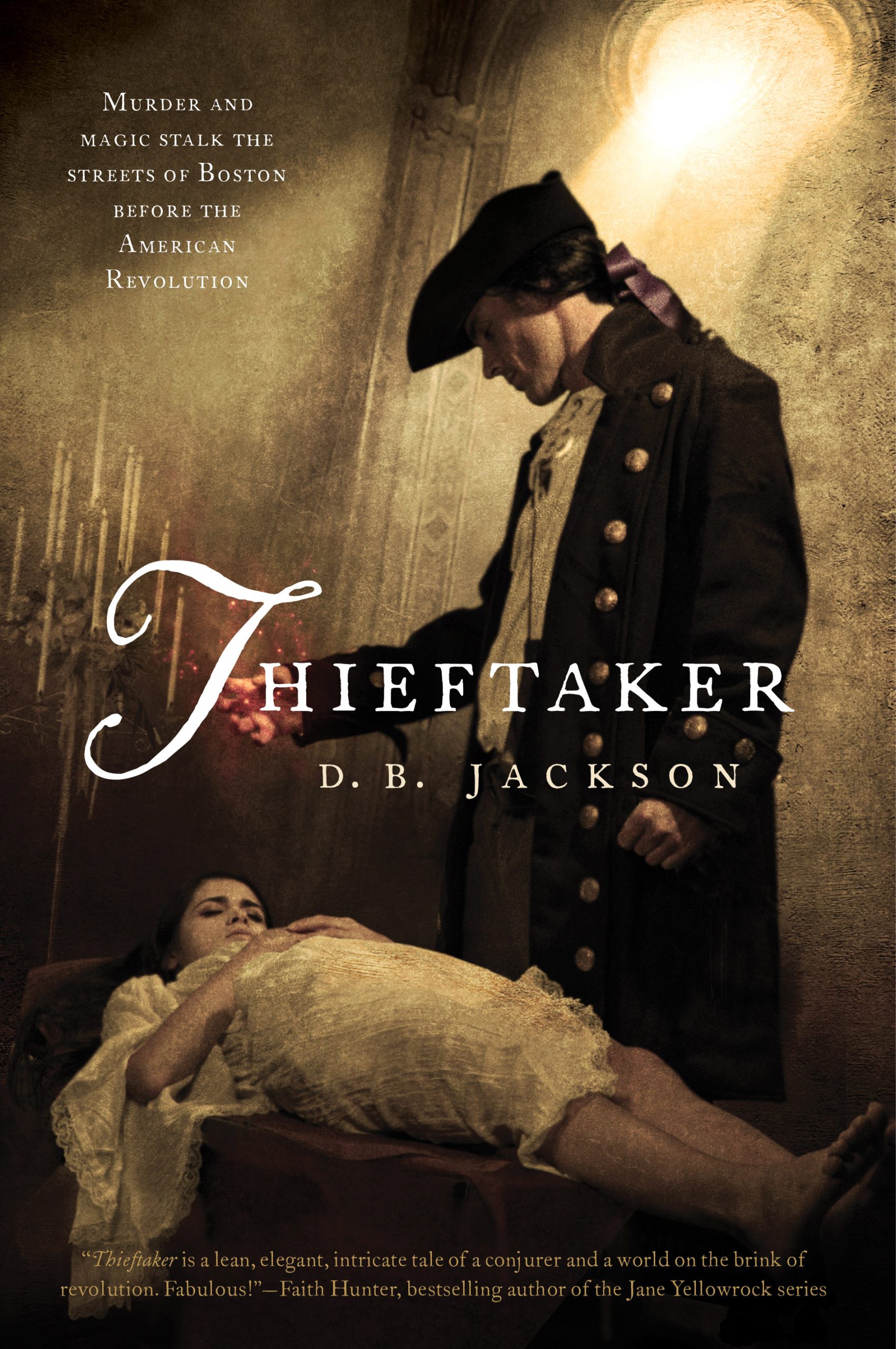
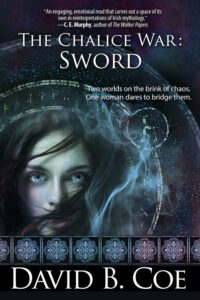 We’ll begin with the assumption that the book we’re writing will come in at around 100,000 words, which is the approximate length of most of the Thieftaker books, the Chalice War books, and the Fearsson books. Epic fantasies tend to be somewhat longer; YAs tend to be shorter. But 100K is a good middle ground.
 Feeling more ambitious? Say we can write for ninety minutes each weekday, and can manage to average 500 words a day, while taking our weekends off to recharge. Well, now we’re writing 2,500 words per week, and that novel will be done in less than nine months. Willing to write on weekends, too? Now we’re down to seven months.
 What about the rest of my life? What’s next in other realms?
 I also know that what has been a quiet year thus far is about to get very, very busy. Starting in May, we (
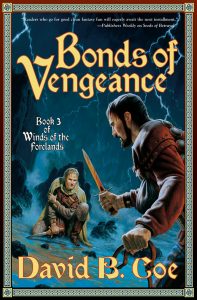 I have two other projects underway as well. A nonfiction thing that I am not ready to discuss in detail, and, at long last, the editing of the Winds of the Forelands books for re-release in late 2023 or early 2024. And I have another writing project — a collaborative undertaking — that I also cannot describe in detail, simply because I am not the organizing force behind the project, so it is not mine to reveal. But I am excited about it.
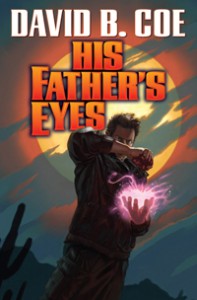
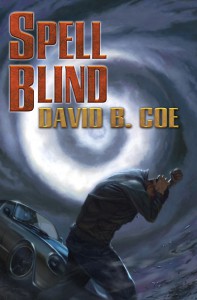 About seven years ago, I received out of the blue, an email from the actor Bronson Pinchot, who is probably best known for playing the role of “Balki” in the sitcom Perfect Strangers. He was, by then, enjoying a successful career as a voice actor, and he was writing to me because he was about to return to the studio to begin recording his reading of the second Justis Fearsson book, His Father’s Eyes. He wanted to know what I had thought of his treatment of the first book in the series, Spell Blind, and if there were things I wanted him to do differently with the second book.
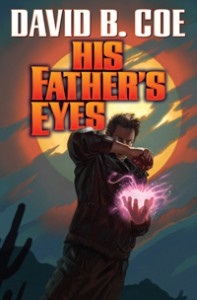 I was thrilled to get the email, and also impressed by the care he was taking with my books. But I wasn’t really able to give him the feedback he was after. “I have heard great things about your performance from friends, as well as from online reviews,” I told him. “I’ve listened to the sample on the Audible site and very much like your take on the character’s voice. The truth is, though, I am incapable of listening to others read my work. It has nothing to do with your performance, or any one else’s, for that matter, and everything to do with hearing the flaws in my own writing, which I find excruciating.”
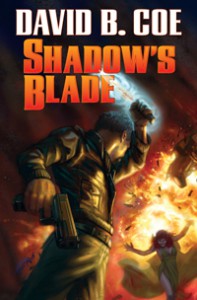 As it happens, I have from Audible the MP3 CD of the third and final book in the original trilogy, Shadow’s Blade. Since I also had in my immediate future two seven-hour drives, I thought I would go ahead and listen to the book. How bad could it be, right? Even if I hated what I heard (to reiterate, I wasn’t worried about Pinchot’s performance, but rather my writing), I could take solace in knowing that I was now seven years and at least eight novels more experienced than I was when I wrote the book.
 When I am not in these panels, I will be at my table in Author’s Alley, signing and selling books. I also plan to have with me some of