








 Today is the 22nd of January. It’s been exactly three months since our older daughter passed away.
I didn’t used to care about the 22nd of any month (my apologies to those with a birthday on one 22nd or another — nothing personal). Now, I can’t help but notice every one.
I have a head for dates. Maybe it’s a byproduct of having been trained as a historian; I don’t know. Many, many years ago, on a June 5th in the 1980s, I think, my father told me that day was the anniversary of his first date with my mom. I have remembered this ever since, and on that day, I find myself thinking of them, of how cute they were together, of the different silly ways they expressed their love.
Some in our family have made things a little easier in the date-remembering regard. My grandmother on my father’s side, who adored my mother 99% of the time, died on my mom’s birthday. Coincidence? Perhaps. A final act of passive aggression from a mother-in-law? Also possible. And so maybe it wasn’t all that surprising that my mother died on the birthday of my brother’s wife, whom she adored. Yeah, that coincidence thing is looking a little less likely now, isn’t it . . . ?
I know — I’m bouncing all over in this post. I started off with a very somber remembrance of my lost, beloved daughter, and now I’m cracking wise about mothers-in-law. Grief and humor. To my mind, we can’t survive the former without the latter. And, the fact is, speaking as a creator, while death is often tragic, it can also be a wonderful source for cathartic humor. Have you ever seen the Chuckles-the-Clown funeral episode of The Mary Tyler Moore Show? If not, do yourself a favor and watch it. Brilliant stuff.
As I said before, I have a mind for dates. But we also live in a society that remembers. December 7, 1941. November 22, 1963. September 11, 2001. Specific dates insinuate themselves into our lives, taking on significance in a variety of ways. Birthdays of family and friends, wedding anniversaries, days of loss, days of joy. I made the mistake once, when setting up my LinkedIn account, of choosing a date on which I began my writing career. I don’t know if it’s the right one. The site asked, I remembered the month and year, and so I threw in a day. Now, I get flooded with work anniversary notifications from LinkedIn on a date that has absolutely no significance for me.
At times, if, say, I’m on a highway and I see an accident by the side of the road, I can’t help but think that, for the people involved, this will forever after be “the day of the accident.” A weird way of thinking, I suppose. It’s my writer brain. There is a story there, a spiral leading to the crash, and then continuing beyond it into the aftermath. The accident might have been the result of random chance occurrences, but we are creatures of narrative, and it’s quite possible that in the minds of the accident victims, those random occurrences will, in hindsight, rightly or wrongly, be seen as a storyline of interconnected events.
Sometimes events become confused by perspective. I remember the day (and time) on which Alex informed us of her cancer diagnosis. But she actually needed a couple of days after that fateful conversation with her oncologist before she could tell Nancy and me. So the actual date of the diagnosis itself is not the day I remember. It doesn’t matter in any way. And yet, the dates themselves, and the very existence of that small gap, carries significance. It is a symptom of her fierce independence and her desire, even under those extraordinary circumstances, to protect us, to deliver this painful news with her composure intact, so that she could put on a brave face and thus cushion the blow a little.
Dates tell a story.
I have no greater point. Not really. I call these posts musings for a reason. It’s the 22nd, and this is what I’m pondering today.
I will close on a more positive note, however, and in doing so will echo my father. Of course I remember my wedding anniversary, and the anniversary of Nancy and my engagement. But I also recall, and always remark upon, the anniversary of our first date. Sort of. We had two first dates, as it happened. The first didn’t take. The second one, the one that counts, was February 24, 1989. Yes, there’s a story there as well. Another time, perhaps.
Have a great week.
 Which is another way of saying that innovation for the sake of innovation is not necessary or advised. Yes, it’s fun and challenging to write books or stories that don’t conform to simple linear narrative. I learned that with the Islevale Cycle, my time travel/epic fantasy series. And if you have ideas for playing with chronology or otherwise changing up your narrative style, by all means give it a try. But don’t feel that you have to. There are plenty of books, movies, plays, and stories out there that conform to regular old narrative form, and they do just fine. Better to write a story in the normal way and have it come out well, than to change things up just for the purpose of doing so, and thus leave your audience confused.
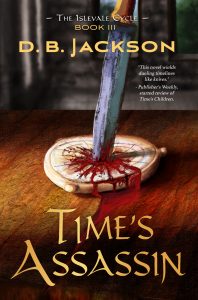 Those are not easy questions to answer. As with beginnings and middles, there are as many ways to approach an ending as there are stories to be written. Different authors like to do different things with their closing chapters. And so, again as with the other parts of story structure, we can learn how to write good endings, in part, by reading as many books and stories as possible. Guy Gavriel Kay’s stand-alone fantasy novel, Tigana, has one of the finest endings of any book I’ve ever read. It is haunting and beautiful and — surprisingly — uncertain. But it is incredibly effective. Of all the endings I’ve written, I believe my favorite is the closing to Time’s Assassin, the third and final book of The Islevale Cycle, my time travel/epic fantasy trilogy. Why do I think it’s the best? Because it ties off all the loose ends from my narrative. It hits all the emotional notes I wanted it to. My characters emerge from those final pages changed, scarred even, but also in a place of growth and new equilibrium. Also, it’s action-packed and, I believe, really well-written.
 2) Tying off various narrative loose ends. The most important story element is the central conflict, which the climax should either settle (if the book is a stand alone or the last of a series) or advance in some significant way (if the book is a middle volume of an extended series). But there are often other narrative threads that need to be concluded to the readers’ satisfaction before our audience will feel at peace with the story’s ending. These can include unresolved relationship issues (strained friendships, burgeoning or troubled romances, conflicts between siblings or a parent and child, etc.), missing information and/or secrets that could not be revealed before the climax ran its course (this is especially common in mysteries like the Thieftaker stories), or character arc and narrative arc issues involving secondary characters and storylines. Part of the so-called “denouement” involves wrapping up these additional story threads.
 I have spoken before about the recurring problem I have with manuscripts at about the 60% mark. For those unfamiliar with the phenomenon, which afflicts many writers — not just me — it is fairly simple to explain. When I write a novel, I tend to make fairly steady progress until I approach the final third of the narrative. At that point, I run into a wall. And this has been true from the very start of my career. I didn’t recognize the pattern until one afternoon, while working on my fourth or fifth book. I came downstairs after a frustrating day, and Nancy asked me how my novel was coming.
 First, though, it occurs to me that in writing about openings last week, I left out one crucial, but easy-to-describe story element: “the inciting event.” The inciting event of your narrative is, quite simply, the thing that jump-starts your story, that takes the characters you have introduced in your opening lines from a place of relative stasis to a place of flux, of change, of tension and conflict and, perhaps, danger. It is the commencement of the narrative path that will carry your characters through the rest of the story. In his description of the Hero’s Journey, Joseph Campbell referred to the inciting event as the “Call to Adventure.” If you’re looking for examples, think of the arrival of the first letter from Hogwarts in Harry Potter and the Sorcerer’s Stone, or the appearance of Gandalf at Bilbo Baggins’s door in The Hobbit. In pretty much all the Thieftaker books and stories, it is the arrival of whoever Ethan’s new client will be for that episode.
 Trust your reader.
 And because we work so hard on all this stuff (and other narrative elements I haven’t even mentioned) we want to be absolutely certain that our readers get it all. We don’t want them to miss a thing, because then all our Great Work will be for naught. Because maybe, just maybe, if they don’t get it all, then our Wonderful Plot might not come across as quite so wonderful, and our Deep Characters might not come across as quite so deep, and our Spectacular Worlds might not feel quite so spectacular.
 Okay, yes, I’m making light, poking fun at myself and my fellow writers. But fears such as these really do lie at the heart of most “trust your reader” moments. And so we fill our stories with unnecessary explanations, with redundancies that are intended to remind, but that wind up serving no purpose, with statements of the obvious and the already-known that serve only to clutter our prose and our storytelling.
 As a result, the first volume of the series was originally 220,000 words long. Yes, that’s right. Book II was about 215,000, and the later volumes were each about 160,000. They are big freakin’ books. Now, to be clear, there are other things that make them too wordy, and I’m fixing those as well. And the fact is, these are big stories and even after I have edited them, the first book will still weigh in at well over 200,000 words. My point is, they are longer than they need to be. They are cluttered with stuff my readers don’t need, and all that stuff gets in the way of the many, many good things I have done with my characters and setting and plot and prose.
 Many years back, while I was working on one of the middle books in my Winds of the Forelands quintet, my second series, I came downstairs after a particularly frustrating day of writing and started whining to Nancy about my manuscript. It was terrible, I told her. There was no story there, no way to complete the narrative I’d begun. The book was a disaster, and I might well have to scrap the whole thing.
 The bias against genre fiction (fantasy, science fiction, mystery, Westerns, romance, etc.) among those who consider themselves devotees of “true” literature, is something I have encountered again and again throughout my career. Not surprisingly, I don’t believe it has any basis in reality. Fantasy (to address my speciality) like literary fiction, runs the gamut in terms of quality. One can find in all literary fields examples of brilliance and also of mediocrity. No genre has a monopoly on either. I write fantasy because I enjoy it, because I love to imbue my stories with magic, with phenomena I don’t encounter in my everyday life. I wasn’t shunted to this genre because I wasn’t good enough to write the other stuff. I don’t hide in my genre because I fear I can’t cut it in the world of “real” literature.
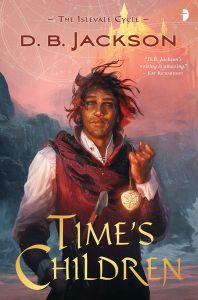 It’s not enough to create my worlds and magic systems. I have to explain them to my readers in a manner that is entirely natural and unobtrusive. And — my own preference — I also have to complete my stories and my character arcs in ways that utilize my fantasy elements without allowing them to take over my story telling. My heroes may possess magic, but in the end, I will always choose to have them prevail by drawing upon their native human qualities — their courage and resolve, their intelligence and creativity, their devotion to the people and places they love. Magic sets them apart and makes them interesting. It is often the hook the draws readers to my books. But those human attributes — those are the ones my real-world readers relate to. They form the bond between my readers and my characters. And so if those are the qualities that allow my characters to prevail in the end, then their triumphs will feel more personal and rewarding to my readers. It is the simplest sort of literary math.