








 I should have enjoyed last week. We had the release of The Chalice War: Stone, the first book in my new Celtic-themed urban fantasy. Lots of spring migrants (talking ’bout birds here) moved through our area of the Cumberland Plateau, so I had plenty of good bird sightings. The weather was cool and clear (mostly), and my morning walks were crisp and golden. As I say, it had all the makings of a fine week.
Yet, it was one of the most difficult weeks of my entire life. And most of the difficulties were of my own making.
I’m not going to go into details as to what happened, or where our family conversations went. Suffice it to say, I did and said some stupid things and hurt both my daughters, two of the three people in this world (along with Nancy) about whom I care most. But the issues in question went far beyond my foolishness in the moment, to encompass deeper matters that go back several years. In a sense the immediate crisis triggered a reckoning with longer-term issues. And that was the painful part.
I have made no secret of the fact that I suffer from generalized anxiety disorder and panic disorder. These conditions have plagued me for much of my life, though I have only identified them and started working to come to terms with them over the past few years. I have been in therapy, I have read about anxiety disorders, I have tried to work into my routines various coping mechanisms. In short, I have taken the process seriously, and have worked at making myself healthier.
To a point.
Life has been challenging and complicated these past couple of years. Much of the mental health work I have done has been geared toward getting myself onto solid emotional ground, enabling myself to get through the day, to be productive in my work, to be functional in social settings. And yes, these are reasonable goals. No one can fault me for wanting any of those outcomes.
The problem is, at some point in the process, I became satisfied with those goals AND those results. I made them not just my immediate aims, but my ultimate ones. And as I found that solid footing, those productive days, the ability to navigate social settings, I settled in to a more comfortable approach to my therapy. I allowed my goals to shift to maintenance of the improvements I had managed to make in my life. I lost sight of the more distant — and more difficult — aims of my mental health regimen.
And so this week, as the crisis with my daughters deepened, I found myself confronted by a reality I had ignored and forgotten in recent months.
Namely this: As with the mental health issues of so many, mine are not just about me. They are about the people in my life, the people who have to coexist with me, who deal with my anxiety and its manifestations on a daily basis. I am not the easiest person to be around under the very best of circumstances, but when my GAD kicks in, or when I hover at the edge of a panic attack, my anxiety can be disruptive for everyone around me. Since I tend to be especially prone to my anxiety problems when I travel, or at times when we are interacting with a lot of people, like at holidays, my kids often have a front row seat to my worst moments.
It became clear to me this past week that I had grown complacent with my therapy and the rest of the mental health work I do. I might have been maintaining an easy middle ground that allowed me to function in most says, but that same middle ground had not yet addressed the deeper problems that have impacted the lives of my spouse and my children. I needed to be reminded of this, and for that I feel badly. I should have known better.
But the important thing is I’ve learned the lesson and taken it to heart. I have already been in touch with my therapist and have arranged to resume more frequent sessions. I intend to work on some potentially curative protocols that will be more demanding, more tiring, but which could make big differences in my daily life and in these crucial relationships. And I am considering other possible remedies as well.
More to the point, I have vowed to my family — and I now vow to you as well — that I will do whatever is necessary to improve my mental health, to make myself an easier person to be around, and to be a better father and husband and friend.
Because here is the fundamental point. It wasn’t merely complacency that held me back. It was fear as well. Fear of the hard work, fear of the difficult revelations that may lurk ahead of me, fear of the emotions I know I will have to wade through to reach the other side. And because of the fear I was not only short-changing my loved ones, I was short-changing myself. I was doing less than I could for me, and so was settling for less emotional health than I deserve.
No more.
I offer this glimpse into my private health in the hope that perhaps others in similar situations and predicaments might find my experience illustrative. If that’s you, I hope this has helped.
Have a great week.

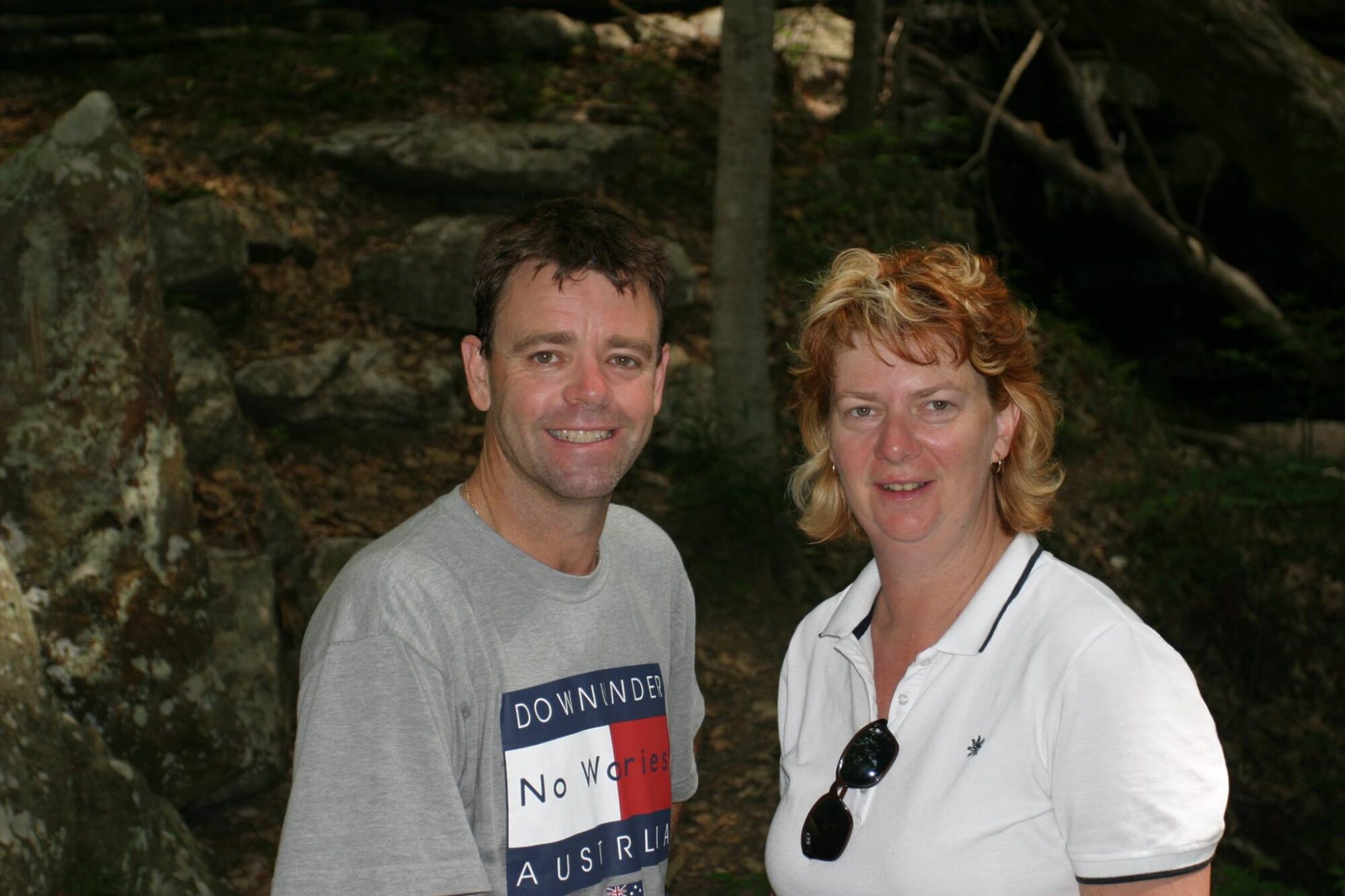 Graham was incredibly generous, kind, whip-smart, fierce in his devotion to Di and Laura, and one of the funniest people I’ve ever known. He and Di were both school teachers, both utterly devoted to education, to serving their schools and communities. They were active in their unions. They were political. They loved nature, loved good food and good drink. They were, in short, a lot like us. We knew that we wanted to maintain our friendship after our return to the States. And we did. The following summer Graham, Di, and Laura came to the States for their winter holiday (Southern Hemisphere and all that) and stayed with us for several days. Another great visit. We had tons of fun, but Graham and I also spent a good deal of time talking. He had just lost his father, something I went through a decade earlier. I can honestly say that even though we were now living literally half a world apart, our friendship had only deepened.
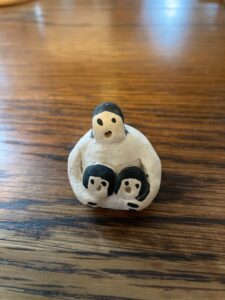 During our tour, we encountered many people selling pottery in front of their homes. And at one table, a mother displayed her wares beside those of her young daughter. I think the girl must have been around 7 or 8, give or take a year, and she had made a few small bowls, seed pots, and dishes. And she had made a tiny storyteller. As one would expect, it was quite crude compared to those we had seen for sale back in Albuquerque (we hadn’t yet been to Santa Fe or Taos), but something about the figure spoke to me. Maybe is was just that the storyteller was so cute. Or maybe it was that the girl herself was so proud of it. Or maybe I saw in this child’s early effort to follow in her mother’s footsteps something akin to my dream of becoming a professional writer. Whatever the reason, I asked the girl how much it cost.
 That was a magical day in many ways. Acoma was as beautiful as we had been told, the pale red stone of the Pueblo seeming to glow beneath a deep azure sky, wooden kiva ladders rising above their structures and reaching toward the clouds. At one point, I spotted a rainbow in the clouds overhead — there was no rain, just the prismatic color, which appeared for a moment and then vanished. I think I was the only one on the tour who saw it. I believed that, together, the rainbow and my little storyteller were omens, signs that my dream would, in fact, come to pass.
 Two months later, I got my first contract from Tor Books. Children of Amarid wasn’t published for another three years — that first book needed a lot of editorial work. But I was on my way.
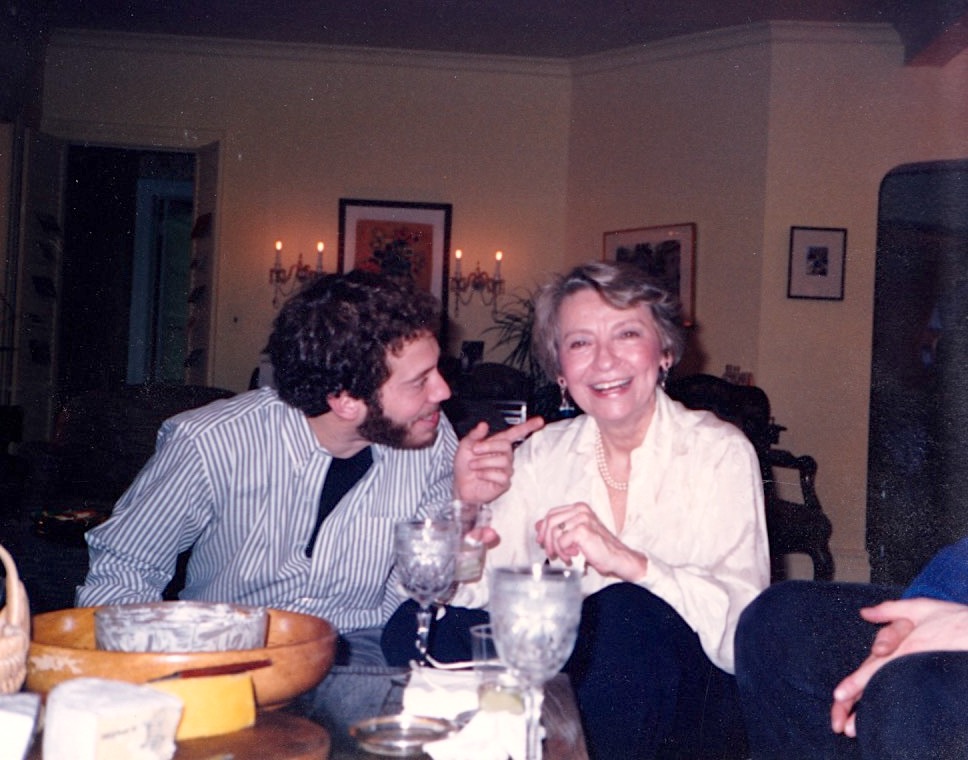 Yesterday would have been my mother’s birthday — her 101st. I’ve written about her, and my dad, quit a bit in this space, though I haven’t written about my mother in a couple of years. She was smart and funny, classy and beautiful, quietly ambitious and deeply accomplished. She doted on her children and was, in turn, doted on by my father. She loved to travel and was passionate to the point of reverence about literature and the arts.
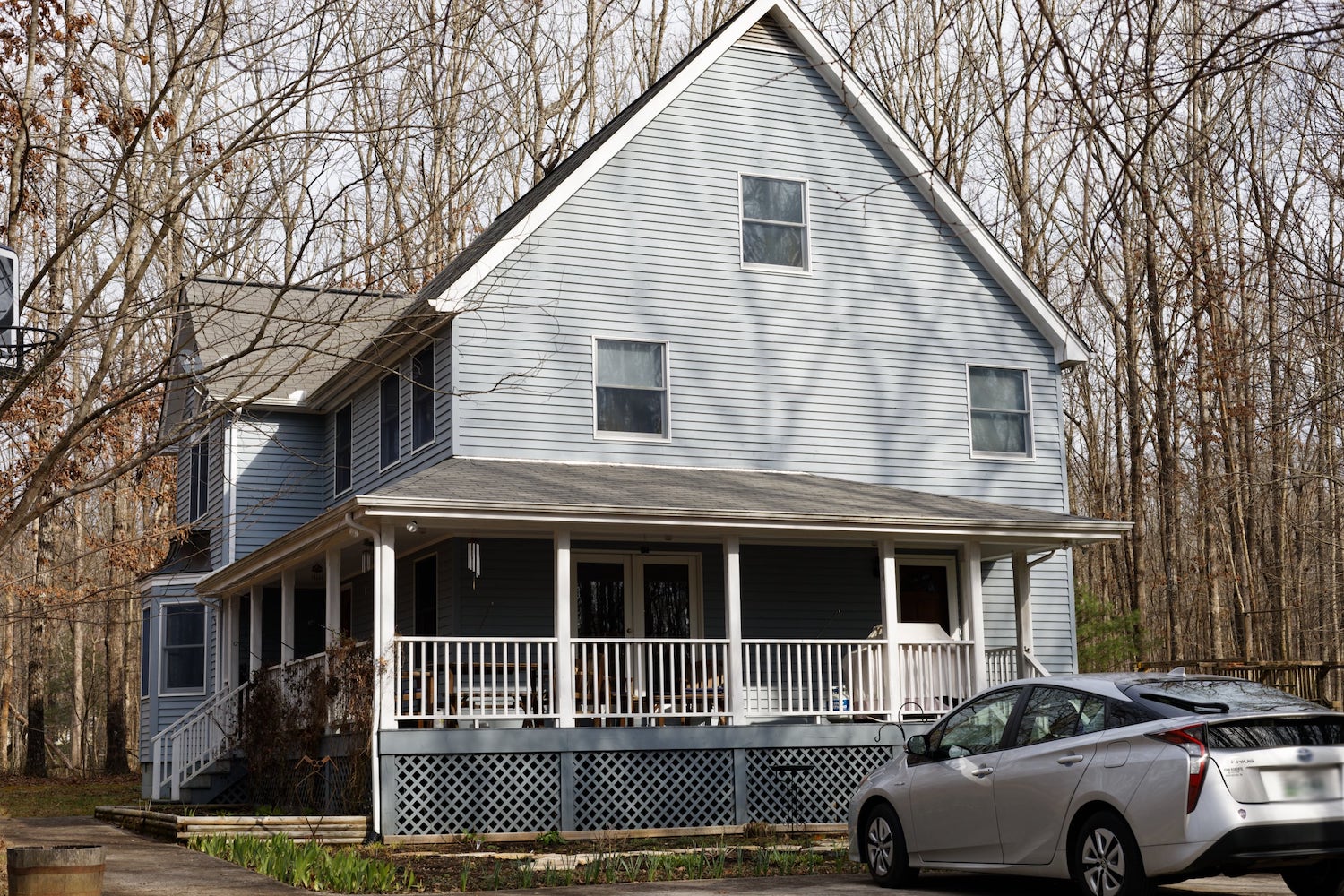 We built our house in 1998. Or, to be more accurate, we paid other people to build our house in 1998. We took a pre-made design that we found in a book of house floor-plans, and with some help from a local architect, customized it to meet our needs. At the time, our older daughter was three and Nancy was pregnant with our younger daughter. We needed a kid-friendly home that would give the girls space to play, and us room to watch them but also cook dinner and such.