Tag Archives: family

Update: What’s Been Going On In My Life

In August, after a long retreat from social media and a series of appearance cancellations, I shared with all in a post on his blog that our older daughter, Alex, has cancer. You can read that post here.

Now, several months later, I wanted to offer an update to that original post, and to share some positive news.

Alex is still undergoing treatments, but her doctors have transitioned her from chemotherapy, which in her case was VERY effective, to what they call a maintenance regimen. Essentially this means that the cancer has been knocked back by the chemo. In many places where she had malignancies, it’s impossible to tell she ever had cancer. In other spots, the cancer remains but is greatly diminished.

The maintenance regimen is intended to keep the cancer in its present, reduced state. It prevents new or renewed cancerous growth without inflicting the kind of side-effects Alex suffered through while on the chemotherapy. Put another way, her doctors are now treating her cancer as a chronic condition, one that can be managed without an invasive and devastating surgery, and without further use of drugs that sap her of energy, make her feel rotten, and cause her hair to fall out.

The sobering news is that, at least for now, they do not know if her cancer is fully curable. It may be that they cannot say “her cancer is gone and it’s not coming back.” This remains to be seen. The reassuring and offsetting news is that they can keep her on the maintenance regimen indefinitely, for the rest of her natural life if they need to. Because Alex responded so well to the first chemotherapy “cocktail” they tried, her doctors have plenty of other treatments they can use on the off-chance that the cancer reasserts itself. And research on exact DNA mutation that caused Alex’s cancer may, before long, yield even more effective, and possibly curative, treatments.

And so it seems she is on a good trajectory, if not yet cured.

I have to admit that adjusting to this outcome has taken me some time. I have lost my mother, my father, and my oldest brother to cancer. I am a gold-circle member of the “Fuck Cancer” club. More, I am shaped by a 20th century view of cancer as a binary phenomenon. One has cancer or one doesn’t; one beats cancer or one dies from it. That has long been my understanding.

But 21st century oncology is not always like that. For some patients with some forms of the disease — including Alex and hers — cancer is something that can be lived with, controlled, kept in check.

From the start, I have wanted nothing more than to be able to announce to the world that Alex is cancer-free. For now, that is more than I can say. But short of that, this is as good an outcome as I could have hoped for or imagined. We will worry each time Alex has a new set of scans to assess the state of her disease, but that was going to be true under any scenario. What matters is that she feels fine, the symptoms associated with her cancer have gone away, she is otherwise healthy and happy, she is working, seeing friends, having fun, living her life, looking forward to the return of her gorgeous hair, which has been an identity marker for her all her life. And the rest of us — Nancy, our wonderful younger daughter, Erin, and I — are breathing easier and recovering ourselves from the emotional ordeal of the past eight months.

I want to thank all of you for your support and friendship during this period. Every expression of concern, every word of sympathy and encouragement, every act of kindness has meant more to me than I can convey.

I look forward to returning to a more normal routine. I intend to be more of a presence online. I plan to attend more conventions in the coming year. Having re-started the newsletter, I will continue to publish it monthly, with the usual giveaways and previews of upcoming releases. (You can sign up for it here!)

Again my thanks to all of you. It’s good to be back.
Monday Musings: Easing Back In

Dear Friends,

About five weeks ago, I announced on various platforms that I would be withdrawing from social media for a while, and would also be delaying the releases of some upcoming projects. My announcement prompted expressions of sympathy and friendship from so many of you and I am deeply grateful for the love and support I have received since then.

I am, at this point, beginning once more to dip my toes in the social media waters. The family health crisis that prompted my pull-back from various platforms continues and will be on-going for months to come. I ask for your patience, your understanding, and your respect of our privacy as we cope with the issues at hand. Nancy, our daughters, and I are fortunate in so many ways. We love each other, we communicate well, we support one another. We also have at our disposal resources — stable finances, excellent health coverage and health care, mental health support — that too many people in this country — in this world — don’t enjoy. And we have marvelous friends and loving extended family who are bolstering us and helping us in every manner possible. We will get through this.

In the meantime, as I have seen to my own emotional well-being, I have learned a great deal, confirming things I thought I knew about myself, and discovering other things that have surprised and even shocked me. I am 58 years old, and I am still growing and deepening my understanding of my own mind and emotional history.

One discovery that probably surprised me more than it should have is this: A quarter of a century plus into my literary career, the simple act of sitting down each day to write is still both a boon and a salve for my tender emotions. Day after day, I have immersed myself in my current world and narrative and character arcs. And not only has working been good for me, it has been gratifying. I can’t always tell while writing a book if the finished product is going to be any good. Often, I’ll finish my first draft and then start to read through the novel, expecting to be horrified, only to find instead that what I’ve got is decent. And it’s possible that with this book, since I think maybe it’s pretty good, I’ll read it through and find that it totally sucks.

But I don’t think so. I am enjoying it far too much. I am 80,000+ words in at this point, shooting for a finished product of 90-95K. I expect to complete draft number one by the end of this week.

As to my pending releases, I hope to release the first of the Thieftaker novellas, “The Witch’s Storm,” within the next six weeks or so. Two more novellas, “The Cloud Prison,” and “The Adams Gambit” will follow. I hope that RADIANTS, my new supernatural thriller, will be out sometime late this summer or early this fall. And I know that DERELICT, the anthology from Zombies Need Brains that I have co-edited with Joshua Palmatier, will be released late this spring or early in the summer.

In short, while my family and I are weathering a difficult stretch, life — professional and personal — must go on. I am not yet ready to resume my three-blog-posts-a-week social media regimen, nor do I expect to be as active on Facebook and Twitter as usual. And my plans in terms of convention appearances remain uncertain.

But I will be more visible in the weeks and months to come than I have been since mid-March. Again, I am grateful for your support, your patience, and, most of all, your continued friendship.

Be well, be kind to one another, and find joy in the love and companionship of the people who mean the most to you.

David

Monday Musings: A Paean to the “Shuffle” Command

Let’s begin with the obvious: Everything that’s old is great, and new stuff sucks. It’s important to get that out of the way before we move on. I mean who are we kidding? The way things were when we were young — well, not so much “we” as “I” — the way things were when I was young? That’s how it should all be now. Progress is bad. Innovation is bad. Technology ruins everything and the world was a better place before people invented all that stuff. By which I mean, anything that hadn’t yet been invented when I turned 21.

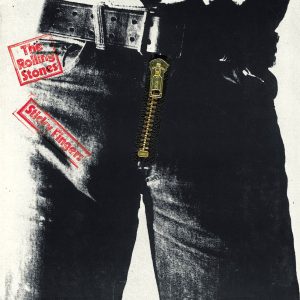
Sticky Fingers, by The Rolling StonesMusic isn’t meant to be sold song by song. We’re supposed to buy albums. We’re supposed to put up with the bad songs in order to enjoy the good ones. That makes the listening experience better. For every “Eleanor Rigby” and “For No One” we should have to endure a “Doctor Robert.” For every “Brown Sugar” and “Can’t You Hear Me Knockin’?” we should have to suffer through a “You Gotta Move.” It’s only fair. No one is entitled to a perfect listening experience, and songwriters deserve the chance to have their crappy songs heard alongside the good ones. This is America, damnit!
And don’t get me started on CDs versus LPs. What ever happened to the art of piecing together a two-sided album, of figuring out the proper song order so as to make those horrible, vinyl-wasting tunes that we hated as hard to avoid as possible? I mean sure LPs warped and skipped, and got scratched, making them all but unbearable after a year or two of solid use, but that’s a small price to pay for the inconvenience of having to interrupt a pot-induced haze to get up, walk to the stereo, and turn the record over.

Songs are meant to occur in a certain order. That’s how God intended it. And by God, I mean Mick Jagger. Or John Lennon. Or Joni Mitchell. Or David Crosby. Or Aretha Franklin. Or James Taylor. You know. God. As day follows night and spring follows winter, “You Can Call Me Al” is meant to come after “Diamonds on the Soles of Her Shoes.” Except not really, because that album came out after my twenty-first birthday. But never mind that.

The point is, albums set the order of songs and never shall they exist in any other configuration.

Except for mix tapes.

Okay, I confess. Back when I still listened to LPs (Kids, ask your parents. And get the hell off my lawn…) I made mix tapes all the time. I loved the idea of cutting out those songs I didn’t enjoy. I loved the idea of putting my favorite songs from any number of artists and any number of albums in one collection and being able to listen to all of them together. I loved listening to a new mix tape, of savoring the lingering surprise of the next tune from a completely different source.

Sadly, even in my pot-smoking days that surprise lasted for all of two or three listens. After that, the mix tapes became too familiar, taking on the wearisome predictability of the albums from which I’d culled the songs in the first place. As Rob Gordon (the John Cusack character in High Fidelity) says, “the making of a good compilation tape is a very subtle art.” But even the best made mix can’t save us from the fact that we remember and anticipate.

Enter the “shuffle” command on our phones and computers.

That stuff I said before, about everything new sucking? I didn’t mean this. And that part about all technology after the mid 1980s ruining the world? I might not have meant that, either. And the stuff I said about how great LPs were — that was total bullshit. Not that a case can’t be made. I mean, cell phones and computers and the constant presence of social media and “connectivity” in our daily lives — there’s a lot there to dislike.

But the shuffle command makes all of it worthwhile. Hitting “shuffle” is like putting in the ultimate mix tape. Every song is one we want to hear. Every transition is a surprise. Every listening experience is destined to be different.

Nirvana.

The state of being. Not the band. They definitely came on the scene after my twenty-first birthday…

The other night, Nancy and I were cooking dinner, and we had my iPhone on shuffle. (iPhones are okay. They were invented way before I turned 21. Really. I promise. Same with Bluetooth speakers like the one we were using. I swear.) And, quite seriously, I was struck that evening, after the fourth or fifth excellent song in a row, by the absurd amount of pleasure I derive from the shuffle feature. Ridiculous, I know. The world is in the midst of a pandemic. The planet is melting. American democracy is on life-support. But I can listen to a collection of Eagles tunes without fear of hearing “Chug All Night.”

It doesn’t get better than that.

Creative Friday: My Brother the Artist

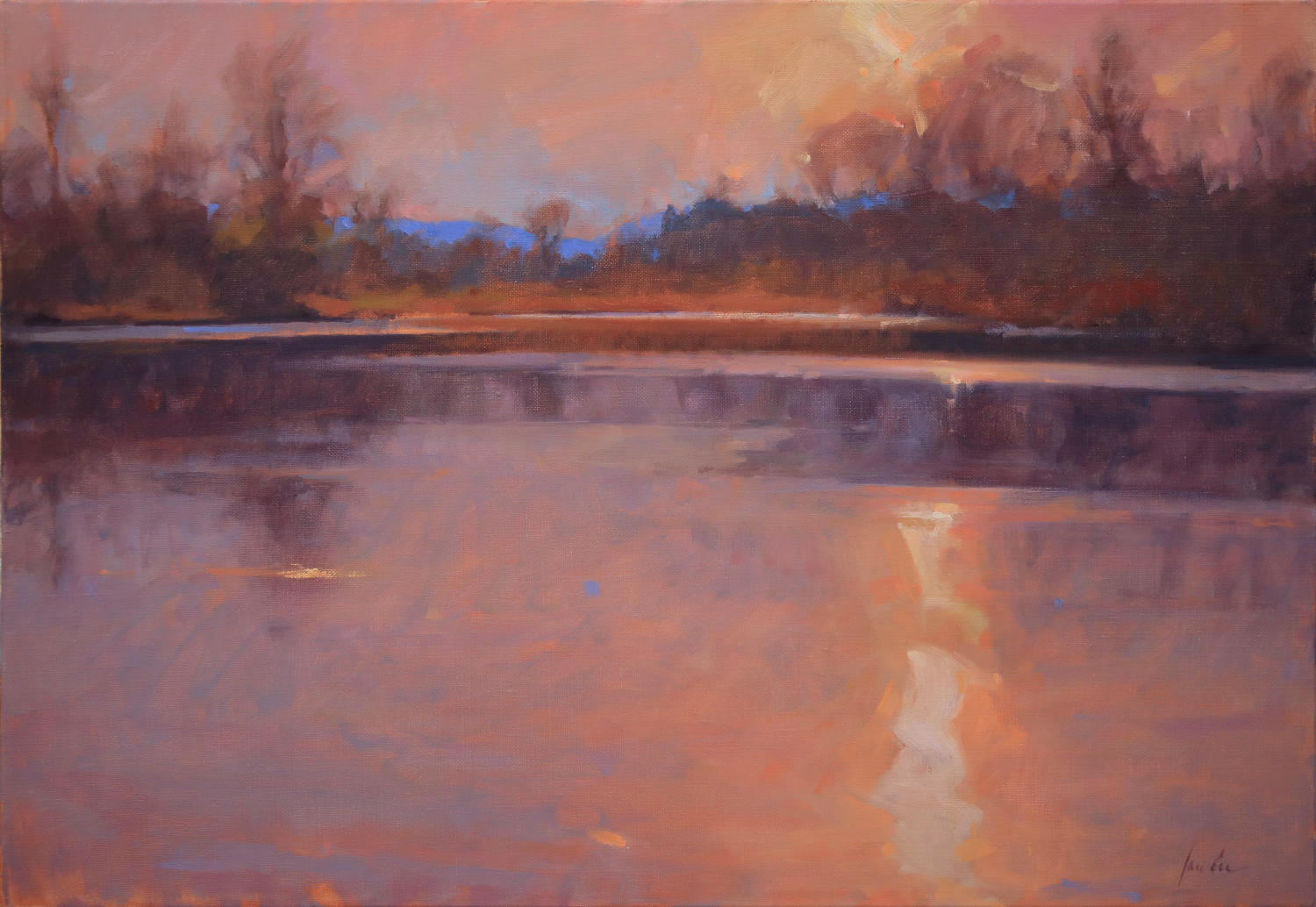
For this week’s Creative Friday post, I would like to tell you about my brother, Jim. [JamesCoe.com] It happens to be his birthday, so please feel free to wish him many happy returns of the day.

Jim is a painter. He started painting when he was all of fifteen years old. At that time, he was drawn to painting birds. Birdwatching had become a sort of obsession for Jim, Bill, and me, and Jim had a preternatural ability to capture not only correct plumage and structure, but also attitude and mannerism. His early works were stunning, the work of a prodigy.

My brother, Jim, painting on Martha's Vineyard, October 2017
My brother, Jim, painting on Martha’s Vineyard, October 2017

For a time, he worked as a bird illustrator, and you can still find field guides and even an ornithology textbook with his work in it. Eventually, though, he wanted to get away from the limiting world of illustration, and he turned to plein air painting. For more than twenty years now, he has been painting landscapes, some with birds in them, some without. His work is known throughout the world. It hangs in galleries and museums. He has been honored again and again by fellow artists and art aficionados.

And never once has this praise gone to his head. Because that’s the other thing about my older brother: not only is he the creative person I admire most in this world, he is the kindest, gentlest soul I know.

His art has been a presence in my life for almost as long as I can remember. When I was young, I tried to emulate him, hoping that I might be an artist someday as well. How did I do? Well, I write fantasy now, so that should tell you…

We have Jim’s work all over our house, and I am always eager for another of his pieces. They’re just that good.

But more important still is the fact that, outside of Nancy and our girls, he is the best friend I have in the world.

Happy birthday, Bro. Love you.

"Pond Light; Sun Dance" by James Coe
“Pond Light; Sun Dance” by James Coe

Monday Musings: My Declaration of Creative Independence

Book shelfSo many professional issues on my mind today — I’m finding it hard to organize my thoughts into something coherent.
These remain hard times for creators. Writers, musicians and composers, visual artists of all sorts, actors and directors, dancers and choreographers. I could go on, but you get the point. The irony of art: it is considered a solitary endeavor, when in fact it is anything but. We all know the clichés of the lonely artist working in isolation, the writer holed up with her computer, tapping away at the keyboard, churning out her next story.

The truth is, though, art is decidedly communal. The act of creation is only the beginning. All art is interactive. Music must be heard. Paintings and photographs must be seen. Stories must be read. Because every song and book and painting has as many lives as there are people who experience it. Twenty people might read my book — or better yet, twenty thousand people might read it — and each would experience it their own way. Same with songs. Same with works of art. Creation is incomplete until it is received.

And so when a pandemic prevents that interaction between creation and audience, art suffers. So does the artist. I can write as many books in isolation as time allows. But until I know my book is being read by someone, I don’t feel that I’ve accomplished anything.

A dear friend posted a couple of times last week about writing in the COVID age. His first post touched on the slowness of the industry right now. Again, we writers can turn out new books, but if the publishing industry does nothing with them, we struggle to reach our readers. And right now, the publishing industry is the literary equivalent of a clogged sink. Nothing is flowing. So it wasn’t that surprising when, a couple of days later, this same friend shared an article about how hard it is to be productive right now. The dialectic between writer and reader is about far more than books sales. It is, as I indicated above, the way we complete the creative experience. When we know that our books are going nowhere, that they have no immediate hope of reaching audience, our motivation leaches away. And without motivation, we’re lost.

A couple of weekends ago, at Boskone, I moderated a panel on self-defining success. This is an important topic for me; I believe we must take satisfaction in our work on our terms. There is a difference, though, between, on the one hand, finding internal affirmation for our work and our careers, and, on the other, working in a vacuum.

So, where am I going with this?

I guess here: I will continue to write with an eye toward big-press publishing. I have not given up on “New York” entirely. But I am currently writing and editing for small presses. Working through an imprint I have developed with a couple of friends, I am bringing out my own work.

I am, in effect, declaring my independence. I am writing for myself, and for the audience I can reach. And I am worrying far less about what the imprint on the spines of my books says about my status as a writer.

A confession: A couple of years ago, after a disappointing stretch, a series of serious professional setbacks, and a particularly demoralizing experience at a convention, I was ready to quit. I’d had enough. I had been kicked, and kicked again, and kicked a third time. My ego had been brutalized. I didn’t want to write. I certainly didn’t want to deal with any more reversals like those I’d just experienced. I was done.

Except, obviously I wasn’t. I still had stories to tell. I still had characters in my head and heart who clamored for attention. I still had things to say. And while I thought I didn’t want to write anymore, I was wrong. Turns out, I can’t go more than a week or two without writing something. I get grumpy. I snarl and mope and brood and rant. Very, very unattractive. Nancy never says anything when I get this way. Not directly. But she’ll ask me, “So what are you working on today?” And the subtext of that question is, “When are you going to start behaving like an adult human again?”

It has taken me a while to reach the place I’m in now. It was a process, as fraught and difficult as the creation itself can be. But I’m here now. I have an idea of what success looks like, and it has far, far more to do with contentment and peace of mind than it used to. I have a sense of what my career will look like going forward, and while some of my old ambition remains, I am happy — eager even — to approach publication and editing and other professional pursuits in a way that preserves my emotional health and feeds the joy I derive from the simple act of telling stories.

Don’t worry. I have no intention of quitting. I have stories to tell, short form and long, and I have every intention of putting them in the hands of readers.

Because creation is communal. It is a never-ending conversation. And we’re all part of it.

Professional Wednesday: Thoughts After Virtual Boskone

Boskone was held this past weekend. Virtually, of course. It has quickly become one of my favorite conventions, and it was the only in-person convention I attended last year (not counting the SAGA professional workshop) before COVID shut down the con circuit.

If you’ve never heard of Boskone, I encourage you to look into it. It is everything a convention should be. The people who run it also happen to be the folks who put together the Dublin WorldCon a couple of years ago (that’s actually how I started attending Boskone). They know what they’re doing and they do it really, really well. The con is a great size — big enough to allow authors to reach a sizable fandom, but not so large that one feels lost amid teeming crowds. Boskone is attended by a large and diverse constellation of writers, editors, artists, and other creators. The panels are top-notch. People are friendly, but also professional.

The hotel, when the con is held as usual, is well-located and very nice. There’s great food within walking distance, and all of the great attractions of Boston, one of my favorite cities in the world, can be reached from the T stop, which is only a couple of blocks from the hotel.

None of us who know Boskone were surprised to find that the virtual version of the con was run with the same level of expertise, efficiency, and attention to detail that characterizes the real thing. My panels this weekend came off perfectly. The one I moderated, a great discussion on self-defining success, included incisive questions from our audience and a dedicated behind-the-scenes zoom host who kept us on task and on time.

Yes, I missed seeing my friends in person. I missed hanging out in the hotel bar and talking shop until the wee hours. I missed having dinner with friends and catching up with the family I have in the Boston area. I missed drinking Guinness at the nearby Legal Sea Foods!

But my experience with this con was not about loss and regret. As much as I would have preferred to be there, in person, with the friends I have missed for the past year, I was still able to reconnect with people, to find in our discussions the sense of community that makes conventions so special. And, I will admit, there was something quite nice about engaging in a spirited panel conversation for an hour, and then going downstairs to sip wine with my wife.

Look, COVID sucks. What it has done to our social lives sucks. The way it has circumvented travel and direct social interaction sucks. And I do not mean to make light in any way of the very real suffering of those who have contracted the virus, and of the hundreds of thousands in this country who have succumbed to it. We have suffered as a nation, as a global community. And that suffering is far from over.

Which is all the more reason to view virtual conventions and other inconveniences as just that: inconveniences and nothing more. Virtual Boskone was fun. Better by far to have had the experience than not. Did the virtual con replace the real one? Of course not. But it did for me what cons are supposed to do. It grounded me in my artistic community. It allowed me to catch up with a few friends, and meet some new people. It gave me an opportunity to connect with new fans. It left me feeling inspired and eager to continue my various projects.

And, as a bonus, it reminded me of something I too often forget in this time of pandemic: We are a resilient and resourceful species. Yes, there are obstacles in our path. But we have already found ways around many of them, and we are working to reach accommodation with COVID, if not victory over it.

This is all to the good.

Keep writing. And use the resources at your disposal to reach out to fellow artists. Make those connections. Don’t allow present circumstance to deny you that comfort and stimulation.

Creative Friday: More Snow Photos!

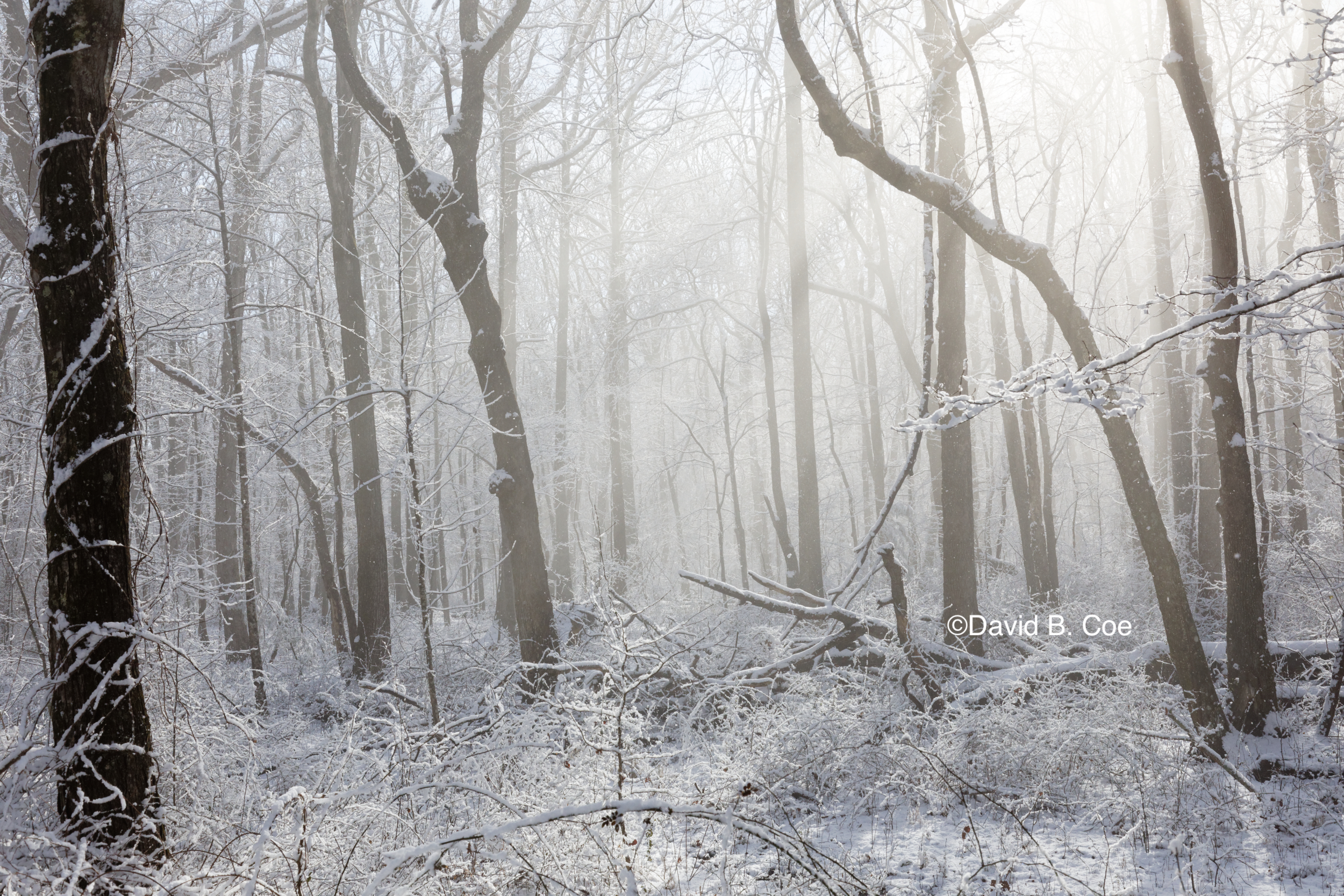
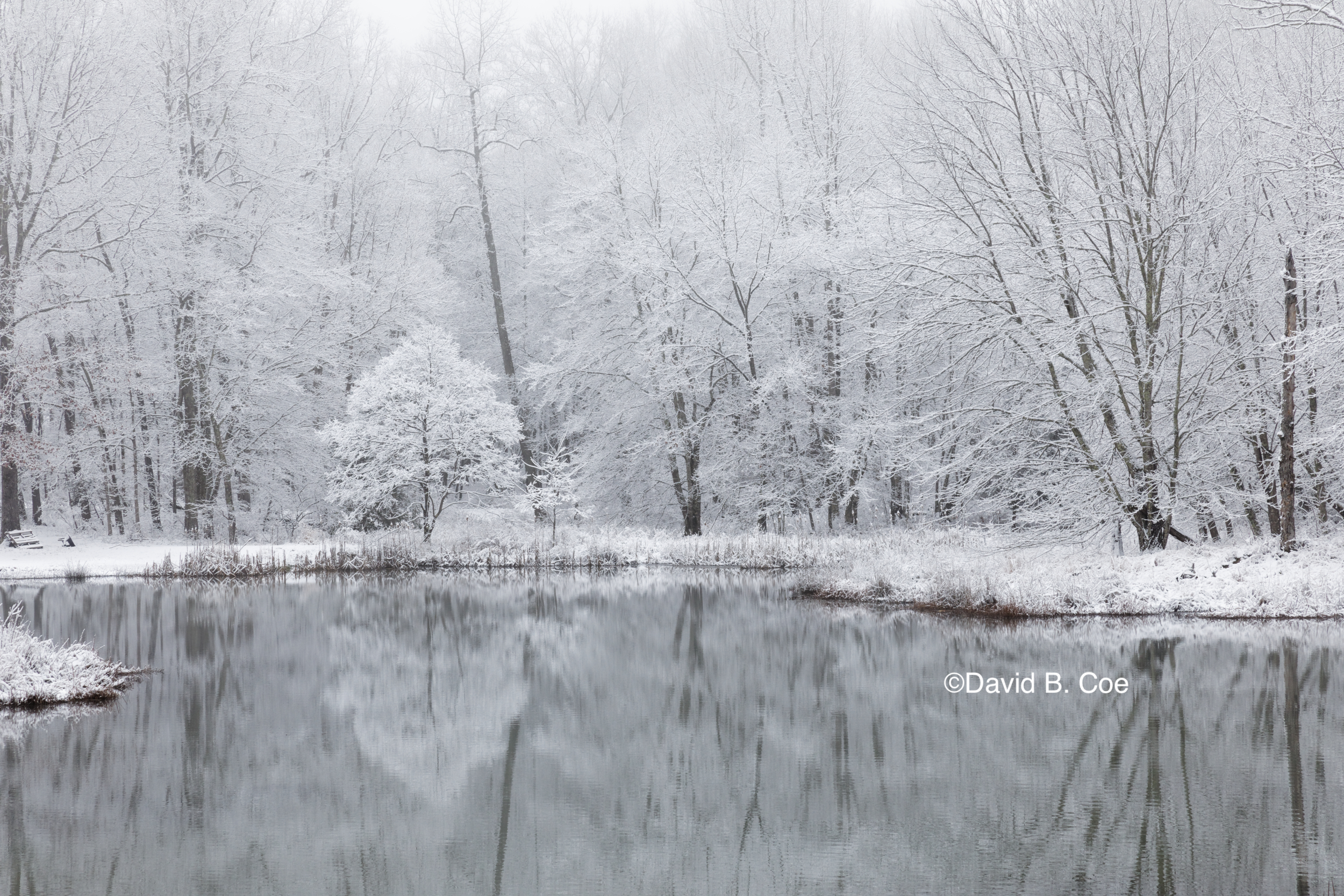
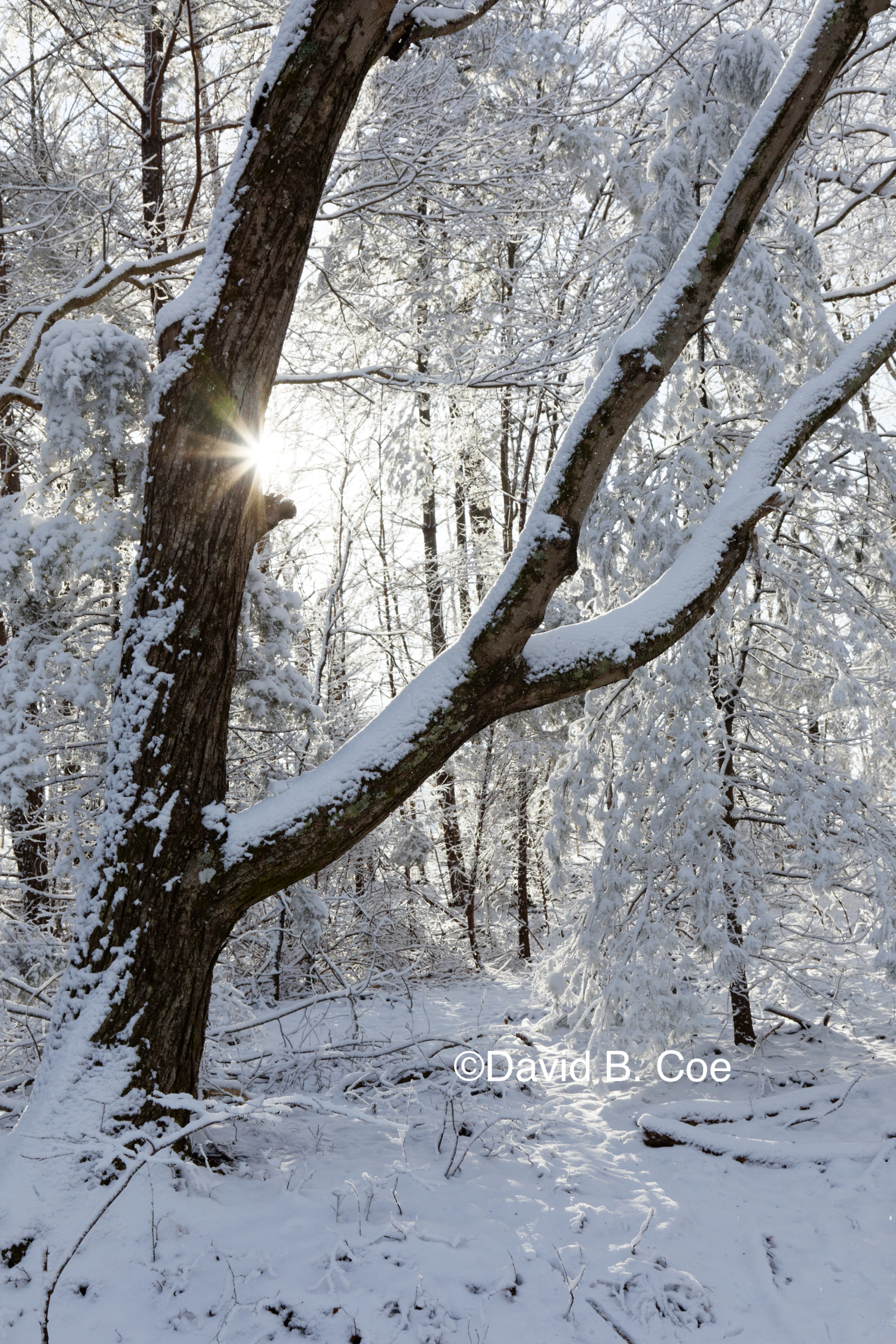
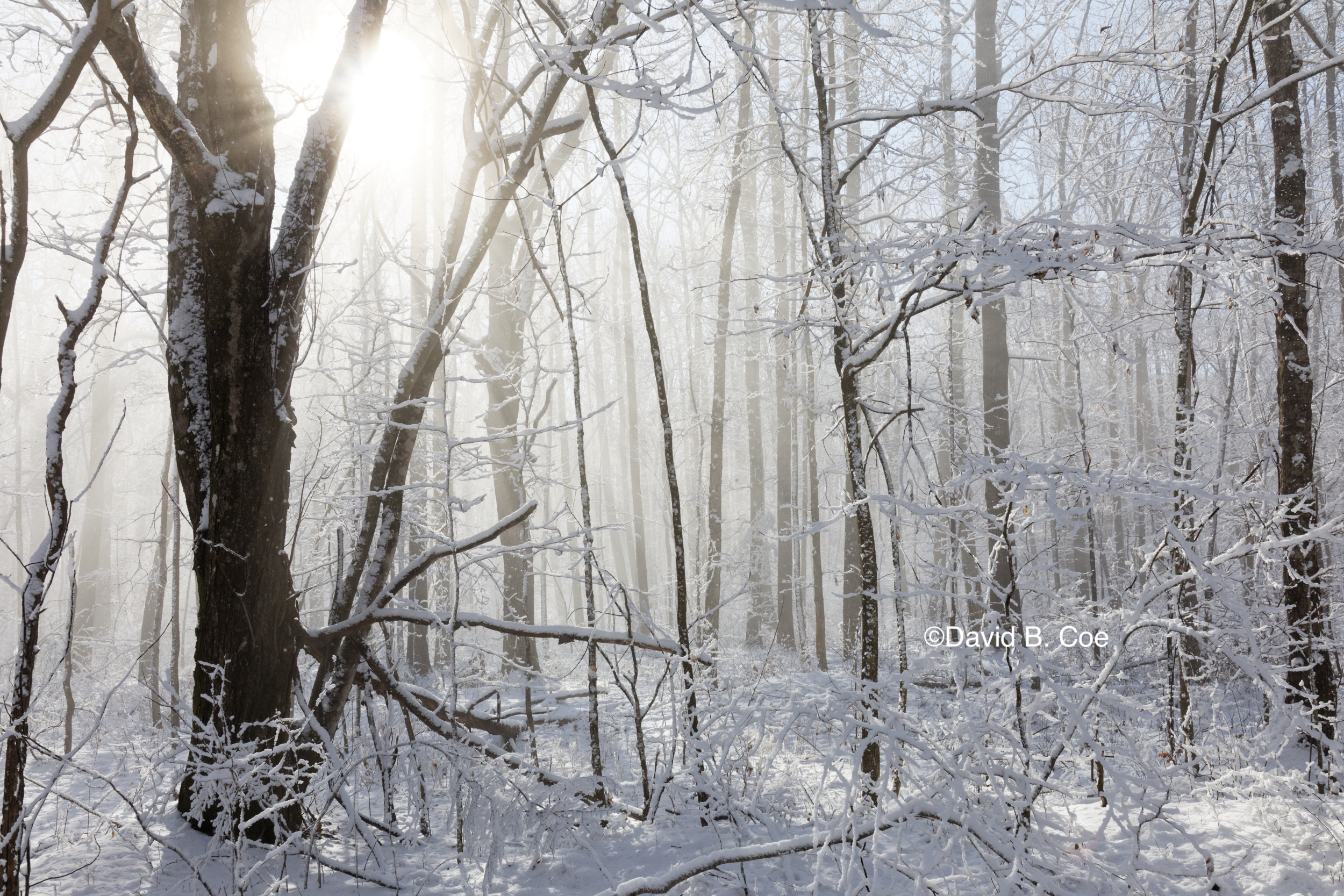
This has been an unusual winter for us. We’ve had several snowfalls, none of them huge, but almost all of them significant enough to turn our pretty little town into a wonderland. This past weekend was no exception. A snowfall Saturday night into Sunday morning frosted tree limbs and houses, and then lasted for a couple of days before melting away.

The first morning, Nancy and I got up early and walked around our neighborhood, enjoying the fresh snow. The second morning dawned sunny and cold, but warmed quickly. As I took my walk on our rails-to-trails path, a fine mist seeped into the forest, hazing the sun and lending a mystical quality to the light and shadows.

These are just a few of the images I captured on those morning walks. I hope you enjoy them. We have more snow in our forecast, so maybe I’ll have more images for you next week.

Have a safe, wonderful weekend. Be kind to one another.

Winter Reflections, by David B. Coe Snow and Morning Sun, by David B. Coe Snow and Mist I, by David B. Coe Snow and Mist II, by David B. Coe

Monday Musings: Sports and COVID

Last year, on the weekend of the Super Bowl, I wrote a post for that following Monday about the power of sports in our culture. In it, I noted that the Big Game was one of the few truly shared experiences in our national culture, an event of vast reach that crossed many of the demographic boundaries that usually divide us as a nation. I also might have voiced some disdain for the hype, the glitz, the obscene expenditures on everything from the halftime show to the half-minute advertising spots.

What a difference a year makes.

When I wrote that post, of course, COVID-19 was not yet on our radar. Sports, among so many other things, had not yet been taken away from us.

I have missed sports far more than I thought I would. And I have found COVID-restricted sports less satisfying than I might have hoped. Usually while watching sports on television I begrudge the crowd reaction shots, the panning of packed stands, the background chants and shouts and, in the case of the Premier League, singing. I realize now, though, that those things meant something to me. I suppose, unwittingly, I got a vicarious thrill out of knowing there were thousands of people attending the game, reveling in the excitement of being there.

I don’t like the cardboard cutouts that have been placed in stadiums and arenas. I understand why they’re there, but I find it creepy and unsettling — a reminder, as if we need it, of all that is absent from our lives right now. I’m not crazy about the prerecorded crowd noise either, although, again, I understand why some venues use it. I’ll even admit that some Premier League venues (Nancy and I probably watch more Premier League soccer than we do any other sport) have done a really great job of simulating crowd reactions to play on the pitch.

Nevertheless, what I love about sports — about the entire spectacle: the game, the interaction of the players, the crowd response, even the cheesy organ playing and sound effects that still infect baseball games — is the organic nature of each event. Over the course of my life, I have watched — in person or on television — literally hundreds upon hundreds of baseball games, football games, basketball games. We’re getting there with soccer games. I have watched a ton of golf tournaments (yes, that’s right — deal with it), swim competitions, track and field meets… I could go on, but you get my point. I love sports and have watched a lot. And I have never seen any two games or meets or tournaments that were exactly alike. That may seem self-evident, but to my mind it speaks to the power of sports.

Every inning, every play, every trip down the court or assault on the opposing team’s goal is a moment of possibility. Anything can happen. Yes, the environment is controlled — action is guided by rules and confined by the field of play, but that actually enhances the experience. There is a certain level of safety in the unpredictability of sports (unlike the unpredictability of life itself, which is anything but safe).

Sports blends the thrill of the possible with the suspense of the unknown and the exploration of human potential and frailty. We watch athletes who are among the best in the world at what they do, pit themselves against one another in full view of thousands, sometimes millions. Will they fold under the pressure? Will they thrive? Will someone unexpected emerge as a hero? Will the most revered among them fail in a key moment, forever changing the way history views them?

Yes, some people will say “Who cares? It’s just sports. None of this matters.”

And they’re right. I won’t go so far as to say that the nerve-wracking suspense of a tight game, the excruciating progression of a key at-bat, has no long-term consequence. I’m merely a fan, and yet there are still sports moments that haunt me, the pain of a devastating loss as raw now as the day it happened. But the fate of the world isn’t at stake. And isn’t that exactly what we need right now?

Sadly, though, the version of sports we’re getting currently is lacking. The players and coaches are doing their best — I have no doubt of that. And I also don’t wish to be misunderstood: I welcome any sports we can have, and I have no desire to see anyone — athlete or fan — put at risk. I’ll take what I can get. Let’s be honest, though. These games are not the same. They can’t be. Playing before hordes of screaming fans has to have an effect on player performance. Yes, the greats claim that they can block out all awareness of the crowd. I don’t believe it. Do you? I haven’t seen stats, but I wouldn’t be surprised to learn that in these COVID leagues, home field advantage has declined markedly. How could it not?

Okay, I just did a quick search online, and home-field advantage has, in fact, diminished in a number of sports. So, yeah.

Look, having any sports at all is great — far better than having none. But I long for the day when stadiums can be filled to capacity. I look forward to going to games myself, to attending spring training again with my daughter, to seeing minor league baseball in the cities near us.

Sports matter, not just to those of us who love them, but to society at large. And having people in the stands makes a huge difference as well. Don’t believe me? Consider whether Jackie Robinson’s arrival in the Major Leagues would have had the impact on America that it did if the seats in Ebbets Field been empty.

Creative Friday: A Photo, and Thoughts About My Mom

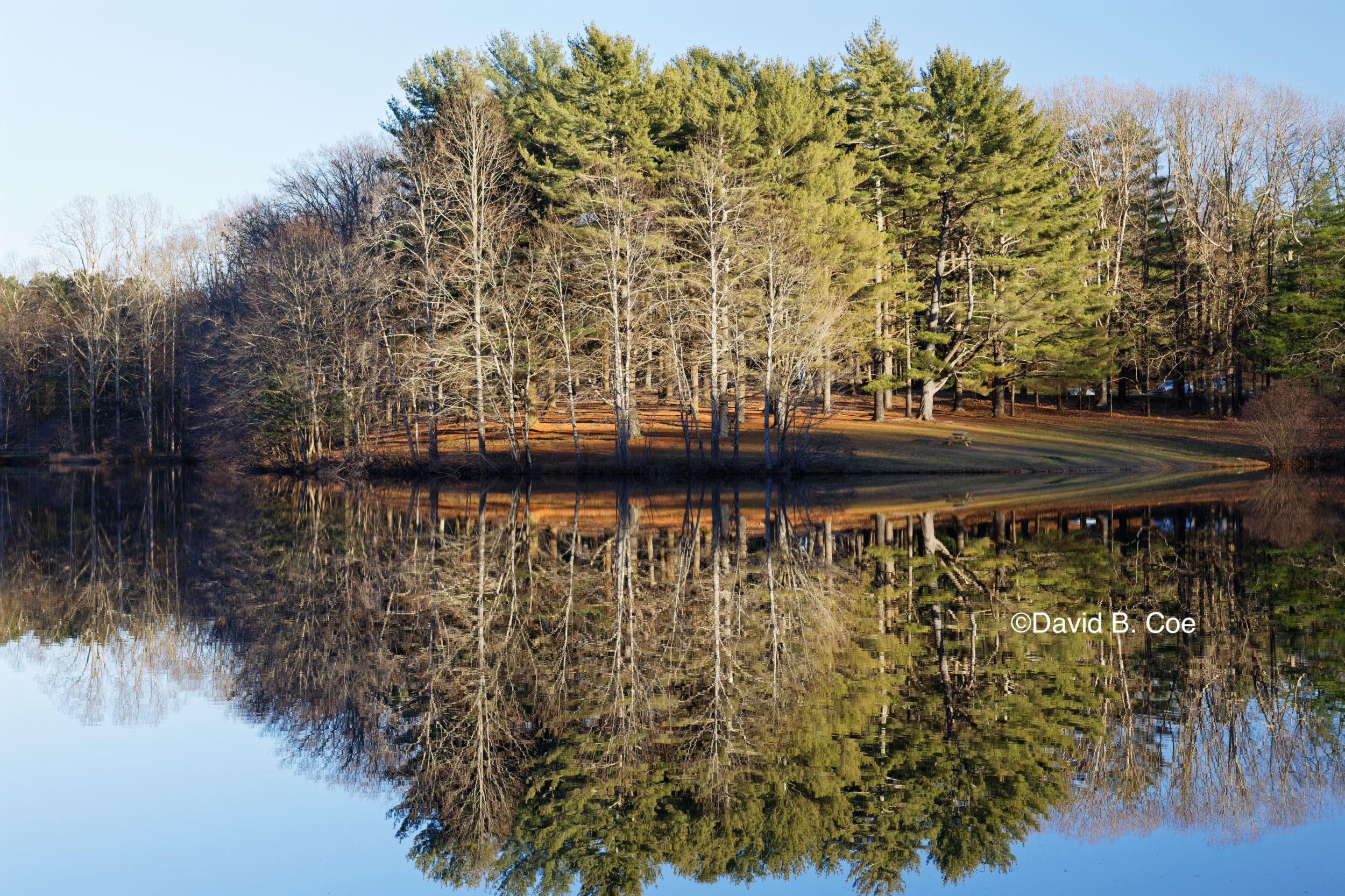
I took this photo back around Christmas, while on a photo walk with my wonderful friend, John Willis. Like me, he is an avid amateur photographer, and he gets out on photo walks almost daily. Before our walk, he had told me that for a period of a few weeks around the Winter Solstice, in late afternoon, the trees and angled sunlight and reflections at Lake Cheston, in our little town, created a striking pattern of striated light and shadow.

As you can see, the man is true to his word.

Today is my mother’s birthday. She would be 99, if she was still with us. She would have loved this photo and would have been fascinated by the light at the lake that day. She was a photographer, too. Mostly, she liked to take pictures while traveling with my father. And travel they did. To Rome and Paris, to Egypt and Israel, to Peru and the Canadian Rockies and all over the Western U.S.

She was curious and lettered, a voracious reader, a lover of all the arts. But there was nothing she loved more than family, than spoiling her grandchildren and catching up with her own kids. She would have had all kinds of questions about this photo — about the place and the light and my friend. And from there she would have had questions about the town, the university, and Nancy’s place in it. And the girls and what they were doing, and my latest book and my next project.

In my mind, I often carry on long conversations with both her and my Dad. And so, with your permission, I will end this short piece, and spend some time conversing with my the memory of my mother.

Wishing you all a wonderful, safe weekend.

Cheston Solstice, by David B. Coe

Monday Musings: What Memories of My Mom Have To Do With COVID

My mother’s birthday is this coming Friday, February 5. I’ve written about her before in this space. I’ve marked past birthdays with Facebook posts and the like. But somehow this year, with her birthday approaching, I find myself thinking of her even more than usual.

She would be turning 99 this year, but we lost her long ago — back in the mid-nineties, when my older daughter was just an infant, and my younger daughter was, to resort to cliché, not even a glimmer in our eyes. I won’t bore you with the sorts of general memories I’ve shared in the past — her love of travel and books, her slightly goofy sense of humor, and her passion for progressive causes and social justice.

My thoughts have gone in a somewhat different direction. I wonder what she would be thinking about the pandemic, and the state of our world. I know she would have been devastated by the earliest days of COVID, almost a year gone now, when her beloved New York City was virtually closed, its hospitals strained beyond capacity, its cultural treasures shuttered. I know she would have had nothing but contempt for those who refused to wear masks and failed to acknowledge the seriousness of the disease.

But I wonder what she would think now. The world is entering a new phase with the pandemic, and I’m not sure what to make of it myself. On the one hand, this is a time of tempered hope. The numbers are terrible, but not quite as bad as they were a few weeks ago. We have vaccines from several drug companies. The protocols vary, but the promise they offer — of limited but effective immunity — allows the optimists among us to envision a time when fear of COVID might fade a bit. Since the pandemic began, health officials have warned against comparing this strain of the Coronavirus to the flu. But if the vaccines work, if immunity can be introduced to broad swaths of the population, COVID might become something we can think as we do influenza: as an illness to be feared, but managed.

On the other hand, our hopes in this regard have to reckon with several troubling truths. First, COVID isn’t going anywhere. Regardless of where it came from, it will probably be around pretty much forever. And the comparison to the flu carries a darker implication. It will continue to mutate, just as the flu does. Already new strains have reached our shores from London, from Brazil, from South Africa. No doubt more are coming. Even now, these new mutations are exposing weaknesses and vulnerabilities in the vaccines. Just as flu shots are somewhat hit-or-miss in their effectiveness, future COVID immunizations are likely to be as well. And COVID is far deadlier than the flu; vaccination failures will have tragic consequences.

What does all of this have to do with my mother? A good question, one I’m still trying to wrap my head around.

Part of it might be this: She used to talk to me about the feared diseases of her childhood. As I say, she was born nearly a century ago, in 1922. When she was a child, penicillin didn’t exist. She was in her thirties, the mother of two small children, when the polio vaccine was developed. I remember once, when I was a kid, a friend of mine got Scarlet Fever, and Mom’s first reaction was to tell me how serious it could be. She almost had to remind herself that by then treatments had become fairly routine. I later learned that she had known children who died of it.

The truth was, my childhood, and that of my siblings, had been made far less perilous by the medical advances of the mid-Twentieth Century. Looking back, I believe that era will be looked upon as a historical aberration. Yes, medical advances continue. But we live in a world that is far more interconnected than it was in the 1960s, ‘70s, and ‘80s. The safety conferred by those advances must now race with accelerated exposures and mutations.

I don’t mean to make this a doom and gloom post. I do think that, by and large, the COVID vaccines will work. Our world will find its way, haltingly, to a new normal that returns to us some of the societal freedoms we’re all missing, while also remaining conscious of the novel threats we face. I’m sad to say that I believe my mother would be less optimistic. She would find all of this frightening, and I wouldn’t blame her. These are scary times. We are fortunate to now have in place an Administration that takes the danger seriously, that relies on science and health experts, and that has no political stake in denial.

That, though, only gets us so far. We need to remain vigilant. We need to watch out not only for ourselves, but also for one another. And that means masking, distancing, getting vaccinated when we are eligible.

Stay safe, friends. Take care of those you love. Take care of those you don’t even know. That’s how we overcome even the most pessimistic of scenarios.