








It’s been a while since I last posted on this blog, and while I don’t think I have much to say, I thought I should at least say something. So….
Hi. How’re’ya doin’?
Good, good…
How am I?
That’s…complicated. Generally, I’m okay. Life flows along. I had a birthday not so long ago. Never mind which one. But I saw friends and family. I heard from lots of people. And despite the inexorable march of time, I felt pretty good about the whole thing. Especially considering the alternative….
A few days later, though, I was feeling down, and I couldn’t explain it. As I say, I’d just had a nice birthday, and things seemed to be going along pretty well. Yet, I was just so very sad. Why? I finally said something to Nancy, and she reacted with something akin to, “Well, yeah, of course.” And then she reminded me that we were, almost to the day, five years removed from the day Alex called to tell us of her cancer diagnosis.
Suddenly, it made sense. As my therapist used to say, the body remembers. Even if the mind doesn’t actively, the body responds on a primal level to things like seasonal changes — the weather, the angle of sun, the awakening of trees and wildlife. My body remembered the trauma of that conversation, and more, it associated it with this time of year. And once I understood, I felt better. I was still sad, of course, but at least I understood why, and that I could handle.
So, yeah, ups and downs.
Speaking of seasonal changes… Spring insinuates itself daily into the landscape and weather. Spring in Tennessee was a frenzied affair. Temperatures rose quickly, everything seemed to bloom at once, and it wasn’t uncommon to go from winter to spring to days that felt like mid-summer in the span of a single month. Spring here in the Northeast is a far more gradual process, as if the land itself is savoring its rebirth. Fits and starts. Warm days give way to cold ones, which in turn are followed by warmer ones. The end of last week was downright cold. It snowed here yesterday. But earlier in the week, it reached 70. It’s supposed to do the same early this week. And then we could have more snow on Thursday or Friday. Nuts, right? Our crocuses are up. Tulips and daffodils are emerging, but not yet showing blooms. Tree buds are beginning to swell. A few more bird species are flocking to our feeders. The general trend is clear and heartening after a long winter.
With spring, of course, comes baseball, which is still my sport of choice. I love soccer (excuse me: football), but my connection to baseball goes back to some of the earliest memories of my childhood. Playing ball on our little dead end street with the neighborhood kids, playing stickball on my school playground, collecting baseball cards, poring over boxscores in the newspaper literally every day of the season, watching games on TV with my dad, listening to games on my radio on weeknights when I should have been trying to sleep.
I don’t watch as much as I used to. When I was ten, I didn’t have to justify wasting a couple of hours watching a televised game. These days, there always seems to be something else I ought to be doing. But MLB.com airs radio broadcasts of Major League games from all over the country, and because I’m a subscriber, they’re basically free. So, I intend to listen this summer. There is something magical about baseball on the radio, announced by someone who knows what they’re doing. Maybe it’s the slower pace of the sport that makes it work. Maybe it’s just my love of the game. Whatever. I’m looking forward to it.
What? Work? Yeah, I’m doing some work. I am editing stories for the upcoming anthology, Disruptive Intent, which I am co-editing with Sarah J. Sover for Falstaff Books. There have been a few hiccups along the way, but that is to be expected when working on a project with so many moving parts. I can’t wait to see the final product. We have a terrific set of stories from our roster of wonderful writers, and working with Sarah has been a joy.
When not working on those edits, I have been writing my new book. I am not setting any land speed records with my output, but that’s okay. I’m not in any rush. I’m making progress, and I continue to love the concept and the main character.
I did my taxes this past week (which is also part of “work,” since I’m self-employed). That’s really all I care to say on that subject….
Finally, this past weekend, I took part in downtown Albany’s small but passionate No-King’s Rally. The city hosted a couple of rallies, and the region hosted more than a dozen. The one I attended began in the shadow of New York’s statehouse and then marched through the streets surrounding the Capitol Plaza. We chanted and held signs and all that good stuff, and we joined the millions worldwide who called for an end to the war-of-choice in Iran, the extra-legal brutality of ICE, the weaponization of the Justice Department, the assault on voting rights, and the systemic protection of Jeffrey Epstein’s allies and enablers in the White House and elsewhere. It felt good to do something positive with my simmering anger at this Administration, and to be surrounded by so many like-minded people.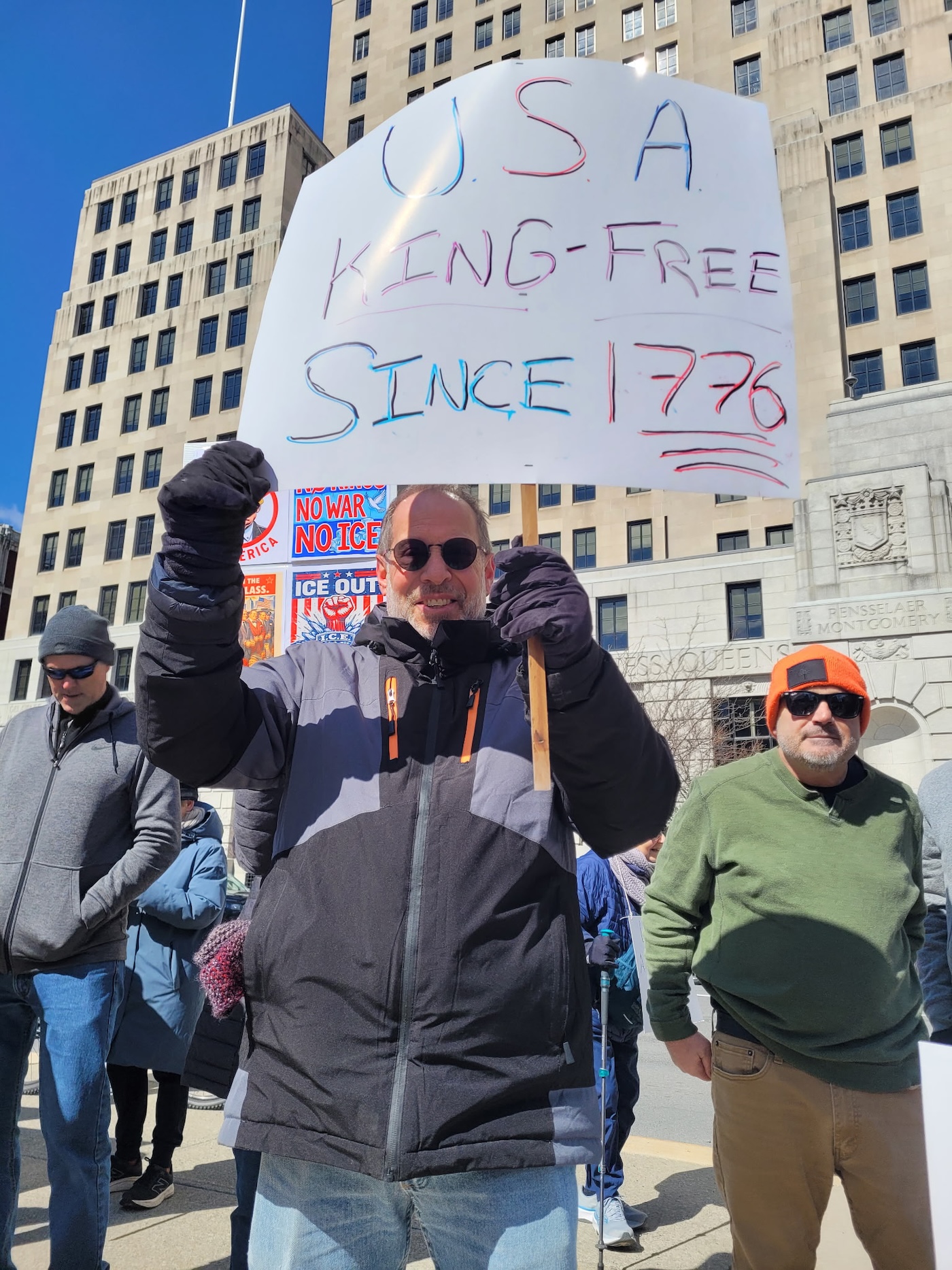
And that’s me right now.
I hope you are well, that the onset of spring brings you joy, and that you have a wonderful week.
 In the next week or so, we —
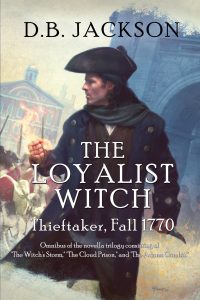
  Which is another way of saying that innovation for the sake of innovation is not necessary or advised. Yes, it’s fun and challenging to write books or stories that don’t conform to simple linear narrative. I learned that with the Islevale Cycle, my time travel/epic fantasy series. And if you have ideas for playing with chronology or otherwise changing up your narrative style, by all means give it a try. But don’t feel that you have to. There are plenty of books, movies, plays, and stories out there that conform to regular old narrative form, and they do just fine. Better to write a story in the normal way and have it come out well, than to change things up just for the purpose of doing so, and thus leave your audience confused.
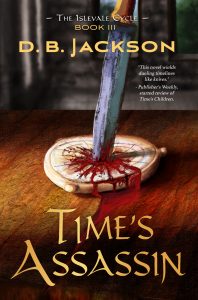 Those are not easy questions to answer. As with beginnings and middles, there are as many ways to approach an ending as there are stories to be written. Different authors like to do different things with their closing chapters. And so, again as with the other parts of story structure, we can learn how to write good endings, in part, by reading as many books and stories as possible. Guy Gavriel Kay’s stand-alone fantasy novel, Tigana, has one of the finest endings of any book I’ve ever read. It is haunting and beautiful and — surprisingly — uncertain. But it is incredibly effective. Of all the endings I’ve written, I believe my favorite is the closing to Time’s Assassin, the third and final book of The Islevale Cycle, my time travel/epic fantasy trilogy. Why do I think it’s the best? Because it ties off all the loose ends from my narrative. It hits all the emotional notes I wanted it to. My characters emerge from those final pages changed, scarred even, but also in a place of growth and new equilibrium. Also, it’s action-packed and, I believe, really well-written.
 2) Tying off various narrative loose ends. The most important story element is the central conflict, which the climax should either settle (if the book is a stand alone or the last of a series) or advance in some significant way (if the book is a middle volume of an extended series). But there are often other narrative threads that need to be concluded to the readers’ satisfaction before our audience will feel at peace with the story’s ending. These can include unresolved relationship issues (strained friendships, burgeoning or troubled romances, conflicts between siblings or a parent and child, etc.), missing information and/or secrets that could not be revealed before the climax ran its course (this is especially common in mysteries like the Thieftaker stories), or character arc and narrative arc issues involving secondary characters and storylines. Part of the so-called “denouement” involves wrapping up these additional story threads.
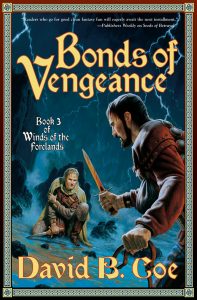 I’ve been thinking of this a lot recently because I am in the process — finally! — of reissuing my Winds of the Forelands series, which has been out of print for several years. The books are currently being scanned digitally (they are old enough that I never had digital files of the final — copy edited and proofed — versions of the books) and once that process is done, I will edit and polish them and find some way to put them out into the world again.
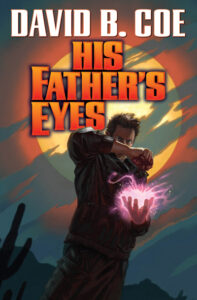 I feel that way about the second and third books in my Case Files of Justis Fearsson series, His Father’s Eyes and Shadow’s Blade. These books are easily as good as the best Thieftaker books, but the Fearsson series, for whatever reason, never took off the way Thieftaker did. Hence, few people know about the Fearsson books, and it’s a shame, because these two volumes especially include some of the best writing I’ve ever done.
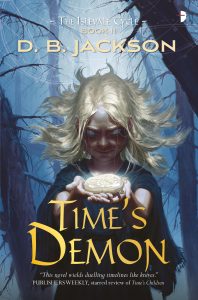
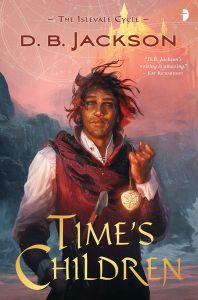 Same with the Islevale Cycle trilogy. Time’s Children is the best reviewed book I’ve written, and Time’s Demon and Time’s Assassin build on the work I did in that first volume. But the books did poorly commercially because the series got lost in a complete reshuffling of the management and staffing of the company that published the first two installments. The series died before it ever had a chance to succeed. Which is a shame, because the world building I did for Islevale is my best by a country mile, and the plotting is the most ambitious and complex I ever attempted. Those three novels are certainly among my very favorites.
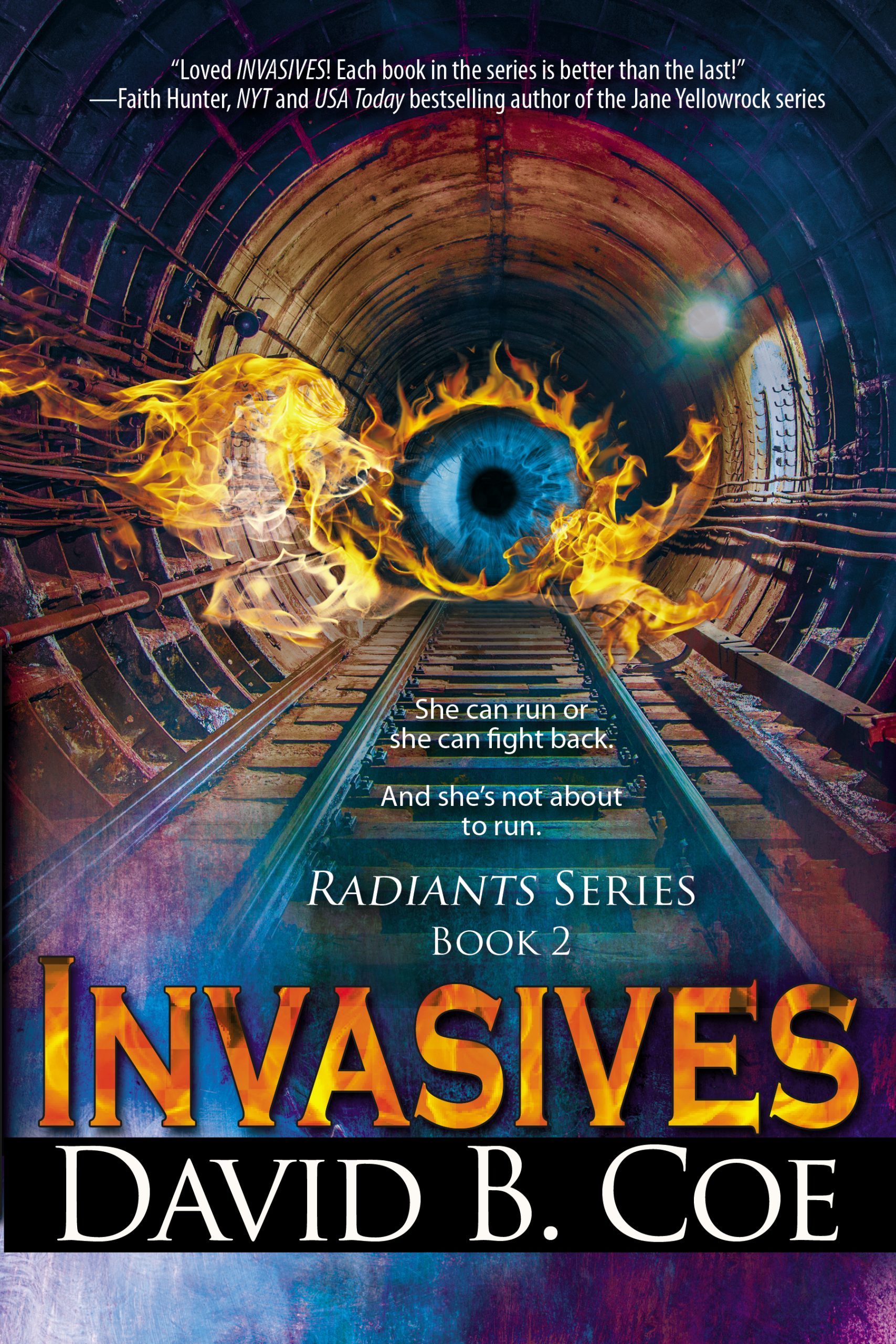
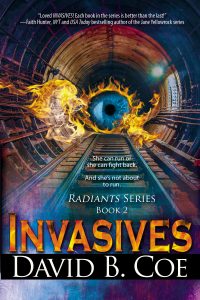 But of all the novels I have published thus far, my favorite is Invasives, the second Radiants book. As I have mentioned here before, Invasives saved me. This was the book I was writing when our older daughter received her cancer diagnosis. I briefly shelved the project, thinking I couldn’t possible write while in the midst of that crisis. I soon realized, however, that I HAD to write, that writing would keep me centered and sane. I believe pouring all my emotional energy into the book explains why Invasives contains far and away the best character work I have ever done. It’s also paced better than any book I’ve written. It is simply my best.
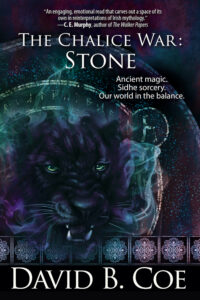 Next month, I will release the first volume of The Chalice War trilogy, my Celtic urban fantasy. This is a different sort of book for me, a different sort of series. As usual with a new release, I love the book and I am excited to get it into the hands of my readers.
 Why do I do this? Why am I suggesting you do it, too? Because while we are telling stories, our books are about more than plot, more than action and intrigue and suspense. Our books are about people. Not humans, necessarily, but people certainly. If we do our jobs as writers, our readers will be absorbed by our narratives, but more importantly, they will become attached to our characters. And they will want to see more than just the big moment when those characters prevail (or not). They will want to see a bit of what comes after.
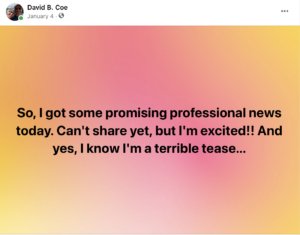 Nearly two months ago, early in the new year, I posted on social media that I had some exciting professional news I couldn’t share quite yet. I was thrilled, and wanted to let people know. But I also didn’t want to say anything before all the details had been settled. So I posted my little teaser, forgetting the one immutable rule of the publishing business: Things always happen slower than one thinks they will.