








By now you might have seen the posts across several social media platforms: There is a new Zombies Need Brains Kickstarter campaign underway. For eleven years now, ZNB has been publishing quality short fiction from teams of established professionals and new voices found through open calls for stories. We’re doing three anthologies this year, and before I get to the advice part of the post, I wanted to take a bit of time to tell you about them.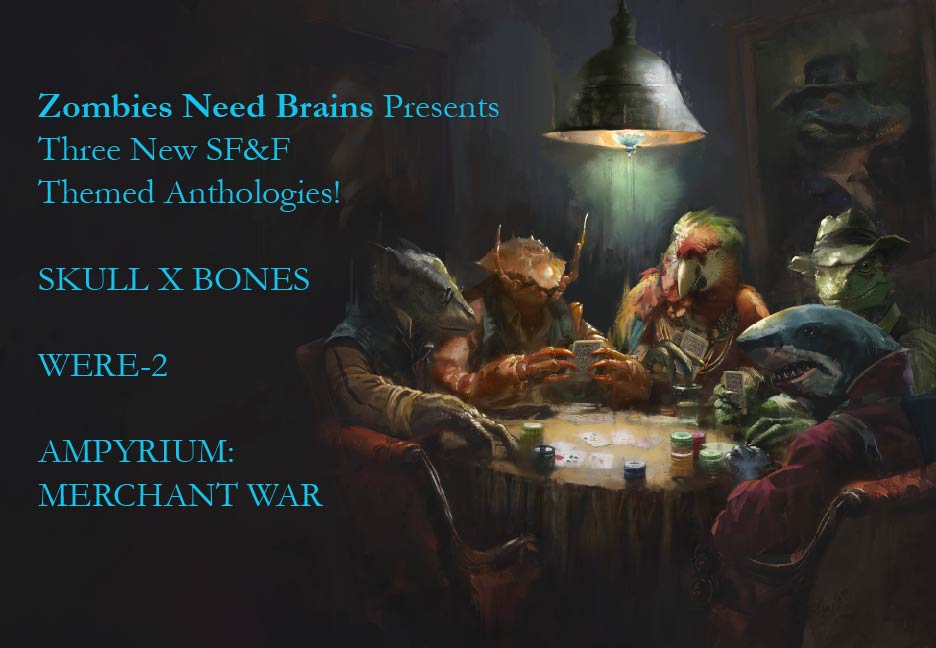
The first anthology is Were- 2, and is edited by Joshua Palmatier and S.C. Butler. The original Were- anthology came out in 2016, and featured stories about were-creatures other than werewolves. This new anthology has a similar theme. I wrote a story for Were-, one I still love, called “A Party For Bailey.” For my were-creatures I chose bears, and that’s all I’ll say. I’m sure you’ll love Were- 2 — its anchor authors include Randee Dawn, Auston Habershaw, Gini Koch, Gail Z. Martin and Larry N. Martin, Harry Turtledove, Tim Waggoner, and Jean Marie Ward.
This year’s second anthology is Skull X Bones. It’s a pirate anthology that I will be co-editing with Joshua. We will be looking for speculative fiction stories of any sort (fantasy, paranormal, science fiction, horror), as long as they focus on pirates. Our anchor author lineup includes Rod Belcher, Alex Bledsoe, Jennifer Brozek, C.C. Finlay, Violette Malan, Misty Massey, and Alan Smale.
Finally, Joshua will be solo editing a follow up to the Ampyrium anthology that was published earlier this summer. Ampyrium is a shared fantasy world that debuted in seven novella-length stories written by Patricia Bray, S.C. Butler, Esther M. Friesner, Juliet E. McKenna, Jason Palmatier, Joshua Palmatier, and me. The new anthology, Ampyrium: Merchant War, will have anchor stories from all seven of us, plus another seven stories (or so) from an open call.
So, as a long-time ZNB editor (Skull X Bones will be my sixth ZNB anthology), and a longer-term ZNB author (in addition to those I have edited, I have written for a half dozen ZNB anthologies), what advice can I offer to writers hoping to sell stories to one collection or another? Each ZNB anthology receives literally hundreds of open call submissions. Usually we take seven or eight stories. So you want your story to stand out in good ways.
1) Pay close attention to the anthology themes. When we ask for stories written, say, about pirates, that doesn’t mean the story should merely mention pirates or have one corsair as a background character. It means pirates, of whatever sort, should be so central to the story that without them, the narrative does not exist. For an anthology like Ampyrium: Merchant War, you should probably plan to read some or all of the first anthology, to familiarize yourself with the setting and the themes of those original tales. Speaking as an editor, I can tell you that I reject more stories for not being on theme than for any other reason.
2) Read the submission guidelines. This is important for ANYTHING you submit to any market. All editors are swamped with stories and short on time. We want to find great stories, obviously, but we also want to get through our slush piles. When I get a story that’s written in a tiny font, or that is single-spaced (which makes a story MUCH harder to read), or has wonky margins, or a weird font color, I tend to start reading it with a negative attitude. The writer in question has already ticked me off by ignoring the guidelines, and now I’m looking for one more reason to reject the story and move on to the next one.
You don’t want that. You want to do everything right in terms of formatting and following directions, so that I read the story with an open mind, so that I accept or reject the story purely based on the quality of the writing and narrative elements. Follow. The. Guidelines.
3) Proof your story. Then proof your story. And then proof your story again. Look, typos happen. All of us who edit for ZNB are also professional writers. We all have typos in our own books and stories, and chances are we could read through them 100 times and still not catch every little error. But that said, again speaking as an editor, finding two or three typos on the very first page is much like receiving a story that didn’t follow the GLs (see above). It makes me wonder if the author of the story cared enough to edit. Taking pride in our work means, in part, making our manuscripts as clean as possible.
4) Think about your narrative — and how it relates to the theme — as broadly as possible. Joshua has said, in offering advice on panels, “Your first idea is not necessarily your best idea.” And he’s right. Sometimes, a great idea comes to us immediately. Those moments are magical, but relatively uncommon. More often, our first idea is the most obvious one, which can mean that it will be similar to the ideas of lots of other writers submitting to the anthology. Let your ideas for your story steep a bit. Give them time to take you in truly innovative directions.
5) Develop your ideas. My second most common reason for rejecting a story is that the idea of the narrative failed to move beyond just that: an idea. A story is more than a cool premise. A story is about characters, be they human or fantastical or alien. A story brings some sort of change or progress to the lives of those characters or to the world around them. If your synopsis of the story you’re submitting doesn’t include something about characters, their lives, and the way things change for them, chances are you need to rethink your story. And I would add this — generally speaking, if the word count of your story is under 2,500, it probably needs more development. We rarely take stories that are shorter than that, not because we want you to pad your word count, but rather because it takes time to develop a plot into something more than an idea.
The open call for stories for this year’s ZNB anthologies will begin soon after the Kickstarter ends. So, first things first: We have to fund the projects. We are already a quarter of the way to our goal, which is great. But we still have a long way to go, and we need your help!!
Thanks, and have a great week!
 And in part, this is the fault of professionals like me, who talk about our work habits and, perhaps, create unrealistic expectations that writers with less experience then apply to themselves. I write full time. I demand of myself that I write 2,000 words per day. I am asked often how long it takes me to write a book, and the honest answer is that it takes me about three months, which is pretty quick, I know. Writers who are at the outsets of their careers should not necessarily expect to do the same.
 We’ll begin with the assumption that the book we’re writing will come in at around 100,000 words, which is the approximate length of most of the Thieftaker books, the Chalice War books, and the Fearsson books. Epic fantasies tend to be somewhat longer; YAs tend to be shorter. But 100K is a good middle ground.
 Feeling more ambitious? Say we can write for ninety minutes each weekday, and can manage to average 500 words a day, while taking our weekends off to recharge. Well, now we’re writing 2,500 words per week, and that novel will be done in less than nine months. Willing to write on weekends, too? Now we’re down to seven months.
 What about the rest of my life? What’s next in other realms?
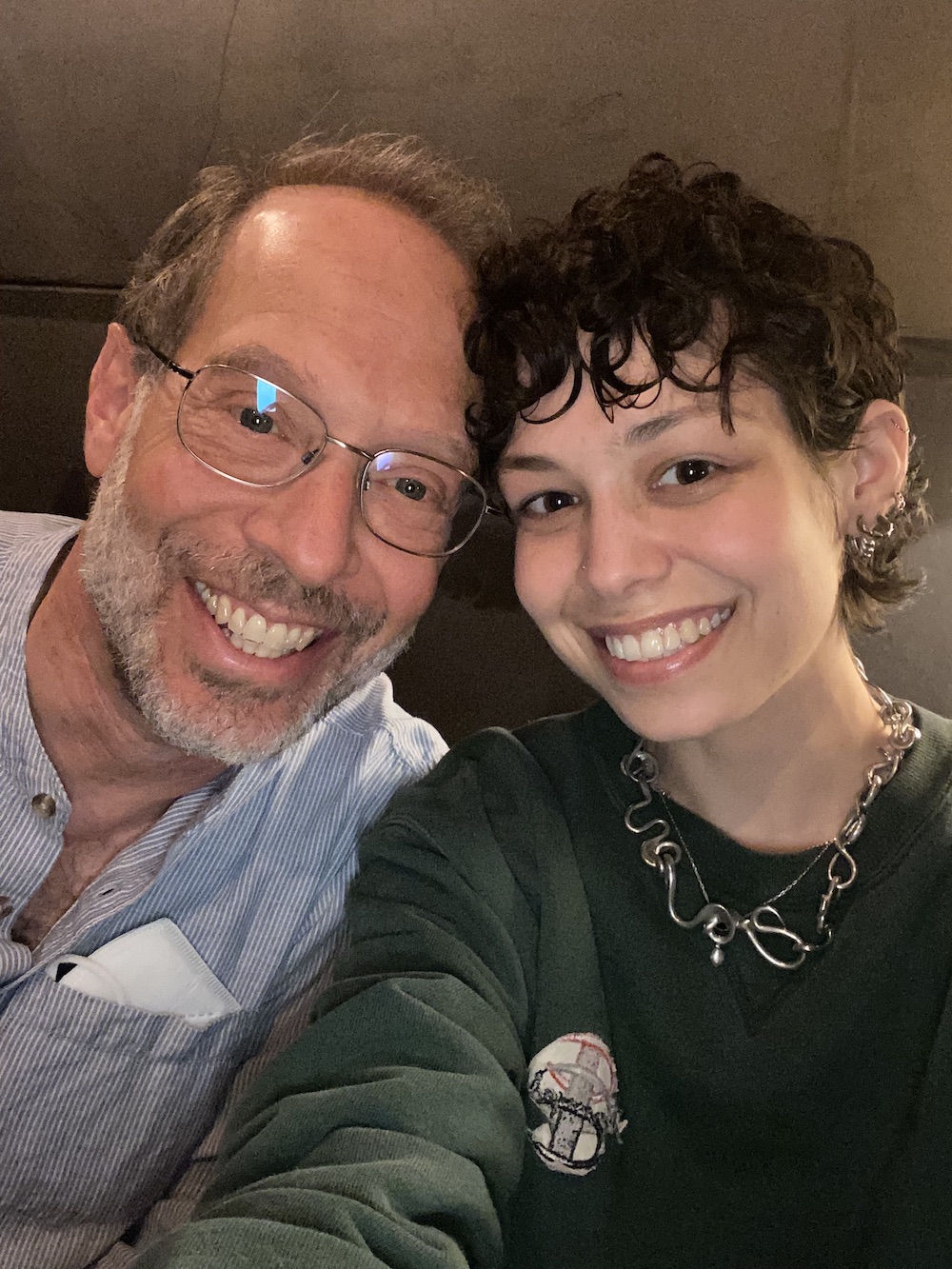 It has now been nearly five months since we lost Alex. I still get the same question — and to be clear, I don’t mind being asked. Not at all. It’s just that I still don’t know how to answer. My friends tell me that five months is nothing, that there is no reason I should have a handle on my emotions already. My therapist says the same. I suppose I should listen to all of them. But I grow impatient with myself. I make my living with words and with emotions. The core of my art is conveying the emotional state of my point of view characters. It’s practically the definition of what a fiction writer does.
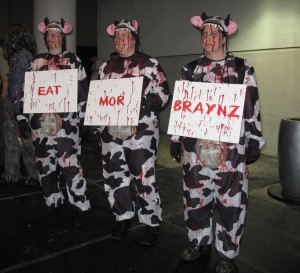 80,000 people. This year, in an attempt to control the crowd just a little, I believe attendance at the con has been capped at 65,000. Yeah, that’s still pretty big.
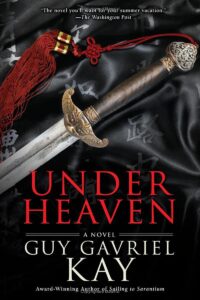 I have just started reading a book that I have read at least one time before. Maybe two. It is Under Heaven, by Guy Gavriel Kay, a terrific historical fantasy set in a world modeled after Tang Dynasty China. The truth is, I read many of Guy’s books more than once. I read books by other authors multiple times as well, and I would recommend that others do the same — writers AND non-writers.
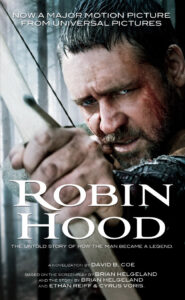 But the media work I have done in the past wasn’t like that. Back in 2009-2010, I wrote the novelization of Ridley Scott’s movie Robin Hood, starring Russell Crowe and Cate Blanchett. The movie wasn’t out yet — I worked from a script — and I didn’t know whether or not I would love it. (I didn’t.) In 2018, I wrote a novel that tied in with the History Channel’s Knightfall series about the Knights Templar. In this case, I got to see all the episodes of the first season before the series was aired. I liked the show well enough.
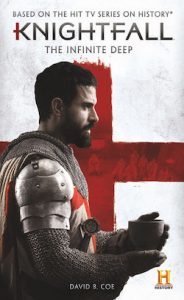 With the Knightfall book, I had a good deal more freedom and control, and so I enjoyed the process much, much more. But still I was mostly writing from the viewpoint of someone else’s characters. There is one point of view character, though, who I made my own — a child who appears later in the series as an adult. But her childhood POV was mine and gave me that sense of ownership, of personal investment in the book.
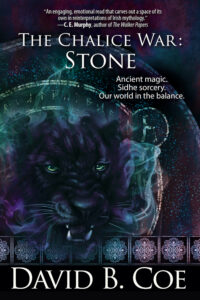 I have written a lot of books and stories over the years. The truth is, I love all of them. I can tell you a hundred things I like about every book I’ve published, and I believe if I could convince people to read each of them, the books would be very popular. But the fact is, as is true with most authors, some of my books have done far better commercially than others. And, as it happens, the ones that have tended to do well are those that are most easily and succinctly described. The Thieftaker books are my most successful. How do I pitch them to interested readers? “These are magical mysteries set against the backdrop of the American Revolution.” The new series, the Chalice War, is also easy to describe — “It’s a modern urban fantasy steeped in Celtic mythology.” These books, I have found, are as easy to sell as the Thieftaker books, and that is saying something.
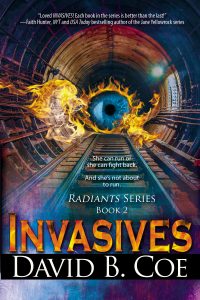 The three books of the Case Files of Justis Fearsson and the Radiants duology might well be my favorites of all the books I’ve written. They are exciting, emotional, filled with great characters, and paced within an inch of their lives. But they are far more difficult to describe in a single sentence than other books and, likely as a result, they have never done as well commercially as I hoped they would.