








Are you familiar with the TV show How I Met Your Mother, which ran on CBS from 2005-2014? Ah, good! [Puts out hand.] Nice to meet you. I’m Ted.
For those unfamiliar with the show, it was a sitcom that featured Alyson Hannigan (“Willow” from Buffy the Vampire Slayer), Cobie Smulders, Jason Segel, Neil Patrick Harris, and Josh Radnor as “Ted.” The conceit of the series is that Ted (voiced in the opening narrative scenes by the late Bob Saget) is, at some point in the distant future, telling his teenage children the story of how he met their mom. Ted is a hopeless and hapless romantic, who goes through a long series of ill-fated relationships looking for The One, the person with whom he is destined to spend his life. It is an entertaining series, funny, poignant at times, and on occasion eloquent on the need to have faith, even in the midst of difficult times, that one’s dreams can be attained. You can stream it on Prime if you’re interested.
I say I’m “Ted” because for the longest time, throughout college and the early years of graduate school, I made many poor dating decisions based on my own epic quest to find The One. I wasn’t interested in casual dating. I wanted to fall in love, to meet the woman of my dreams. And so I pursued the wrong romances. I passed over opportunities to date people who probably would have been great companions for a while. Put another way, I took the whole thing way too seriously, and, more to the point, I made myself miserable doing so. I spent a lot of time alone, and sad about it. The two truly serious relationships I did have during this time ended badly, in part because I found myself thinking maybe they were my future. And so I grew too intense about the romances and placed too many expectations on my partners.
Why am I telling you this?
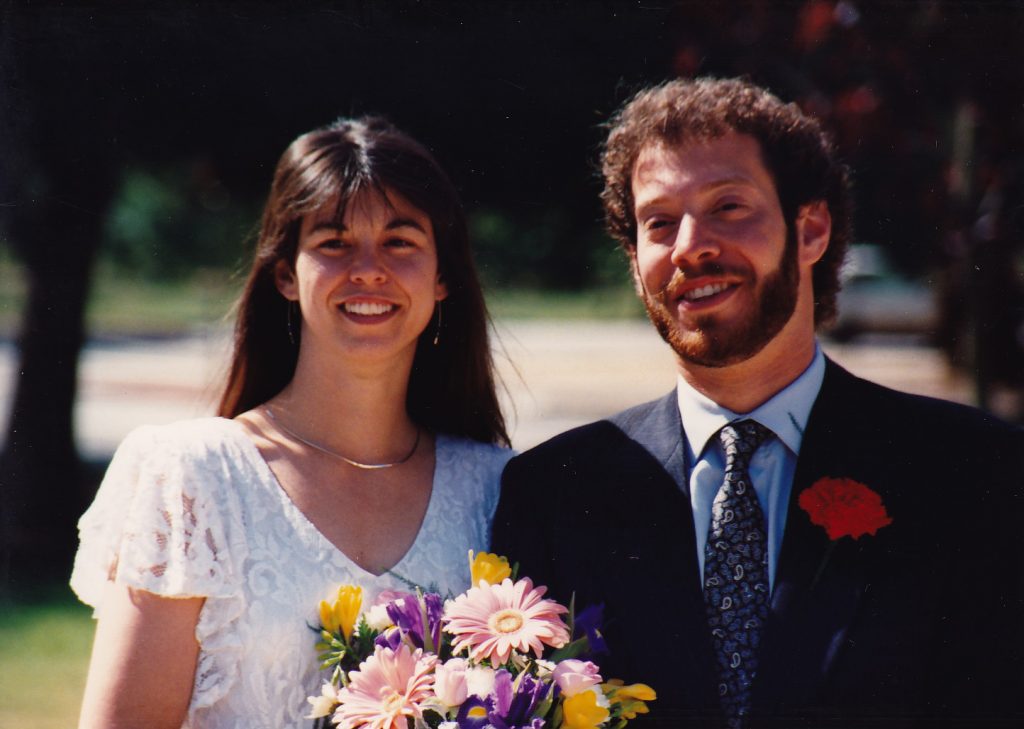 Because eventually I did find The One, and I married her 31 years ago this week. (Our anniversary is Thursday.)
The funny thing is — and perhaps the predictable thing as well — when Nancy and I started dating, I thought I was making, at long last, a decision to live in the now instead of worrying about what was going to happen, about where the relationship was headed in the long run. I didn’t try to project out in my mind how things might go with respect to our possible lives together. I didn’t assume we had that kind of future. I had no expectations. And I also didn’t know, because Nancy hadn’t yet told me, that the moment she met me, she thought, “Oh, this is the guy I’m going to marry.”
Thank God I wasn’t aware of this. Because if I had been, I probably would have found some way to screw it all up.
To state the obvious, life is unpredictable. The Fates delight in messing with us, taking our plans and expectations and shaking them up like a snow globe. As I said, going in, I had no expectations about my relationship with Nancy. Within two weeks of our first date, I knew that I would spend my life with her. Within three months, we were living together. She was a thunderbolt in my life, and has been my love and my light ever since.
But as in love, so in life. Expectations and plans are good for things like AirBnB bookings and car rentals, project due dates and conference attendance. But for the stuff we can’t control, they can be a source of more stress than comfort, of more disappointment than direction. I found The One when I wasn’t looking for her. I have enjoyed my greatest triumphs and moments of joy professionally when working toward my goals without necessarily banking on my ambitions.
Thirty-one years ago at this time, Nancy and I were welcoming our first wedding guests to California (my brothers and their partners, and my parents). Over the next several days we had dinners, rehearsals, a wonderful Wedding Softball Game (Nancy, as the bride, never had to play in the field, and could bat for either team whenever the spirit moved her), and a glorious wedding day, complete with a civil ceremony in the Rodin Sculpture Garden at Stanford, that still resonates as one of the three happiest days of my life.
The point of Ted’s search for love in How I Met Your Mother is that all his setbacks and disappointments, while painful at the time, were actually carrying him inexorably toward his one true love. I like to think of my failed romances the same way. Yes, I made some poor decisions at the time, and I went through some spells of loneliness. But given how it all worked out, it was worth the pain. I am a very lucky man.
Have a great week.
 After publishing
 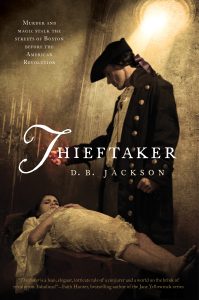 I would love to be a bestselling author. And with each new project I take on, I wonder if this might finally be the literary vehicle that gets me there. Thieftaker, Fearsson, the time travel books, the Radiants franchise. I had high hopes for all of them. All of them were critical successes. None of them has taken me to that next level commercially. So does that mean I should give up?
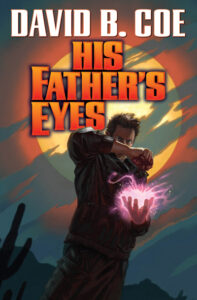 The difference between what I did with those two projects and what I am telling you not to do is this: I kept working on these books, but I also moved ahead with other projects, so that I wouldn’t stall my career. Yes, I worked for six years on the first Fearsson book. But in that time, I also wrote the Thieftaker books and the Robin Hood novelization. This, by the way, is also the secret to finding that balance I mentioned. By all means, keep working on the one idea, but do so while simultaneously developing others. Don’t become so obsessed with the one challenge that you lose sight of all else.
 One of the great delights of writing historical fiction is the opportunity to leap into research and go bouncing off into every conceivable rabbit hole—er, to do a deep dive into a specific time, place or topic which will provide the backdrop for the story you have in mind. Unless you’re already a historical specialist in that area, doing the research is likely to consume a lot of time, attention, and other resources.