








I remember a conversation with my father when I was a kid, about a friend of the family who was trying to make a second career for himself as a writer of fiction. His first novel had come out recently, and having already developed my own passion for writing stories, I was interested to know more about the book. I asked Dad how the book was and he told me, with some regret, because this really was a good friend, that it wasn’t very good. He blamed the book’s failings on the fact that our friend had strayed too far from his own experience in writing it. And then he repeated that age-old admonition for writers, “Write what you know.”
Now anyone who has read my blog entries or social media knows that I loved my dad — to the moon and back, as the children’s book says. I adored him. But I’ve understood for years now that this particular bit of received wisdom — “Write what you know” — is, at best, of questionable value. At worst, it is terribly limiting, particularly for authors of speculative fiction.
Or is it?
Let’s start with the obvious. If we take “write what you know” too literally, we can never write from the point of view of any character who is not like us. We can never set our stories in any world unlike our own. We can never place our characters in situations that we have not lived. Which, if you’re at all like me, leaves you with nothing but really boring stories to tell.
And I fear that my father, who was wonderful and well-meaning, but didn’t know a great deal about what it meant to write creatively, hewed a bit too closely to this limited and limiting interpretation of the old adage. For him, “write what you know” meant exactly that.
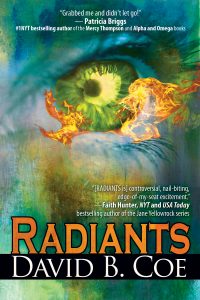
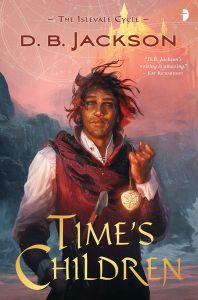 The thing is, we writers do and must “write what we know.” But we understand that “what we know” does not equal “what we have lived.” Writing is all about emotion, about delving into the thoughts and feelings and visceral reactions of our point of view characters. I may not have ever traveled through time (for example), or investigated a murder in pre-Revolutionary Boston, or discovered that I possess supernatural powers and then been pursued by rogue government agents intent on killing my family and making me their weapon. (If you haven’t read Radiants, it’s really time you did.) But even if I haven’t done those things, I have lived the gamut of emotions my characters experience. I have known fear. I have been in love. I adore my children and have been frightened for them. I have been enraged. I have experienced physical pain and illness, exhaustion and hunger, desire and pleasure. I have known joy and confusion and shock, the thrill of ambition realized and the bitter disappointment of expectation thwarted. I can go on, but I think you get my point.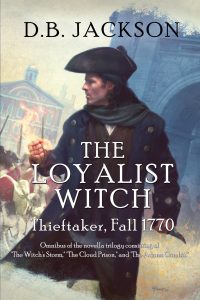
As writers, we tell stories that range through time and place, that mine the very depths of our imaginations, that spin circumstance and situation into plots of complexity and innovation. But we connect with our audience through what our characters feel and experience, and what they, in turn, evoke from those who read their stories.
Put another way, “write what you know” proves to be quite valuable advice if we take it the right way, if we see it not as a limitation on our subject matter, but rather as an exhortation to delve deeper into the emotional and sensory content of our narratives.
 This is a topic to which I intend to return next week and in the weeks to come. Because when we start to think of “write what you know” as an invitation to think more about what our lives, despite their mundanity, have in common with the lives of our characters, we find new ways to enrich our storytelling and world building.
But for today, I leave you with this: The more you incorporate your emotional history into the character work you do, the more relatable your characters are apt to be. And then it won’t matter if they are Qirsi or weremystes, wizards or necromancers, vampires or vampire hunters. Their thoughts and feelings will resonate with your readers. And that, after all, is what we want.
Keep writing!
 These are books I turn to again and again during the course of my work, and I expect the writer on your list will do the same. Not all of them are easy to find, but I assure you, they’re worth the effort. So here is a partial list:
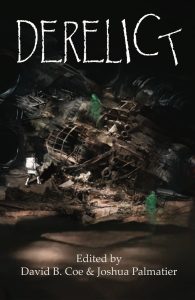 Last year, I co-edited Derelict. We received more than four hundred stories. The year before, I co-edited Galactic Stew. We received more than four hundred stories. The year before that, I co-edited Temporally Deactivated. We received more than two-hundred and fifty stories. Again, these are submissions for a total of six or seven slots.
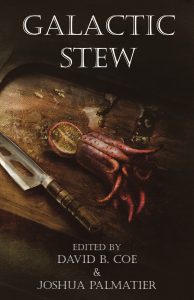 Along similar lines, ZNB anthologies are themed, which means that all the stories are about something in particular. Galactic Stew was about food. Derelict was about abandoned or lost ships. Noir is about detectives, in SF, fantasy, horror, or paranormal settings, investigating mysteries. As with the GLs, anthology themes are not suggestions. We’re not saying “If you feel like writing about detectives, feel free, but we’ll take any story about anything.” We’re saying, “For this anthology, we want detective stories with a speculative fiction element.” I can’t tell you how many stories we get that have nothing at all to do with our theme. I CAN tell you that we reject every last one of them. If you send to a themed anthology open-call a story that is off theme, it will not be accepted. Ever. Full stop.