Tag Archives: writing

Monday Musings: Where Does Mentoring Fit In With Today’s Publishing Realities?

I have a very good friend, also a writer, with whom I often discuss the depressing state of the writing world at this point in history. We have a sort of gallows humor about the whole thing — a lot of joking comments about low pay, the dearth of readers, the way New York publishing has basically lost interest in the midlist author, and the generally low quality of self-published works that we encounter when we dare to dip our toes into those murky waters. (No slight intended to anyone — seriously, if you are self-published, please don’t tell me that I have insulted you. There are good self-published books out there. But let’s be honest: The self-pubbed gems tend to be overwhelmed by the dross. Too many self-published books have had no serious editing or proofing, leaving them overlong and filled with errors that might easily have been avoided.)

Writers starting today face formidable obstacles that did not exist when I began my career (you know, back in the day when we carved novels into stone tablets….). There are more wannabe writers hawking their wares on various online platforms now than there have ever been. The democratization of publishing technology has convinced many that they can be professionals simply by writing something, slapping it into the appropriate app, and putting it up for sale. Again, some of those books might be very good, but none of them have had to make their way through any vetting process. I am a dedicated amateur photographer, and I am pretty good. I have even sold some of my work and had images published. But I am not truly a professional. I know professionals. Most of them are far, far better than I am. But I have access to digital photo equipment that has helped me elevate my skill. I have access to printing services that make my photos look professional. I have even put together a book of my work that looks like any other coffee table photography book. In short, I have benefited from the same sort of democratization in photography that I am describing with respect to publishing, even though I KNOW that I am not nearly as good a photographer as most professionals.

So, anyway, that is one obstacle: The sheer number of authors out there these days, competing for the attention of an ever-shrinking pool of potential readers.

Why ever-shrinking? That’s obstacle number two. I actually think the absolute number of devoted readers has remained roughly the same over the course of the past, say, fifty years. But if that number is remaining relatively static while the population grows, and while the number of would-be authors grows… well, you do the math.

The third obstacle I mentioned above: New York publishing — a moniker used to refer to what some might call legacy publishing — basically means the publishing houses that have dominated the industry for so long: Alfred A. Knopf, Random House, Saint Martins (which includes my old publisher, Tor Books), and other such behemoths. When I started writing, these big publishing houses were still (mostly) independently owned. They ran their businesses with at least some sense of the mission of their founders. They understood that publishing was not simply another profit-maker. The success of big-name authors allowed these houses to nurture the careers of beginning writers, and of those in the so-called midlist who had solid readership but who were probably never going to break into the ranks of those bestsellers. (And allow me to say here that legacy publishing was far from an idyllic business world. Yes, it supported authors in a range of sales categories. But the vast, vast majority of its authors were male and White.) Around the turn of the millennium, New York publishing began to consolidate. Mergers and buyouts disrupted that old model, and when the dust settled, many of the remaining publishing houses were subsidiaries of larger corporations that had no interest in sustaining the careers of authors who didn’t sell all that well. They still gave contracts to the big names, and they still gave contracts to young writers who showed promise, but they had little patience if those young voices didn’t catch on quickly, and they stopped maintaining the midlist pretty much entirely.
The publishers also squeezed out a lot of editors, feeling that editing was a luxury, and an expensive one at that. “Look at all those self-published titles selling online,” they said. “They’re not edited, and their readers don’t seem to care. Why should we spend so much when most readers just aren’t that discerning?” My editor at the start of my career was, to put it mildly, a problematic character. He was difficult to work with, unreliable, and slow. And eventually, he was fired for cause. And yet, I learned a ton from him. He taught me about the business. He taught me to be a much, much better writer, simply by working with me to improve my craft. I would be lying if I didn’t admit that I owe much of my career to his peculiar brand of wisdom. Young writers need that sort of mentorship. And in today’s world, few of them get it.

I should also say (in a post that is already lengthy) that today’s young writers also have to compete with a faceless, soulless technology that can produce passable stories at virtually no cost, in virtually no time. How the hell are human authors supposed to compete with that? Yes, AI generated characters and stories are not very good (yet). But again, many readers have come to accept mediocrity as entertainment, so long as it has a plot and serviceable characters. It may not be great, but it will divert my attention for a little while.

And all around us, civilization collapses….

Polaris Award, David B. Coe 2025That brings me to the larger point of this post. Last year, at ConCarolinas, I was given the Polaris Award, in large part for the mentoring of young writers I have done, and continue to do. Right now, I have no fewer than half a dozen writers who consider me a mentor. Over the course of my career, that number is far, far higher. I benefited from the wisdom of many established authors when first I began my career. I have always felt that it was my duty, and also my privilege, to offer the same guidance to those coming up after me. I love mentoring.

But in recent years, I have come to wonder how I can offer encouragement to young writers knowing how difficult a path they face in this profession. I have discussed this at length with the friend I mentioned at the beginning of this post. He feels much the same way, and yet he continues to mentor, too. Why do we do this?

At the risk of speaking on his behalf…. We do everything in our power not to mislead our mentees. We tell them all that I have said in this post about the state of the publishing world. We try to make certain that they understand fully the challenges laid before them. We make sure they know that there are many easier careers available to them, all of them more lucrative. But the truthis, this litany of obstacles usually does little to dissuade them. Which also begs that simple question: Why?

I believe the answer is the same for those seeking mentorship as it is for those of us who mentor. And I find hope in that answer. Storytelling is fundamental to being human. So is the act of receiving stories. Yes, that explains the glutting of the marketplace. But it also explains why so many of us continue to write for a world that seems less and less interested in the tales we create. Many of my friends who are writers tell me that they can’t not write. Writing is an imperative. It is as fundamental to their (our) being as breathing, eating, sleeping. This has been true for me for as long as I can remember. And it is also true for those seeking mentorship today. Just as reading (or listening to books and stories) is essential to those who still seek out books at cons and in bookstores. I have said repeatedly in this post that many readers are not all that discerning. They will accept stories that are just so-so in the absense of anything else. But I also believe that when they encounter a story written with passion and elegance, they recognize it, and they celebrate it.

This is a difficult time for the arts — not just writing, but also music, photography, painting, theater, dance, etc. Our digital world competes with those endeavors for our time, our ears and eyes, our money. And with the digital in our palms all the time, it has a huge advantage. And yet, new creators, with new creations, emerge from obscurity every day. Because at an elemental level, we yearn for art, for story and narrative, for beauty. These things are part of what make us human. I refuse to believe that they won’t remain so for generations to come.

Have a great week.
Wednesday Musings: A New Beginning

This week, I did something I hadn’t done in a really, really long time. I began work on a new novel. Not a media tie-in. Not work-for-hire set in someone else’s world. This novel is mine through and through. And it felt great.

So far, I haven’t gotten a lot written. I never do at the outset of a new project. It usually takes me a couple of weeks to find my pace and start churning out pages the way I like to. On the first day, though, I got a thousand words written. Good words. Words I like. Long words, short words, fat words, skinny words, words that climb on rocks, yes, my friends, even words with chickenpox….

Seriously, it felt wonderful. I have found myself thinking about this new book all the time, daydreaming ideas for descriptive passages and plot twists even when I’m far from my computer. I can’t tell you how long it’s been since I did that. At least a couple of years.

No, this is not a continuation of any series you’ve read before. It’s something entirely new, utterly different. I won’t say more than that for now.

I am sure that my enthusiasm for the project will wax and wane, as it does with all projects. There will come moments when the writing is nothing but a slog. There will be days when I curse the book and its characters, when I want nothing more than to chuck the whole thing. That is part of the process. Even my favorite books piss me off at times. I have never written anything that was a joy start to finish. Writing just isn’t that easy. To my knowledge, no artistic pursuit is. Nothing worth doing is.

And life will get in the way now and then. That happens, too. Just yesterday, I spent the whole day dealing with homeowner stuff — annoying, distracting, ultimately, I expect, very expensive. That is part of being a writer as well. Stuff gets in the way.

The story remains, though. The world and plot and characters will be there when I get back to them. They’ll be impatient, miffed at me for leaving them in stasis for a day or a week or whatever. A good book, though, stays fresh, even during the interruptions. This one is no different.

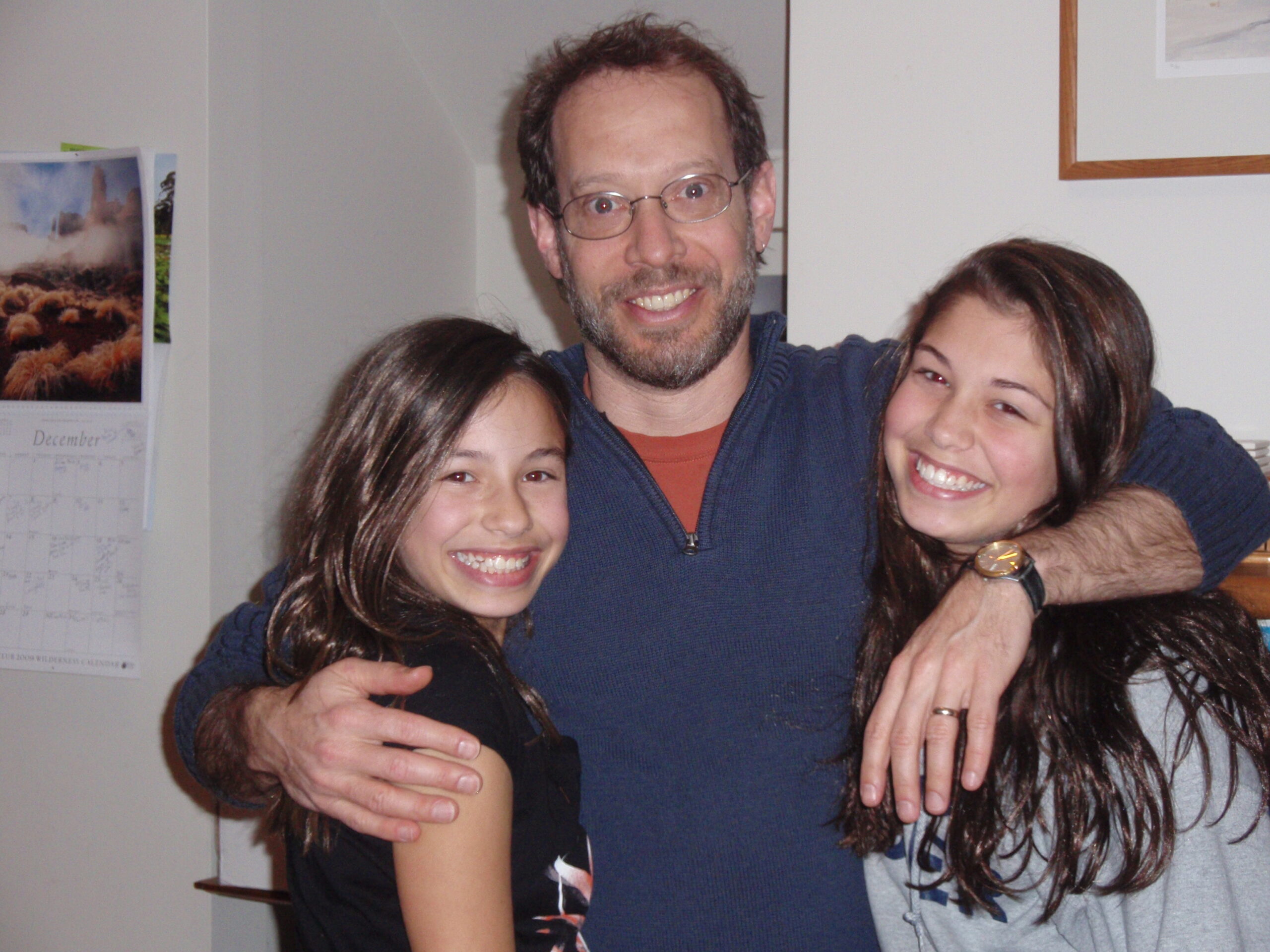
Me with Erin and AlexYes, my hiatus from writing was a byproduct of my grieving process. My return to writing is not an indication that my grief is spent. It never will be. I will grieve my darling Alex for the rest of my life. As I’ve said before, I wouldn’t have it any other way. Grief is an expression of love, and my love for her was limitless. But she wouldn’t want to be the reason I stopped writing forever, any more than she’d want me to give up on happiness or love or life because she’s gone.
Writing is part of who I am, and after a long absence I feel that I am ready to be me again, for good or ill. Alex would approve, I believe.

So, I ‘m back at it, and I will keep you updated as I work my way through this newest manuscript.

Enjoy the rest of your week. And Happy New Year.

Monday Musings: Reviews of Shows We’ve Been Streaming!!

Nancy and I have been doing a good deal of streaming in our new(-ish) home. We did in the old house, too, once we got serviceable internet (it only took 29 years), but our last year in Tennessee was filled with travel, packing, cleaning, more packing, looking at houses, etc. This year has been far more relaxed.

And though no one has asked, I thought I would offer my thoughts on some of the shows we have been watching recently. As Eeyore famously said, “I’m not asking anyone; I’m just telling everyone.” My opinions, of course, are my own and offered merely in the interest of starting a conversation. So, without further ado….

The Witcher, Netflix (Season 4) — Let me say up front that I came to the series first. I never played the game and I have not yet read the books. Same with Nancy. We loved the first three seasons, and were disappointed when Henry Cavill left the show. By the same token, we were willing to give Liam Hemsworth a chance to fit into the role. Now that we have watched Season 4 . . . well, let’s start with the not-God-awful. Hemsworth was not terrible. He wasn’t good, either. He was adequate. Cavill made the part his own. Hemsworth tried to be Cavill, and he just isn’t. In another role, maybe that’s fine, or even better than fine. But Geralt is Cavill, and Cavill is Geralt, and Hemsworth didn’t work in the role. Other performances were okay, but the scripts. My God, the scripts. They were DREADFUL. Bad dialogue, questionable plot choices, and an utter lack of progress on the main storylines. The season went absolutely nowhere, and I am left wondering why I would waste eight more hours on the show. Lots of pointless, graphic violence. 1 star out of 5.

The Diplomat, Netflix (Season 3) — Seasons 1 and 2 were amazing, and Season 3 more than matched them. Adding Allison Janney and Bradley Whitford to an outstanding cast that already featured Keri Russell, Rufus Sewell, David Gyasi, Ali Ahn, and Ato Essandoh, elevated the show. The writing continues to be crisp, intelligent, and thoughtful, reminding me of the best seasons of Aaron Sorkin’s The West Wing. The show is compelling, beautifully filmed, and just immensely fun. 4.5 stars out of 5.

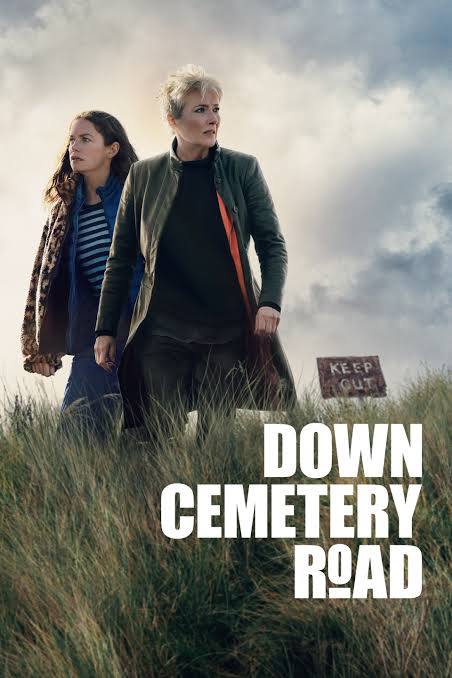
Down Cemetery RoadDown Cemetery Road, Apple (Season 1) — A taut, twisty, dark thriller starring Ruth Wilson, Emma Thompson, Fehinti Balogun, and Nathan Stewart-Jarrett, this is our new favorite show. Thompson and Balogun really stand out, but all the performances are terrific. Again, wonderful writing makes the show. There is humor and also some very graphic violence. The story, which involves intrigue deep in the British security state, has kept us utterly rapt. The last episode of Season 1 drops on Wednesday, and we will be holding our breath until then. Sooooo good. 4.5 stars out of 5.
Nobody Wants This, Netflix (Season 2) — A romcom about a rabbi who falls in love with a podcaster who is not Jewish. After a promising first season, which offered plenty of laughs and some warm moments, the second season has disappointed. The cast (Adam Brody, Kristen Bell, Justine Lupe, Timothy Simons, Jackie Tohn) is good, but the storyline has stalled, falling into predictable, repetitious patterns. I wanted to love it, but I don’t. 2.5 stars out of 5.

Shrinking, Apple (Season 2) — This quirky comedy stars Jason Segel as a psychiatrist who has lost his wife and is learning to cope with his grief. Sounds less than hilarious, I know, but it works. The ensemble, including Harrison Ford, Jessica Williams, Lukita Maxwell, Crista Miller, and Luke Tennie, is terrific, as is the chemistry among the various characters. Some of the predicaments are predictable, and a few of the jokes don’t land, but overall, it’s a fun show that is oh-so-easy to binge. 4 stars out of 5.

High Potential, ABC (Season 2) — Yes, an actual traditional-network offering. Kaitlin Olson plays an “ordinary mom” who is anything but. She is actually a genius, with a knack for knowing and seeing things no one else does, which makes her a perfect consultant for the LA police department. Yeah, the set-up is somewhat far-fetched, as are the case solutions, which almost always come in the nick of time. But the show is fun if you don’t think about it too hard. The cast includes Daniel Sunjata, Judy Reyes, Amirah J, Deniz Akdeniz, and Javicia Leslie. 3 stars out of 5.

Slow Horses, Apple (5 Seasons) — We’re playing catch-up with this one and are currently finished with Season 3. So far, it’s fantastic. Every episode is gripping and effective. Gary Oldman, who plays the unkempt, slightly boorish, flatulent, but brilliant head of a misfit team of MI5 spies, gives an Emmy-worthy performance, making his obnoxious character somehow likable and formidable. Kirsten Scott Thomas and Jack Lowden are also stellar in supporting roles, as are Saskia Reeves, Rosalind Eleazar, and Christopher Chung. Warning: some graphic violence. 4.5 stars out of 5.

And that’s it for now! Feel free to share your thoughts on whichever social media platform brought you to my blog!

Have a great week.

A Thanksgiving Post, and Something For Which I’m Thankful

This is not my typical Thanksgiving post, although, before I dive into it, I do want to say that I am thankful for so much: my family, my friends, the wonderful memories I have of those I have lost and the enduring bonds I have with so many who are reading these words. Thank you. I am grateful for my new home, for the daily comforts I take for granted most of the year, and for the opportunities I have been privileged to enjoy throughout my life.

I am also, of course, grateful for my writing career, which brings us a little closer to the core of this post.

It’s no secret that my family and I have been through a rough period, and that during that time, I virtually stopped writing. I continued to post here when I could, but I did not write any original fiction for more than two years.

This fall, I decided I’d had enough of not writing. A few weeks ago, the Kickstarter for the Disruptive Intent anthology that I will be co-editing with the fabulous Sarah J. Sover for Falstaff Books funded. That meant not only that I will have more editing to do before too long, but also that, at the request (insistence? direct order?) of John Hartness, head of Falstaff, I will be writing a short story for the project.

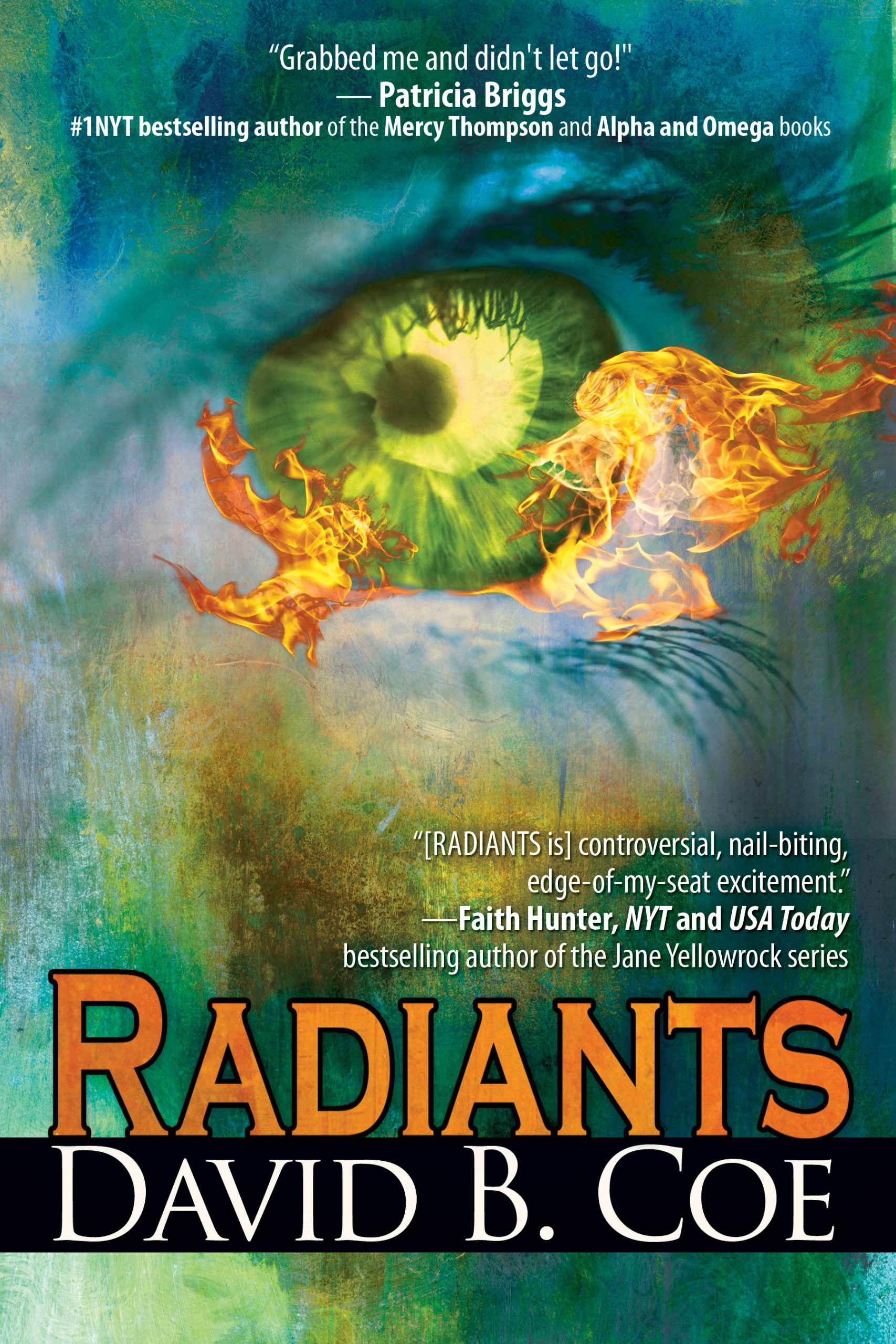
I am truly delighted to report that, as of about a week and a half ago, I have started writing said short story, which will be set in my Radiants universe.RADIANTS, by David B. Coe (Jacket art by Belle Books)

Yes, I am writing fiction again.

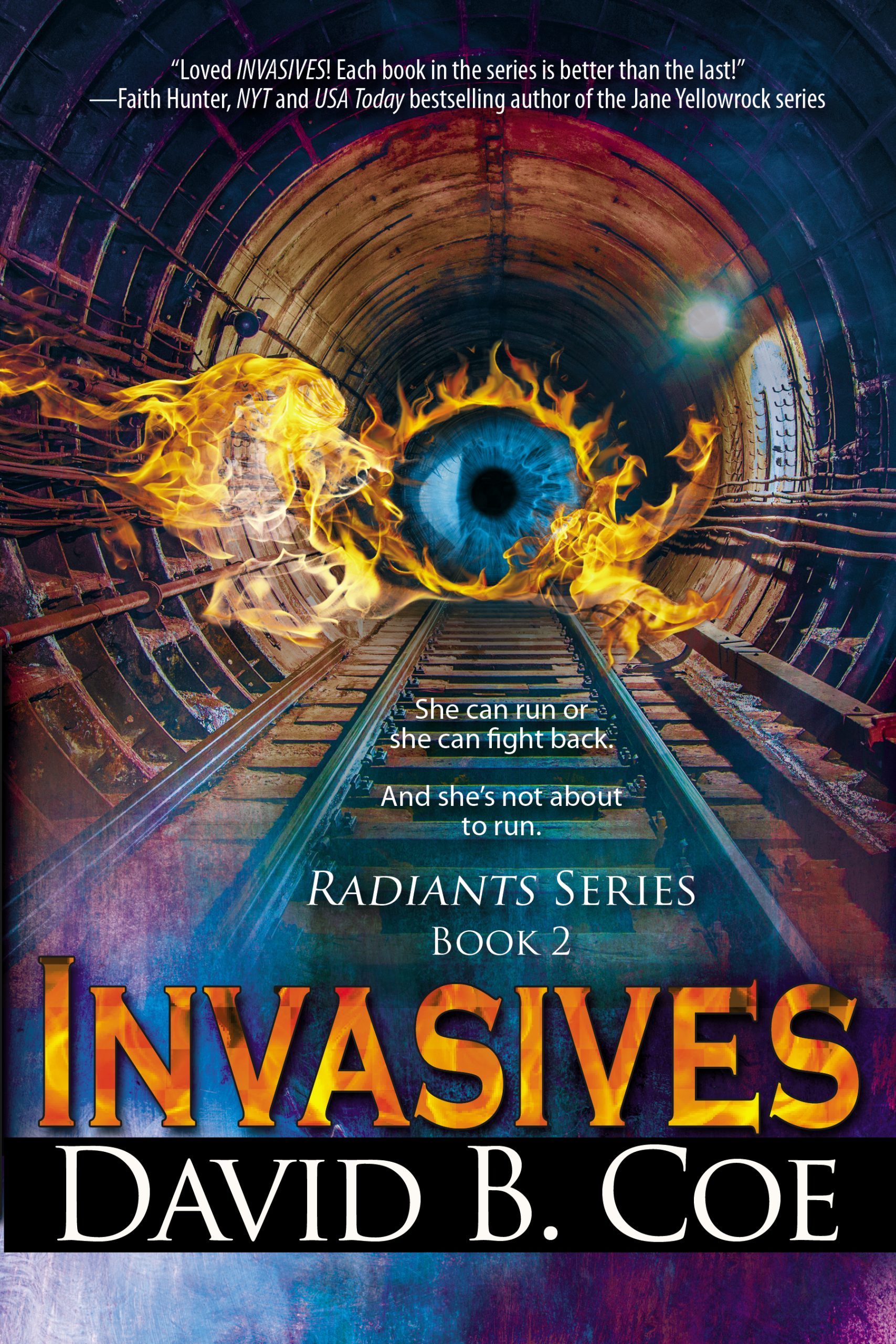
It’s coming quite slowly right now. But I am making progress each day and now have nearly half the story drafted. It’s not very good. Not yet. I may have to scrap much of what I’ve committed to phosphors thus far. That, though, is beside the point. I am writing. Finally. It feels really good.INVASIVES, by David B. Coe (Jacket art courtesy of Belle Books)

Before starting on the fiction, I actually took a couple of weeks and wrote about Alex, about losing her, about our relationship, about my grief, about the complex tangle of emotions that seemed to be getting in the way of my creativity. Those words I will never share with anyone. I just knew that I needed to write them before I could move on. The writing was painful, but it was also freeing. A lesson there, I believe. Writing is not always about producing words for publication. Sometimes it is catharsis. Sometimes it is a means of processing emotions that cannot be addressed in any other way. That, at least, is how it sometimes is for me.

In any case, I wanted to share this.

Happy Thanksgiving to you all. May you be surrounded by love and laughter.

Professional Wednesday: New Anthology Project In The Offing!!

Disruptive Intent announcementIn the next week or so, we — Sarah J. Sover, the good people at Falstaff Books, and me — will be starting a Kickstarter for a new anthology, Disruptive Intent.

Sarah and I will be co-editing the collection. Falstaff Books will be publishing it. And we have a terrific lineup of authors who have committed to submitting stories. The theme of Disruptive Intent is, essentially, stories that have a key element challenging the political/social/cultural orthodoxy of this moment in history. Each story will be accompanied by an author’s note, detailing their intent and their reasons for challenging that orthodoxy as they have. Ever wonder while reading a story, “Did the author mean to do that?” Well, wonder no longer!

We are not yet announcing who our authors are — that will come as we draw nearer to the start of the Kickstarter. But trust me: You’re going to want to read these stories. As for my fellow editor, Sarah J. Sover, author of the Fractured Fae series, is as wonderful a writer as she is a person. She is passionate about this project, and like our other authors, she is committed to writing a story as well as editing. And, for the record, I’m committed to writing one, too.

Our publisher, of course, is Falstaff Books, owned and operated by the shy and retiring (/snort) John G. Hartness. So, you know the book is going to be beautifully produced, reasonably priced, and packed with the sort of innovative, exciting stories for which Falstaff is known.

So, watch this space for updated Kickstarter information and author announcements! And help us meet our funding goal!

Friday Musings: Checking In and Sharing a Song From Alex

Summer is speeding by, and I have been terribly remiss in keeping up with my blog. For those who have reached out to me in recent weeks, asking if I am okay, the short answer is, “Yes, I am.” I won’t claim to be wondrously fantastic, because you wouldn’t believe me if I did. But I am well.

Our new house continues to feel more and more like home. The house itself is pretty much where we would like it to be at this point. A few more doors, door frames, and window frames need painting, but that can wait for cooler weather. We have found a couple of pieces of furniture to fill gaps in the three-season room on the back of the house, and we now have outdoor furniture for the backyard patio. All we need now is a fire pit for the fall. The yard looks great — Nancy has been planting and transplanting and weeding, and I have been keeping the grass under control with my new (used) standing mower. (If you don’t know what a standing mower is, look them up. This thing actually makes cutting the lawn sort of fun.)

We have a large flock of Wild Turkeys that walks through the yard a couple of times each day. How large? Five hens and twenty-two growing chicks. The young were adorable when they were little fuzzballs. Now they’re bigger, more awkward — like adolescents — but still dependent on their moms. Apparently it really does take a village… We also have a White-tailed doe and two fawns who show up most evenings while we’re eating dinner in the back room. And there is a young buck, with velvet still on his antlers, who appears to be shadowing them. Add to that our hummingbird family, the Indigo Buntings and Chipping Sparrows, and our local Cooper’s hawk, and we have a nice selection of wildlife paying us visits on a daily basis.

I have recently finished reading slush for the Skulls X Bones anthology I am editing with Joshua Palmatier for release from Zombies Need Brains. Soon, we will be making our final choices of which stories to include and will begin the actual editing of the manuscripts. And already I am working on my next editing project, which will be for Falstaff Books with the fabulous Sarah J. Sover. More details to come.

RADIANTS, by David B. Coe (Jacket art by Belle Books)As for writing, I have still not done much at all. But that might be changing soon. There are a lot of moving parts to this development, and nothing is set in stone yet, but for fans of the Radiants books, who have wondered if I ever planned to go back to those stories, stay tuned . . . . Yes, I know that I have promised a return to the Thieftaker universe as well, not to mention a reissue of Winds of the Forelands, which I have had on the back burner for years now. Those will be coming eventually as well. I am slowly working my way back into a writing mindset. I would ask for your patience, as I continue to heal and find my emotional footing again.

Nancy and I have been out to see Erin in Colorado, and will be seeing her again before too long. We have plans for multiple trips later this summer and into the fall, and are also looking forward to welcoming some guests to our home.

Other than that, life has been sailing along. We see family and friends. We watch our favorite shows and listen to music. We cook fun foods and taste new whiskeys. I have been playing music as well, polishing long-neglected guitar skills and trying to retrain my voice.

Alex, of course, is a constant presence in my thoughts. I am learning to live with my grief, to honor her memory in ways that do justice to the loss while also allowing me to function and breathe and be thankful for all that we still have in our lives. At the risk of misspeaking for Nancy and Erin, I believe it is a journey for all of us. There’s no real end point. It is just the reality of our world now, and always will be. Not long ago, I shared a song with my guitar buddy and dear, dear friend, Alan Goldberg. It was a tune I first heard on a mix CD Alex made for me when she was in high school, a tune I hadn’t listened to in several years, since well before her death. I knew he would love the song, but I was also afraid to play it for him. I didn’t know how I would feel upon hearing it again.

I needn’t have worried. It brought a smile. It made me feel close to her, thankful for this tiny gift she had given me — one gift among so, so many. Did it make me miss her? Of course, but it’s not like I need help in that regard. And the sweet memories that came with the melody were a balm.

Here is the song. Enjoy your weekend. Hug those you love.

Monday Musings: Some Recent Epiphanies

The title speaks for itself. These are recent epiphanies I’ve had. Some are profound others less so. Enjoy.

Polaris Award, David B. Coe 2025Last weekend, at ConCarolinas, I was honored with the Polaris Award, which is given each year by the folks at Falstaff Books to a professional who has served the community and industry by mentoring young writers (young career-wise, not necessarily age-wise). I was humbled and deeply grateful. And later, it occurred to me that early in my career, I would probably have preferred a “more prestigious” award that somehow, subjectively, declared my latest novel or story “the best.” Not now. Not with this. I was, essentially, being recognized for being a good person, someone who takes time to help others. What could possibly be better than that?


Nancy and I recently went back to our old home in Tennessee for the wedding of the son of dear, dear friends. Ahead of the weekend, I was feeling a bit uneasy about returning there. By the time we left last fall, we had come to feel a bit alienated from the place, and we were constantly confronting memories of Alex — everywhere we turned, we found reminders of her. But upon arriving there this spring, I recognized that I had control over who and what I saw and did and even recalled. I avoided places that were too steeped in hard memories. I never went near our old house — I didn’t want to see it if it looked exactly the same, and I really didn’t want to see it if the new owners made a ton of changes! But most of all, I took care of myself and thus prevented the anxieties I’d harbored ahead of time from ruining what turned out to be a fun visit. I may suffer from anxiety, but I am not necessarily subject to it. I am, finally, at an advanced age, learning to take care of myself.

Even if I do not make it to “genius” on the Spelling Bee AND solve the Mini AND the Crossword AND Wordle AND Connections AND Strands each day, the world will still continue to turn. Yep. It’s true.

I do not know when or if I will ever write another word of fiction. But when and if I do, it will be because I want to, because I have a story I need to tell, something that I am certain I will love. Which is as it should be.

The lyric is, “She’s got electric boots/A mohair suit/You know I read it in a magazine.” Honest to God.

I am never going to play center field for the Yankees. I am never going to appear on a concert stage with any of my rock ‘n roll heroes. I am never going to be six feet tall. Or anywhere near it. All of this may seem laughably obvious. Honestly, it IS laughably obvious. But the dreams of our childhood and adolescence die hard. And the truth is, even as we age, we never stop feeling like the “ourself” we met when we were young.

Grief is an alloy forged of loss and memory and love. The stronger the love, and the greater the loss, and the more poignant the memories, the more powerful the grief. Loss sucks, but grief is as precious as the rarest metals — as precious as love and memory.

As a student of U.S. History — a holder of a doctorate in the field — I always assumed that our system of government, for all its obvious flaws and blind spots, was durable and strong. I believed that if it could survive the War of 1812 and the natural growing pains of an early republic, if it could emerge alive, despite its wounds, from Civil War and Reconstruction, if it could weather the stains of McCarthyism and Vietnam and Watergate, it could survive anything. I was terribly wrong. As it turns out, our Constitutional Republic is only as secure as the good intentions of its principle actors. Checks and balances, separation of powers, the norms of civil governance — they are completely dependent on the willingness of those engaged in governing to follow historical norms. Elect people who are driven not by patriotism but by greed and vengeance, bigotry and arrogance, unbridled ego and an insatiable hunger for power, and our republic turns out to be as brittle as centuries-old paper, as ephemeral as false promises, as fragile as life itself.

I think the legalization of weed is a good thing. Legal penalties for use and possession were (and, in some states, still are) grossly disproportionate to the crime, and they usually fell/fall most heavily on people of color and those without the financial resources necessary to defend themselves. So, it’s really a very, very good thing. But let’s be honest: Part of the fun of getting high used to be the knowledge that we were doing something forbidden, something that put us on the wrong side of the law. It allowed otherwise well-behaved kids to feel like they (we) were edgy and daring. There’s a small part of me that misses that. Though it’s not enough to make me move back to Tennessee….

I’ll stop there for today. Perhaps I’ll revisit this idea in future posts.

In the meantime, have a great week.

Monday Musings: Nesting (Redux) and Writing

Back in early January, with snow falling on our bare trees and the brisk cold of a northeastern winter defining our days, I wrote a post for this blog about “Nesting.” The title referred to what Nancy and I had been doing around the house — unpacking, finding places for our stuff, making improvements to the new house.

That process has continued in the months since. While we have also done other stuff — editing, music, birding, and other pursuits on my part; weaving, knitting, and getting her last academic paper published on Nancy’s part — we (mostly Nancy) have still been working on the house. My hands are not (and never have been) steady enough to paint the trim around the interior of the house, so Nancy has carried the bulk of that burden. And with the onset of spring, my multi-talented spouse has also been planning her approach to landscaping our new yard. And I have done more unpacking and have been slowly hanging our art around the house.

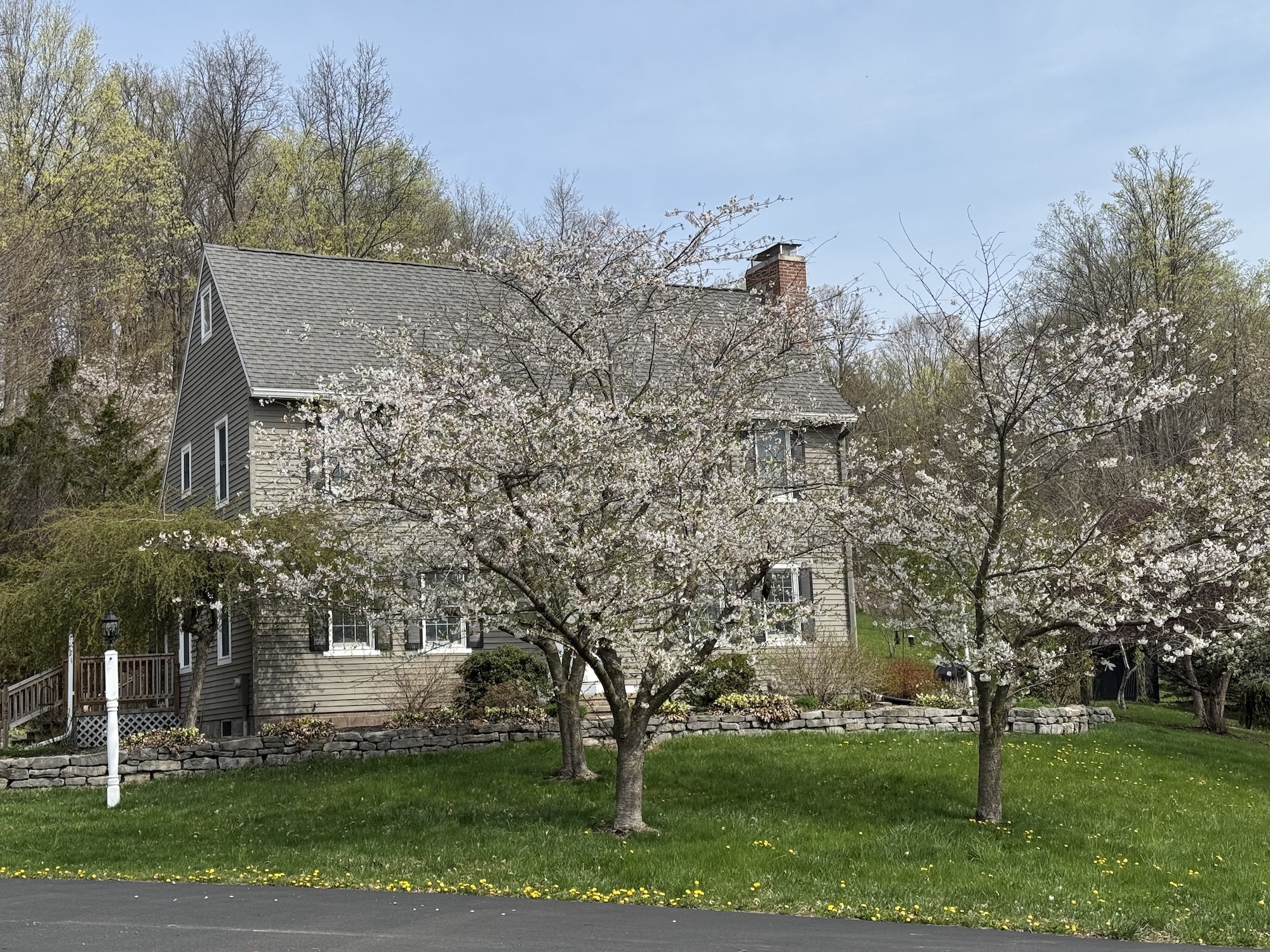
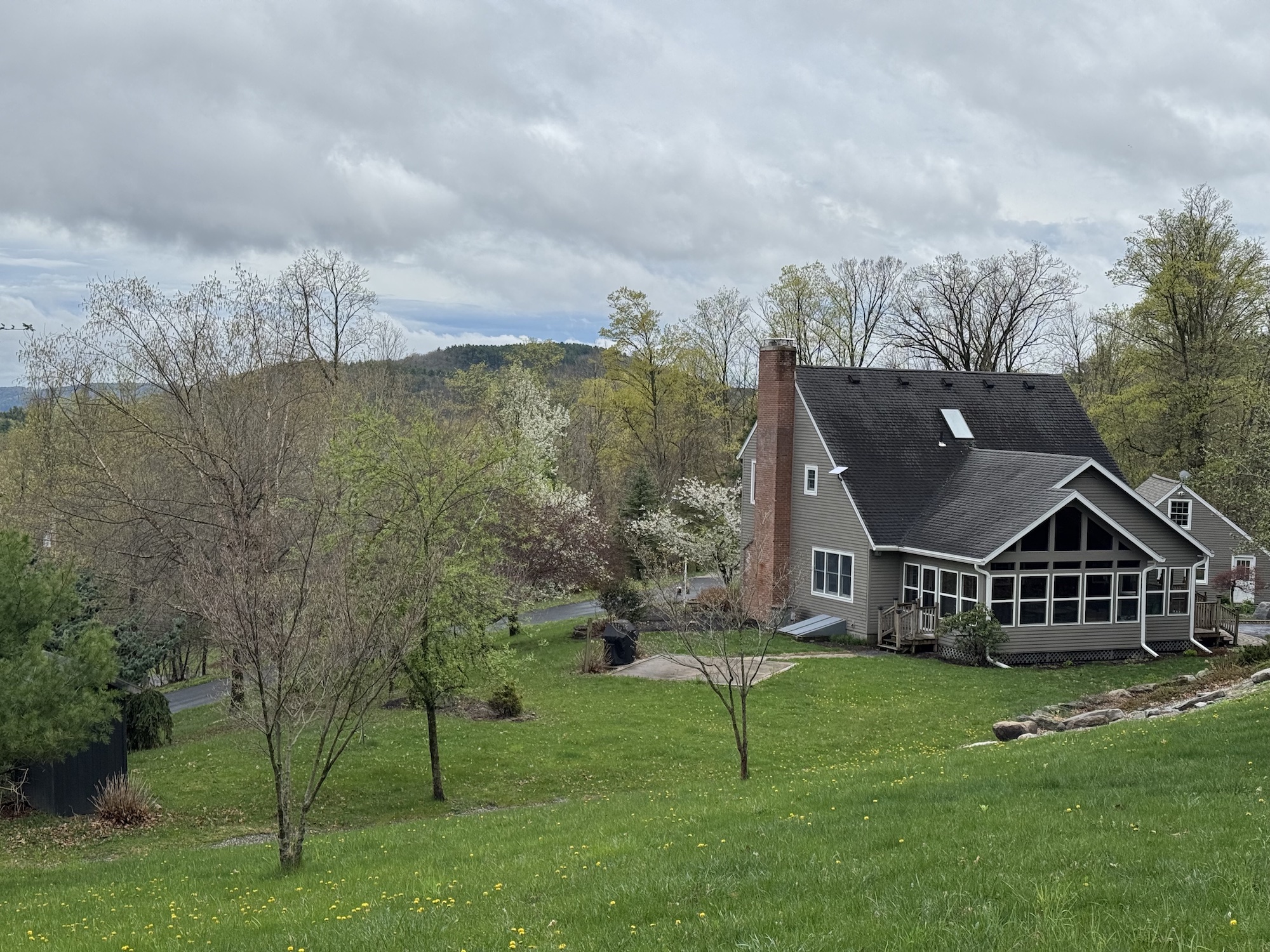
I posted a couple of photos of the new place back in January, but wanted to follow up with a few more today.Interior of house Interior of houseInterior of new house. Front exterior of house. View of yard.

And I wanted to say a few things about this blog, which I seem to be struggling to keep up with consistently. I am trying. Truly. A lot of the time, though, I just don’t want to write. It really is as simple as that. Most days, I wake up, confront the newest atrocity committed by this hateful, cruel, criminally incompetent Administration, and am torn between wanting to write yet another outraged screed and wanting to ignore politics altogether. I don’t want this blog to become nothing more than a nonstop critique of all the current occupant of the White House is doing to undermine the strength of our republic. But I also don’t want to post about birds or baseball or our latest favorite series on Netflix when the country is burning down. And so I go for weeks without posting at all, which isn’t an answer either.

This is actually symptomatic of a larger problem. I’m not writing much of anything — not blog posts, and not fiction. I did some fiction writing early last year, when I was hired to write something in someone else’s world. But the truth is, I haven’t written a word of fiction that was really my own since we lost Alex back in October 2023. Will I write again? I hope so. That’s all I can say for certain. I want to write again. But I don’t want to write now, and I feel that I owe it to myself to take this time to continue healing. I have no idea how long this feeling will last. A month? A year? A decade? Maybe. Maybe. Maybe. All I know is, I need to take care of myself.

Because I AM healing. I’m doing better in most ways than I was a year ago, and far better than I was a year and half ago, when the grief was fresh and I thought it would never ease.

Watching the house come together has been good for me. Watching spring touch our little slice of the Hudson Valley has been lovely. Trees are blooming. Flowerbeds are revealing themselves. We moved in late in November, so the arrival of warmer weather has been a revelation for us.

I saw Erin in March. I will see her again in May. And then June. And then maybe later in the summer. And then . . . soon after that. Being with her is a balm for both Nancy and me. And so is Nancy and my time together. The love tying our family together remains strong, and in many ways missing Alex, loving her, grieving her, has become one more unbreakable filament binding us to one another.

So we nest. We heal. We love. And we continue to ask your patience and support.

Have a wonderful week.

Monday Musings: My Big Brother

People often ask why Nancy and I moved to New York when we left the Appalachians. We could have settled pretty much anywhere, but we chose an area — the Hudson River Valley — that few think of as a retirement destination. The fact is, a main reason we came here was to be near my brother and sister-in-law, whom we adore.

Jim and me, birding in Arizona.

As it happens, this is my brother’s birthday week, and so I am afforded a wonderful opportunity to embarrass him.

James Coe — Jim to me; Jimmy when we were much younger — is just about my very favorite person in the world. He is older than I am. I won’t say by how much, but trust me, it’s A LOT!! When we were kids, I wanted to do everything he did, often to his dismay. He was my babysitter, my early-life mentor, occasionally my tormentor, but throughout all my years my best friend. He was the one who interested me (and our oldest brother, Bill) in birdwatching. He shaped my early musical tastes, introducing me to James Taylor, Joni Mitchell, the Beatles, Crosby Stills and Nash, Carole King, Simon and Garfunkel, not to mention the Monkees and Young Rascals. Later, as I got older, he was my guide to jazz. He saw to it that I discovered pizza. He risked parental sanction by lighting off firecrackers for my entertainment (and the satisfaction of his own pronounced pyromaniacal tendencies).

Jim is a remarkably talented artist — you can find samples of his work, as well as his very impressive biography, here — and all kidding aside, his courage in pursuing his own unconventional artistic career emboldened me to do something similar in pursuit of my passion for writing fantasy. In a sense, I owe my career to his example. His art is all over our walls, and for all of my adult life, the best gift I could receive for any birthday has been an original James Coe painting. Over the years, he has been incredibly generous in that regard.

He is a bold and creative chef, an accomplished baker whose from-scratch bread rivals Nancy’s (and that, my friends, is saying something). He is wise and caring, a wonderful Dad to his talented, beautiful children, Jonah and Rachel, a loving spouse to his spectacularly brilliant wife, Karen, and a marvelous uncle to our girls. He is, to this day, my favorite birding companion, my constant partner in silliness, my beloved big brother.

So, please wish Jim a happy birthday, and really do check out his website. He is annoyingly talented.

Love you, Coe.

Tuesday Musings: What Makes An Effective Villain?

I love villains. I love writing them. I love reading them. I love seeing them brought to life on big screen and small.

Well, let me modify that. I love villains in fiction and movies and television shows. I can’t stand real-life villains. (In the interest of keeping things civil, I won’t name any of the real-life villains I have in mind, even the one whose name rhymes with Peon Husk.) But a good fictional villain can make even the most mundane of stories shine. And a boring or ineffective villain can ruin an otherwise effective narrative. Over the years, as a reader, teacher, and editor, I have seen many beginning writers undermine their stories by making the same mistakes in the development of their antagonists.

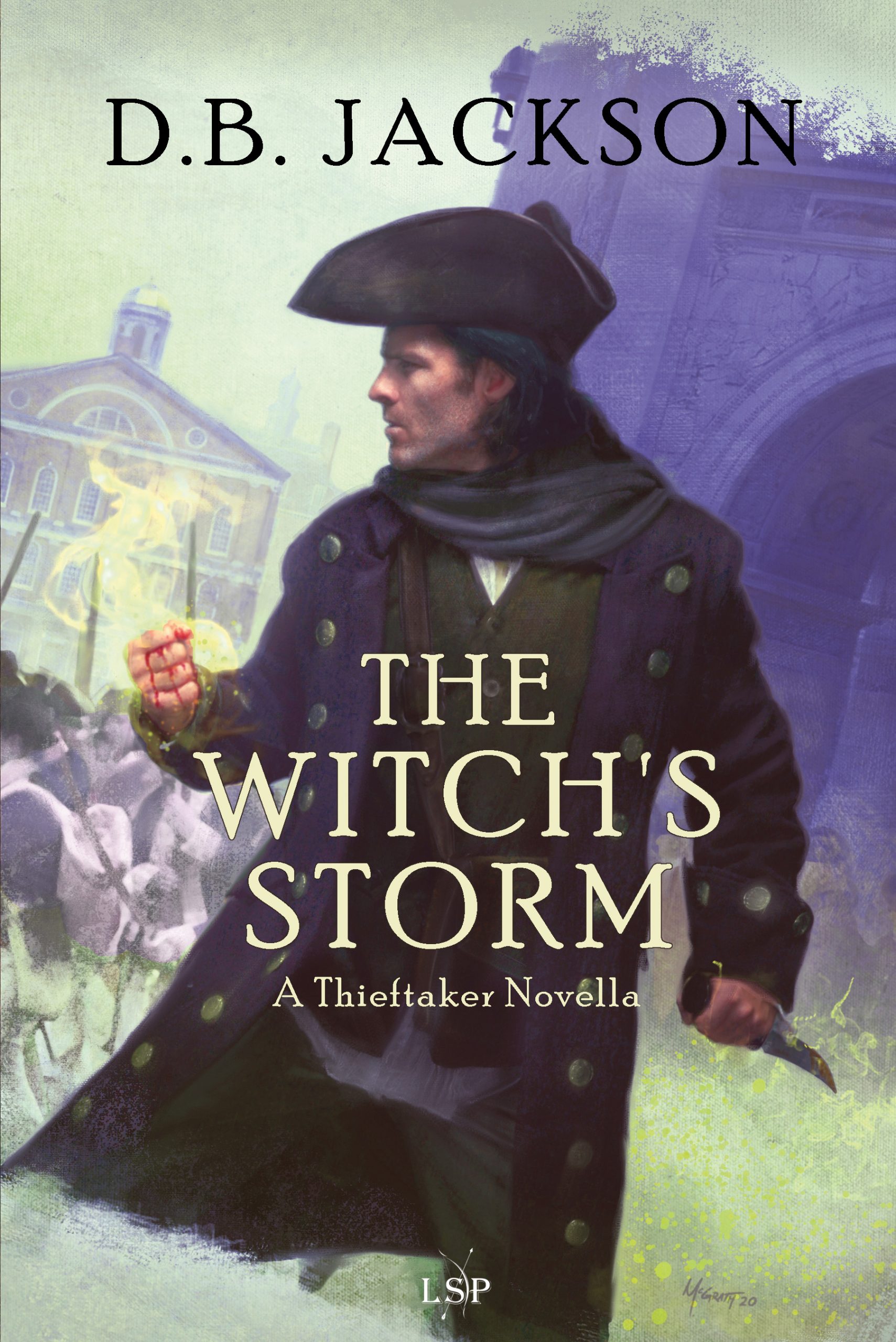
"The Witch's Storm," by D. B. Jackson (Jacket art by Chris McGrath)What qualities make a villain compelling? I intend to dive into that. Who are some of my favorite villains? I’ll get into that, too. But let me offer a few quick points up front. I don’t think much of the all-powerful-evil-through-and-through villains one often encounters in the fantasy genre. Sauron, for instance — the evil god whose world-conquering designs lie at the heart of J.R.R. Tolkien’s The Lord of the Rings — is, to my mind, a very boring villain. He’s really powerful, and he’s really, really evil. And yes, he’s cunning, which is a point in his favor, and he’s scary (or his minions are). But beyond that, and unless one has gone back and read all his backstory in The Silmarillion, there isn’t really much to him. He lacks dimension and complexity.

So, let’s begin there. In my opinion (and yes, ALL of this is just my opinion), villains should be complex. There should be more to them than mere evil. Their backstory should contain the seeds of their villainy and the twisting of their world-view. Because let’s face it, most of the villains we encounter and create do some pretty messed up things in pursuit of their agendas. They’re not all there sanity-wise. But how they wound up there ought to be an interesting tale in and of itself. And the fact that their actions are working at cross purposes with those of our protagonists should not mean they can’t have some normality and even joy in their lives. They can and should have people and things that they love. They should be relatable for our readers. One of my very favorite villains is Brandan of Ygrath, the emperor-sorcerer who is the villain of Guy Gavriel Kay’s Tigana. He is charming, brilliant, loving with those he cares about, handsome, refined. He is also ruthless, merciless, temperamental, and unpredictable. He does horrible, cruel, vicious things for reasons that are both understandable and insufficient. He is nearly as easy to like as he is easy to hate.

Too often, I see young authors make their villains unintelligent and unsubtle. They give their villains lots of power, but then undermine that power by making their machinations transparent. Villains, I believe, need to be canny, keen of mind, creative. Their schemes should be the stuff of genius. Remember the old Adam West Batman series? I used to watch it after school when I was little. Invariably, Batman’s foes would leave him in a situation where he wasn’t dead yet, but he would be soon. They were sure of it. So they didn’t need to wait around to make sure. They could leave, and eventually, the pendulum on the giant clock with the medieval axehead attached to it would cleave the masked crusader in two! And, of course, their premature departure gave Batman and the Boy Wonder the opportunity they needed to escape their less-than-certain deaths. Stupid villains were entertaining and convenient when we were kids watching bad TV. But for more sophisticated fiction, stupid villains will ruin a good tale.

Think of it this way: Assuming that our protagonist eventually manages to overcome the villain in our story, the power AND intelligence AND shrewdness of the bad guy reflect well on our good guy. The easier the villain is to defeat, the less challenging their plot against the world, the less impressive our hero appears when they prevail. When we build up our villain, when we make them really smart and really cunning, our hero’s victory becomes that much more of an achievement. Consider it narrative mathematics.

TIME'S DEMON, by D.B. Jackson Art by Jan Weßbecher.Some of my favorite villains from my own work? Quinnel Orzili from the Islevale Cycle (Time’s Children, Time’s Demon, Time’s Assassin), Saorla from the second and third books in The Case Files of Justis Fearsson, and, my absolute favorite, Sephira Pryce from the Thieftaker books. Yes, she later become something other than a pure villain, but that was basically because she became SO much fun to write that I had to find a way to keep her around and relevant.
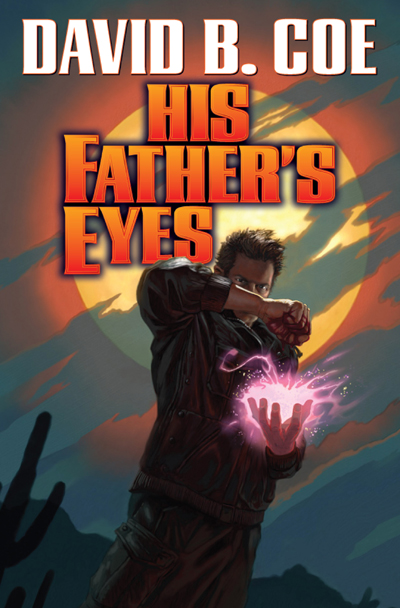
His Father's Eyes, by David B. CoeMy favorite villains in the work of others? I already mentioned Brandan of Ygrath. John Rainbird, from Stephen King’s masterpiece, Firestarter, is a terrific villain. Smart, brutal, and yet also human. In Catie Murphy’s marvelous Negotiator trilogy there are two supernatural “bad guys,” Daisani and Janx, whose personal rivalry threatens the fabric of the mortal world. Their mutual animus and their own needs and desires humanize them and make them terrific foils for Magrit Knight, the series’ protagonist. And I would add that a certain writer I care not to mention in light of recent revelations has created some truly amazing villains. Too bad he wound up being a villain worthy of his own undeniable storytelling talents.

So, make your villains relatable, make them canny and dangerous and terrifying, and make their eventual defeat a true achievement for your protagonist. And try not to be villainous yourself.

Advice for this week. Cheers!!