








We have a fun July 4th celebration in our little town. It’s a university town, and a somewhat affluent one at that, especially when compared with the surrounding communities. And so we attract a lot of visitors. There are games for kids, a fun, somewhat tongue-in-cheek dog show, a parade, lots of food stands, a crafts fair, and, in the evening, a surprisingly good fireworks display over one of the local lakes.

 Our girls LOVED Sewanee Fourth of July when they were young. We would give them a bit of cash, help them meet up with friends, and then pretty much say goodbye to them for the day. It’s a small, safe, friendly town, and we never worried about them. They always found us eventually, sunburned and sweaty, their faces covered in face-paint, their pockets stuffed with candy that was thrown to kids by the parade participants. We’d go home, have a nap and some dinner, not that any of us was very hungry, and then, after covering ourselves with bug spray, would make our way to the fireworks venue.
Fond memories.
Nancy and I have been doing July 4th on our own for many years now, since we became empty-nesters. It’s easier in a way, though a bit less fun. The magic of the day has dissipated with the years. We still enjoy seeing people, and we can usually find something good to eat. These days, we tend to stop by a couple of the parties that take place along the parade route, and, once the parade is done, we head home. Some years we go to see the fireworks, some years we don’t.
I will admit that this year my heart isn’t in it. Not the way it used to be. Part of that is personal — those fond memories have thorns these days.
But more than that, I feel less inclined to celebrate America than I used to. I have long found the equating of conservatism with patriotism offensive. I was brought up by liberals, and I raised my kids as a committed progressive. The terminology changed, but the love of country has never wavered. I have a Ph.D. in U.S. history, and while it is impossible to dive into the depths of our nation’s past without seeing its many flaws, it is also impossible to do so without gaining a healthy appreciation for qualities in our national story that are worthy of admiration. Resolve and resilience, boundless ambition and a commitment to human dignity that is often myopic and even hypocritical but also naïvely sincere. Ours is an imperfect but charmingly idealistic vision of government, an experiment in democratic republicanism that has yet to fulfill the dreams of its Founders, but which continues to strive for realization.
All of which makes our current state of political affairs so terrifying. The aforementioned experiment is at risk. If the Presidential election were held today, we would likely elect a man who has shown no compunction at all about placing his personal hunger for power above the national good, a man who has shown utter disregard for the centuries-old norms of our governing system, a man who has been convicted of 34 felonies and accused of dozens more, a man who literally lies about everything, who has made grievance and greed and graft synonymous with his personal brand, and who has declared without shame that he intends to begin his next term in the White House — a sequel to his disastrous, chaotic, hate-filled first term — with a one-day dictatorship. As if this paragon of gluttony will be able to stop after a single day.
Is our incumbent old? Yes. Do his communications skills leave much to be desired? Absolutely. This is why your Democratic friends and neighbors haven’t slept or eaten in days and have the look of caffeine addicts whose coffee machine is on the fritz. But Joseph Biden has been a remarkably effective President when it comes to passing bipartisan legislation. He has overseen an economic recovery that includes the creation of fifteen million new jobs. To be sure, inflation went up on his watch, spurred by supply-chain disruptions that began during the Covid recession of 2020 and worldwide economic dislocations caused by the ongoing war between Russia and Ukraine. But it has come down steadily since its 2022 peak and is now below 3% annually.
Most of all, though, the President is a decent, honest man, who honors and upholds our nation’s political ideals. He poses no threat to our republic. On the contrary, he is committed to saving our heating planet, improving the lives of those who face discrimination and economic injustice, and restoring a national right to women’s health care access. He has spent his life fighting for social equality. Is he a step slower now? A bit more muddled in his speech? A bit more frail and forgetful? Yes, yes, and yes. But on his worst day, he is better than the lying felon running against him.
I hope desperately that the American people will realize this before it’s too late. I fear they won’t.
I hope your July Fourth is fun and fulfilling.
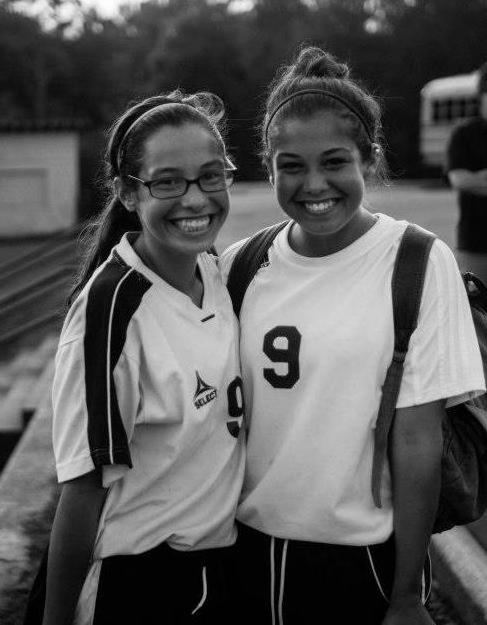 My mind has been on Title IX again over the past month, as Nancy and I (and our daughters, while we were all together in Colorado) watched the Women’s World Cup. Soccer has long been a very big deal in our household. Our daughters grew up playing, first in weekend league soccer and then through middle school and high school. Both of them were accomplished players. Both of them continue to love the sport. And so we all look forward to the World Cup — men’s and women’s — the way we look forward to holidays and birthdays.
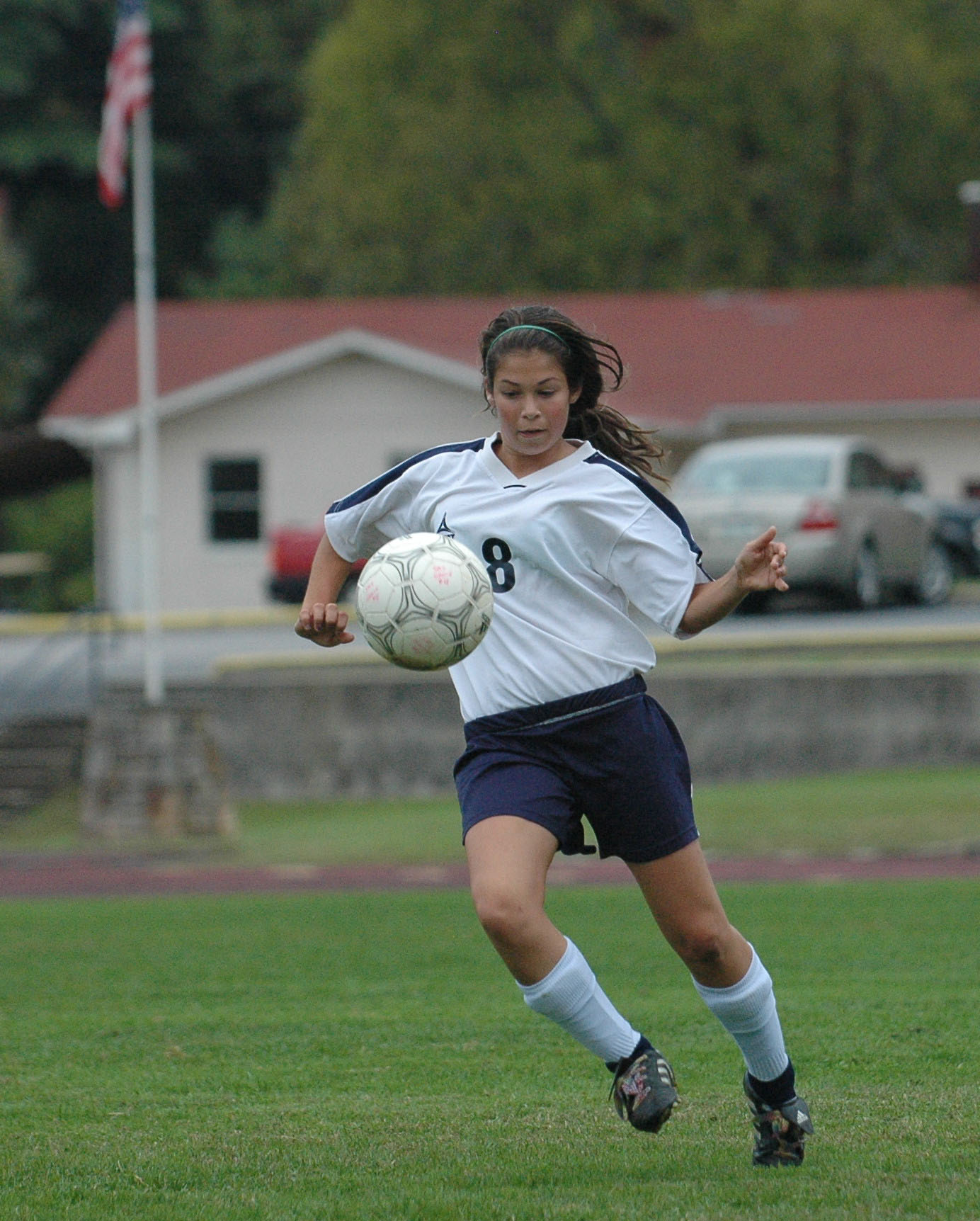 World Cup soccer — men’s and women’s — begins with what is called group play. The field of thirty-two is divided into eight groups of four. Each group plays among themselves, three matches for each team, and they get three points for a win, one point for a draw, and none for a loss. The two teams with the best record from each group advance to the knockout stage, so called because there are no ties, and the loser of each match is knocked out of the competition.
 Despite American disappointment, these developments actually constitute incredibly good news for women’s soccer around the world. Title IX paved the way for the U.S. women to become a dominant team, and in many European nations, where traditional football is THE sport, women’s teams have access to facilities and funding. But in other places this is simply not the case. The Jamaican woman faced so many financial hardships in their preparation for this year’s Cup that they literally had to rely on crowdfunding in order to participate.
 In 1976, I was thirteen years old. I couldn’t vote, obviously, but I could work for candidates I liked, passing out pamphlets and such. That’s what I did in my little (at the time) moderately conservative (at the time) hometown in suburban New York. I stood on street corners in the commercial district of our village and I handed out leaflets for the Carter-Mondale ticket. “Leaders For A Change,” they read. A message that resonated after Watergate and the hapless administration of Gerald Ford.